

Order Total (1 Item Items):
Shipping Destination:

Michael T Ferejohn (16 results)
Skip to main search results
Search filters
Product Type
- All Product Types
- Books (16)
- Magazines & Periodicals (No further results match this refinement)
- Comics (No further results match this refinement)
- Sheet Music (No further results match this refinement)
- Art, Prints & Posters (No further results match this refinement)
- Photographs (No further results match this refinement)
- Maps (No further results match this refinement)
- Manuscripts & Paper Collectibles (No further results match this refinement)
Condition Learn more
- New (12)
- As New, Fine or Near Fine (3)
- Very Good or Good (1)
- Fair or Poor (No further results match this refinement)
- As Described (No further results match this refinement)
Binding
Collectible Attributes
- First Edition (No further results match this refinement)
- Signed (No further results match this refinement)
- Dust Jacket (No further results match this refinement)
- Seller-Supplied Images (4)
- Not Print on Demand (14)
Language (1)
Price
- Any Price
- Under £ 20 (No further results match this refinement)
- £ 20 to £ 35 (No further results match this refinement)
- Over £ 35
Free Shipping
Seller Location
Seller Rating
-
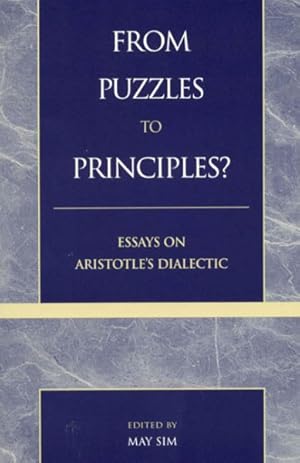
Condition: As New. Unread book in perfect condition.
-

Condition: New.
-
From Puzzles to Principles? : Essays on Aristotle's Dialectic
Seller: GreatBookPricesUK, Woodford Green, United Kingdom
Seller rating 5 out of 5 stars

Condition: New.
-
From Puzzles to Principles? : Essays on Aristotle's Dialectic
Seller: GreatBookPricesUK, Woodford Green, United Kingdom
Seller rating 5 out of 5 stars
Condition: As New. Unread book in perfect condition.
-

Formal Causes: Definition, Explanation, and Primacy in Socratic and Aristotelian Thought
Language: English
Published by Oxford University Press, 2014
ISBN 10: 019969530X ISBN 13: 9780199695300
Seller: THE SAINT BOOKSTORE, Southport, United Kingdom
Seller rating 5 out of 5 stars
Hardback. Condition: Good. Used copy in good condition - Usually dispatched within 3 working days.
-
Formal Causes : Definition, Explanation, and Primacy in Socratic and Aristotelian Thought
Language: English
Published by Oxford University Press, 2014
ISBN 10: 019969530X ISBN 13: 9780199695300
Condition: New.
-

Formal Causes : Definition, Explanation, and Primacy in Socratic and Aristotelian Thought
Language: English
Published by Oxford University Press, 2014
ISBN 10: 019969530X ISBN 13: 9780199695300
Condition: As New. Unread book in perfect condition.
-
Formal Causes: Definition, Explanation, and Primacy in Socratic and Aristotelian Thought
Language: English
Published by Oxford University Press, 2014
ISBN 10: 019969530X ISBN 13: 9780199695300
hardcover. Condition: New. Special order direct from the distributor.
-

Formal Causes (Hardcover)
Language: English
Published by Oxford University Press, Oxford, 2013
ISBN 10: 019969530X ISBN 13: 9780199695300
Hardcover. Condition: new. Hardcover. Michael T. Ferejohn presents an original interpretation of key themes in Aristotle's classic works, and their roots in Socratic thought. The principal historical thesis of this work is that Aristotle's commendation of the historical Socrates for 'being the first to pursue universal definitions' is explainable in part by Aristotle's own attraction to the 'formal cause' (or definition-based) mode of explanation as providing justification for scientific knowledge.After exploring the motives behind Socrates' search for definitions of the ethical virtues, Ferejohn argues that Aristotle's commitment to the centrality of formal cause explanation in the theory ofdemonstration he advances in the Posterior Analytics is at odds with his independent recognition that natural phenomena are best explained by reference to efficient causes. Ferejohn then argues that this tension is ultimately resolved in Aristotle's later scientific works, when he abandons this commitment and instead evinces a marked preference for explanation of natural phenomena in terms of efficient as well as so-called final (teleological) causes.This tension betweenformal and efficient cause explanations is especially evident in Aristotle's discussions of events such as thunder and eclipses in Posterior Analytics B 8-10. In the later chapters of the book Ferejohn defends anovel interpretation of Aristotle's manner of treating these phenomena that depends on his fourfold classification of scientific questions and the presupposition relations he believes to hold among them. The final chapter turns to the role of definition in Aristotle's mature ontology. Ferejohn argues that in Metaphysics Z 17 he proposes a treatment of kinds of composite substances parallel to that of thunder and eclipses in the Posterior Analytics, and that this treatment is acrucial element in his sustained argument in Metaphysics Z and H that such kinds are definable unities. Michael T. Ferejohn presents a new analysis of Aristotle's theory of explanation and scientific knowledge, in the context of its Socratic roots. Ferejohn shows how Aristotle resolves the tension between his commitment to the formal-case model of explanation and his recognition of the role of efficient causes in explaining natural phenomena. Shipping may be from multiple locations in the US or from the UK, depending on stock availability.
-
Formal Causes: Definition, Explanation, and Primacy in Socratic and Aristotelian Thought
Language: English
Published by Oxford University Press, 2014
ISBN 10: 019969530X ISBN 13: 9780199695300
Seller: THE SAINT BOOKSTORE, Southport, United Kingdom
Seller rating 5 out of 5 stars
Hardback. Condition: New. New copy - Usually dispatched within 4 working days.
-
Formal Causes
Language: English
Published by Oxford University Press, 2013
ISBN 10: 019969530X ISBN 13: 9780199695300
Seller: Kennys Bookshop and Art Galleries Ltd., Galway, GY, Ireland
Seller rating 5 out of 5 stars
Condition: New. Michael T. Ferejohn presents a new analysis of Aristotle's theory of explanation and scientific knowledge, in the context of its Socratic roots. Ferejohn shows how Aristotle resolves the tension between his commitment to the formal-case model of explanation and his recognition of the role of efficient causes in explaining natural phenomena. Num Pages: 224 pages. BIC Classification: HBLA1; HPCA; HPK; PDA. Category: (UP) Postgraduate, Research & Scholarly; (UU) Undergraduate. Dimension: 222 x 147 x 18. Weight in Grams: 396. . 2013. . . . .
-
Hardcover. Condition: Brand New. 211 pages. 9.00x5.75x0.75 inches. In Stock.
-
Formal Causes
Language: English
Published by Oxford University Press, 2014
ISBN 10: 019969530X ISBN 13: 9780199695300
Condition: New. Michael T. Ferejohn presents a new analysis of Aristotle's theory of explanation and scientific knowledge, in the context of its Socratic roots. Ferejohn shows how Aristotle resolves the tension between his commitment to the formal-case model of explanation and his recognition of the role of efficient causes in explaining natural phenomena. Num Pages: 224 pages. BIC Classification: HBLA1; HPCA; HPK; PDA. Category: (UP) Postgraduate, Research & Scholarly; (UU) Undergraduate. Dimension: 222 x 147 x 18. Weight in Grams: 396. . 2013. . . . . Books ship from the US and Ireland.
-
Formal Causes (Hardcover)
Language: English
Published by Oxford University Press, Oxford, 2013
ISBN 10: 019969530X ISBN 13: 9780199695300
Hardcover. Condition: new. Hardcover. Michael T. Ferejohn presents an original interpretation of key themes in Aristotle's classic works, and their roots in Socratic thought. The principal historical thesis of this work is that Aristotle's commendation of the historical Socrates for 'being the first to pursue universal definitions' is explainable in part by Aristotle's own attraction to the 'formal cause' (or definition-based) mode of explanation as providing justification for scientific knowledge.After exploring the motives behind Socrates' search for definitions of the ethical virtues, Ferejohn argues that Aristotle's commitment to the centrality of formal cause explanation in the theory ofdemonstration he advances in the Posterior Analytics is at odds with his independent recognition that natural phenomena are best explained by reference to efficient causes. Ferejohn then argues that this tension is ultimately resolved in Aristotle's later scientific works, when he abandons this commitment and instead evinces a marked preference for explanation of natural phenomena in terms of efficient as well as so-called final (teleological) causes.This tension betweenformal and efficient cause explanations is especially evident in Aristotle's discussions of events such as thunder and eclipses in Posterior Analytics B 8-10. In the later chapters of the book Ferejohn defends anovel interpretation of Aristotle's manner of treating these phenomena that depends on his fourfold classification of scientific questions and the presupposition relations he believes to hold among them. The final chapter turns to the role of definition in Aristotle's mature ontology. Ferejohn argues that in Metaphysics Z 17 he proposes a treatment of kinds of composite substances parallel to that of thunder and eclipses in the Posterior Analytics, and that this treatment is acrucial element in his sustained argument in Metaphysics Z and H that such kinds are definable unities. Michael T. Ferejohn presents a new analysis of Aristotle's theory of explanation and scientific knowledge, in the context of its Socratic roots. Ferejohn shows how Aristotle resolves the tension between his commitment to the formal-case model of explanation and his recognition of the role of efficient causes in explaining natural phenomena. Shipping may be from our Sydney, NSW warehouse or from our UK or US warehouse, depending on stock availability.
-
FORMAL CAUSES C (eng)
Language: English
Published by Oxford University Press, 2014
ISBN 10: 019969530X ISBN 13: 9780199695300
Condition: new. Questo è un articolo print on demand.
-
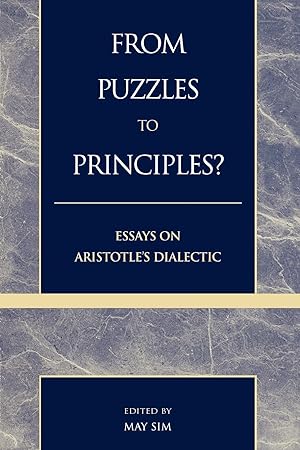
Condition: New. Dieser Artikel ist ein Print on Demand Artikel und wird nach Ihrer Bestellung fuer Sie gedruckt. A discussion of whether Aristotle was a dialectic thinker. May Sim gathers together experts to offer a variety of interpretative possibilities. The contributors include Allan Back, J.D.G. Evans, Michael Ferejohn, Eugene Garver, Lenn E. Goodman and Martha Hu.

