Scott Reisfield
Scott Reisfield is the grandnephew of Greta Garbo and the author of 'Greta Garbo and the Rise of the Modern Woman'. He grew up knowing Garbo as family, not as a legend, and spent years reconciling the private woman he knew with the public myths that surrounded her.
Educated at the University of Pennsylvania and the University of Michigan, Reisfield spent four decades in business and senior management before returning to Garbo’s story with the time and perspective to approach it critically. His work focuses on Garbo’s cultural impact, her relationship with her audience, and her role in shaping modern ideas of women’s independence.
He lives in Ann Arbor, Michigan.
From the Author:
Most people have a sense of Greta Garbo, even if they know very little about her.
A mystery. A woman who disappeared. A figure defined as much by what she refused as by what she showed.
They’re often drawn to women who didn’t fit neatly into the roles offered to them. Women who guarded their inner lives, resisted easy explanations, and made deliberate choices in a world uncomfortable with that kind of independence.
I grew up knowing Garbo as family, not as an icon. The woman I knew was thoughtful, funny, and nothing like the myths that later surrounded her. That gap between who she was and how she was portrayed stayed with me.
When I began researching her life seriously, I wanted to understand how she thought about her work and the women she knew were watching her. Why she chose certain roles. Why she refused others. And why she ultimately walked away rather than compromise her vision of complex, interesting women.
This book is the result of that search. Not to solve Garbo or preserve a legend, but to see her clearly and in context.
Her story still resonates because the questions she faced remain. About agency. Privacy. Compromise. And knowing when it’s time to walk away.
— Scott
From the Back Cover:
Greta Garbo is remembered as a mystery. A recluse. A legend who walked away.
That story is wrong.
Greta Garbo and the Rise of the Modern Woman reframes one of the most famous figures of the twentieth century as something far more consequential: a woman who helped redefine how women saw themselves at a moment when society was struggling to contain them.
Through meticulous research and access to family letters and private materials, Scott Reisfield shows how Garbo’s naturalistic acting style, deliberate role choices, and refusal to conform made her a cultural touchstone for millions of women navigating the shift from Victorian restraint to modern independence. Her audience was not critics or elites, but working and middle-class women who filled first-run movie theaters and recognized their own lives in Garbo’s performances.
This biography traces Garbo’s rise from working-class Sweden to global stardom, her clashes with studio power and censorship, and her eventual refusal to continue making films that compromised her vision of complex, autonomous women. It dismantles the myth of her withdrawal and replaces it with a portrait of intention, resistance, and control.
Garbo did not disappear. She drew a line.
This is the story of how one woman’s choices helped change what was possible for women everywhere.
Advance Praise for Greta Garbo and the Rise of the Modern Woman
Bookshelves groan under the weight of books about Greta Garbo. She has been characterized as, variously, a loner, a sphinx, a depressive, a victim, a lesbian, and essentially unknowable. Those bookshelves can be considerably thinned out, as Scott Reisfield’s biography of his great aunt, based as it is on impeccable research and her own letters, gives us Garbo as a recognizable human being - ambitious, dedicated, sure of her worth, a good friend devoted to her family and her privacy.
Bravo!
Scott Eyman, Author of Joan Crawford: A Woman’s Face.
There have been many books about Greta Garbo, but Scott Reisfield's "Greta Garbo: The Modern Woman" is one of the essential ones, and for several reasons. Reisfield places her in the context of her time and correctly assesses her cultural impact and influence. He makes a strong case for her as, not only a one-off original, but as a great artist whose operatic vision in combination with her naturalistic truthfulness pointed the way to a new kind of screen acting. And he knew her, a fact whose importance must be emphasized. There are things Reisfield knows about Garbo, just from having been in her presence, that we will never be able to know. But, fortunately, he tells us.
Mick LaSalle, author of Complicated Women: Sex and Power in Pre-Code Hollywood.
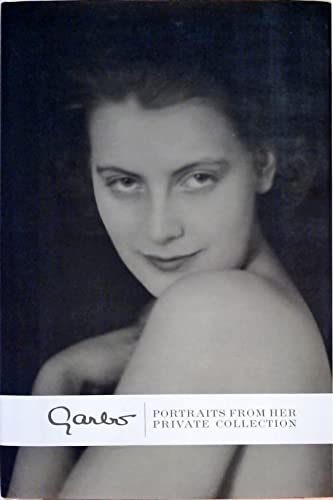
In 2005 Scott Reisfield together with Robert Dance published Garbo: Portraits from Her Private Collection, a fantastic coffee table book with lovely pictures seldom seen. Now Scott Reisfield has written a history of his great-aunt. Informed by research in archives around the world, he has put the pieces together for the final book on “the Divine Woman” – telling the story of both the star and the woman.
Bo Florin, Professor in Cinema Studies Stockholm University
Popular items by Scott Reisfield
View all offers-
Garbo: Her Private Collection of Her Own Portraits
Reisfield, Scott
Item prices starting from
View 26 offers£ 10.70
-
Greta Garbo and the Rise of the Modern Woman
Reisfield, Scott
Item prices starting from
View 50 offers£ 19.12