Thomas D. Pollard MD
Tom Pollard graduated from Pomona College in 1964 with honors in Chemistry and Zoology. At Harvard Medical School he began to investigate cellular motility. After a medical internship at the Massachusetts General Hospital, three years as a Staff Associate at the National Institutes of Health with Edward Korn provided training biochemistry. As a faculty member at Harvard Medical School (1972-1978), Johns Hopkins Medical School (1978-1996), Salk Institute (1996-2001) and Yale University (2001-2021), his research group focused on the molecular basis of cellular motility and cytokinesis.
His laboratory discovered and characterized proteins that produce forces for cells to move including the first unconventional myosin (myosin-I), Arp2/3 complex and capping protein, all originally isolated from Acanthamoeba. They combined microscopy, biochemistry, biophysics, molecular biology and mathematical modeling to provide the quantitative evidence required to formulate and test a detailed molecular explanation for how Arp2/3 complex stimulates the assembly of branched actin filaments that produce forces for cellular movements and endocytosis. They combined quantitative measurements of the time course of the appearance and disappearance of the participating proteins at site of endocytosis in fission yeast with computer simulations of mathematical models to confirm the molecular details and physics of the force-producing process.
The lab discovered myosin-II in the cleavage furrow of Hela cells in 1976, initiating a second line of research on cytokinesis. In the late 1990’s the lab switched to using fission yeast to investigate cytokinesis. They characterized the participating proteins (actin, two isoforms of myosin-II, formin Cdc12, IQGAP Rng2, anillin Mid1p, F-BAR Cdc15, profilin, cofilin and capping protein) and measured the numbers of these proteins over time in the cytokinesis structures of live cells. This work culminated in the first molecularly-explicit mathematical models and computer simulations of the mechanisms that assemble and constrict the cytokinetic contractile ring.
In addition to research and teaching, Pollard chaired his departments at the Johns Hopkins Medical School and Yale, served as President of the Salk Institute for Biological Studies and Dean of the Graduate School at Yale. Pollard served as president of both the American Society for Cell Biology and the Biophysical Society and in leadership positions at the National Academy of Sciences. He retired from the full time Yale faculty in July 2021 and moved to Berkeley, CA, where he is a visiting professor of Molecular and Cell Biology at UC Berkeley.
Pollard's honors include the Gairdner International Award, E.B. Wilson Award from the American Society for Cell Biology and membership in the American Academy of Arts and Sciences, National Academy of Sciences and National Academy of Medicine.
Both of Tom’s children are computational biologists: Katie is a professor at the UCSF/Gladstone Institute; and Dan is a professor at Western Washington University.
Popular items by Thomas D. Pollard MD
View all offers-
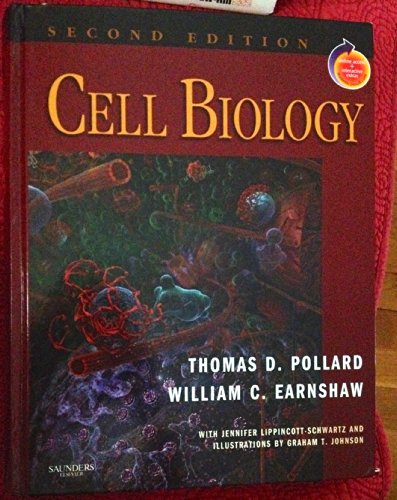
Cell Biology
Pollard MD, Thomas D.; Earnshaw PhD FRS, William C.; Lippincott-Schwartz PhD, Jennifer; Johnson MA PhD CMI, Graham
Item prices starting from
View 9 offers£ 8.37
-
Cell Biology Playing Cards: Cell Biology Playing Cards: Art Card Deck (Single Pack) (Netter Basic Science)
Pollard MD, Thomas D.; Earnshaw PhD FRS, William C.; Johnson MA PhD CMI, Graham; Lippincott-Schwartz PhD, Jennifer
Item prices starting from
View 7 offers£ 14.96
-
Cell Biology
Pollard MD, Thomas D.; Earnshaw PhD FRS, William C.; Lippincott-Schwartz PhD, Jennifer; Johnson MA PhD CMI, Graham
Item prices starting from
View 38 offers£ 53.12
-
Cell Biology Playing Cards: Cell Biology Playing Cards: Art Cards Box of 12 Decks (Bulk) (Netter Basic Science)
Pollard MD, Thomas D.; Earnshaw PhD FRS, William C.; Johnson MA PhD CMI, Graham; Lippincott-Schwartz PhD, Jennifer
Item prices starting from
View 1 offer£ 161.79
Also find
New -
Cell Biology: With Student Consult Access
Pollard, Thomas D.; Earnshaw, William C.; Lippincott-Schwartz, Jennifer
Item prices starting from
View 38 offers£ 5.65