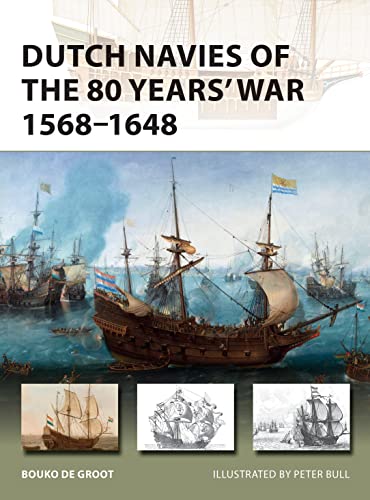
Bouko de Groot
I've received a BA in Art History and an MA in Egyptology, served in the Royal (Dutch) Army, and been a journalist in Shanghai for UK and US publishers, and in the Netherlands for Dutch publishers. Merging all those skills - research of art and history, study of manuscripts, the military, writing - has made me a military history author.
The extensive Bibliography and the Addenda & Errata file can be found on the site 80yw dot org, which forwards to an FB group. With members there I've meticulously researched and then recreated many banners of the long war and put those in the group.
My research is thorough and to the point: apart from dissecting all the latest academic titles, I go back to the original sources - Dutch, English, French, German, Spanish, Italian, Latin - and find confirmation in contemporary works - memoirs, manuals, histories and art. That is how I've managed to find the proper location of the battle of Worringen (1288), how I've explained from the data why the German air force held out so long in WW1 (and along the way dispelled some myths).
It is also how I've uncovered the dedicated skirmisher corps, lightweight infantry guns, and 48-pounder broadsides invented and introduced by Maurice of Orange during the 80 Years' War in The Netherlands (1568-1648). It's how I've properly defined the true military revolution of that period: Maurice of Orange's introduction of drill (drill is quite unlike exercise, McNeill's "Keeping Together in Time" explains it very well). The military revolution of Maurice was the main cause of the global transformation into the western world we now live in. None of these major developments have been mentioned or their importance noticed by military historians of the past century (including e.g 't Hart, Van der Hoeven and Van Nimwegen).
I cannot comment on reviews, but if you visit the FB group mentioned above, you can comment, discuss, ask, share, and learn. If it had been asked there for example, I could have explained that the simple countermarch that some think was a Maurician reform, actually wasn't anything new in 1600. But it also wasn't a Spanish or Japanese sixteenth century invention as some claim (it's actually at least as old as the days of the crossbow volleys of the late middle ages). Maurice however, did introduce a wholly new type of countermarch, a faster method that maintained the unit's order (the simple countermarch severely disorders the unit). That important new version, which led to platoon fire of later fame, was merely a result of the new possibilities that his revolutionary introduction of drill presented.
I explain this new countermarch with a clear diagram in my fourth book about the 80 Years' War, which looks at the pivotal battle of this military revolution: "Nieuwpoort 1600, The First modern battle". In it I also explain other interesting details that readers asked me to clarify, for example why Maurice settled on ten ranks for his infantry units, and why calivers continued to be used even though more powerful muskets were readily available.
The job isn't quite done yet, so currently I'm (very) slowly working on 'the ultimate military history atlas of the Eighty Years' War'.
Popular items by Bouko de Groot
View all offers-
Dutch Armies of the 80 Years’ War 1568–1648 (2): Cavalry, Artillery & Engineers (Men-at-Arms)
Groot, Bouko De
Item prices starting from
View 15 offers£ 6.22
-
Dutch Navies of the 80 Years' War 1568–1648: 263 (New Vanguard)
Groot, Bouko De
Item prices starting from
View 25 offers£ 4.86
-
Dutch Armies of the 80 Years’ War 1568–1648 (1): Infantry (Men-at-Arms)
Groot, Bouko De
Item prices starting from
View 17 offers£ 10.66
-
Nieuwpoort 1600: The First Modern Battle: 334 (Campaign)
Groot, Bouko De
Item prices starting from
View 14 offers£ 12.50