Allan Spiegler
Allan is retired social worker who has been a child welfare supervisor, therapist, and consultant. He grew up in the towns of Des Plaines and Mount Prospect, Illinois. He graduated from the University of Illinois with a bachelor's degree in psychology and earned university honors. Allan earned two master's degrees, one in theology and one in social work. He co-authored an article in the publication "Children Today" (Jan.-Feb. 1989) on specialized foster family care. His adventures include a year-long hitchhiking trip throughout Europe and Morocco after college. He is married with two adult children and lives with his wife in Tucson, Arizona.
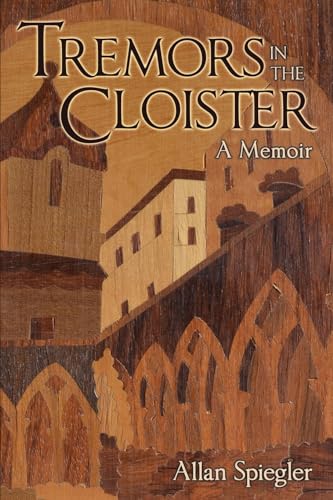
Allan's first book, "Tremors in the Cloister, a heart-warming, true story of the friendship between Allan, a young monk, and Father Julian, a Catholic priest struggling to maintain his quality of life despite the ravages of Parkinson’s disease, was published in July 2015. "Tremors" offers a real-life account into the nature of Parkinson’s disease, the difficulties it creates, and ways of coping with the illness. In 2017 the book won third place in the Arizona Authors Association Literary contest, Published Non-Fiction category.
In March 2017, "Clark Street Whole Foods Baking" was published, which are 100 recipes from his former bakery (specializing in whole grains and non-processed foods) which was on Clark Street in Chicago. The bakery was not your average economic enterprise. Interspersed with the recipes are interesting accounts of the unique individuals and experiences which were part of the bakery. The book was a finalist in the 2018 New Mexico/Arizona Book Awards in the cookbook category.
September 2020 brought forth "If a Store Could Talk...the Spiegler Family Remembers", a story of the author's great-grandparents who began a general store in 1900 in Des Plaines, Illinois. Four generations of the Spiegler family operated it as a department store for 90 years. There are many interesting stories which provide insights into the historical development of the local town center in the United States and its gradual demise in the digital age. The book was a finalist in the Regional Nonfiction: Midwest Category of the 14th Annual National Indie Excellence Awards.
Popular items by Allan Spiegler
View all offers-
-
Clark Street Whole Foods Baking: A collection of much-requested recipes and heart-warming vignettes
Spiegler, Allan
Item prices starting from
View 14 offers£ 14.28
-
If A Store Could Talk...: The Spiegler Family Remembers
Spiegler, Allan
Item prices starting from
View 14 offers£ 18.95