Tom Klobe
Tom Klobe
"A Young American in Iran" is an account of a Peace Corps experience in a remote Iranian village when, under the Shah, Iran was undergoing incredible changes in education, health care, and community development.
"A Young American in Iran" is a tribute to the people in the village of Alang and Iran—to their love and goodness. It strives to capture the essence of life in a specific village and Iran in the mid-1960s. It is also the story of my attempt to understand others and their culture, and of my attendant initial frustrations trying to fit in. Ultimately I realize the depth of my love for the people and for a country in which I was always an outsider. It is an account of growing in a special kind of wisdom that cannot be learned within the context of formal education, of knowing you can be an idealist—always—but that you must have your feet firmly planted on the ground.
The idea of writing about the nearly two years I lived in Alang in northern Iran as a Peace Corps Volunteer in community development never occurred to me until 2011 when I attended an Iran Returned Peace Corps Volunteer reunion in Portland, Oregon. There, I realized my connection to the village and its people was profound and long-lasting. I finally understood the singular importance of my situation. Few other volunteers in Iran had lived in a remote village and thus missed the opportunity to encounter isolation from American norms and experience cultural assimilation to the degree I had. I left the reunion still not aware of the need to document what happened in those years and how it influenced my life. However, before I reached home, my determination to record the story was set.
I grew up on a small farm in an all-white community near Young America, Minnesota. So, in a way, I was a Young American through and through. My parents taught my brother and me to believe in the American ideals of freedom and democracy, in the rights and privileges of being an individual, and, most importantly, that “all men are created equal.”
Life was an endless whirlwind of dizzying dichotomies. We were quiet liberals in a conservative community, staunch Catholics, but from early on I was apprehensive of the clergy. We respected our parents because they deserved our adulation, but they taught us to question authority. We were fiercely independent and proud of it, even if it hurt. “Always do the right thing, no matter how difficult it is,” our parents would tell us.
When we moved to Hawaii in 1959, a year after I finished high school, I could freely live the American ideals my parents had instilled in us. Freed from the American norm, and realizing that democracy thrives on pluralism and diversity, I could now truly be an individual. Foremost, I saw and understood the necessity of equality for all people, and knew I had to work to ensure that all would have the same opportunities. Yet my aptitudes and interests were in art, and I would strive to find ways to mesh my chosen career with my philosophical thought. Iran and the Peace Corps were a diversion, a solidifying element that provided my life with professional, intellectual, emotional, and spiritual depth. To say my adopted country of Iran and the Peace Corps were life-changing cannot adequately describe the significance of both.
Philosophically the people of Alang have been the most important influence on me. I learned from them the importance of the little things in life and that every moment must be cherished. I left Alang realizing that people are of primary importance. I have kept this in mind in everything I do. It is the people I work with in community projects, those in the classroom, and those I do not know who come to see an exhibition I presented who must be considered first. In a sense the Peace Corps experience became a model for my life.
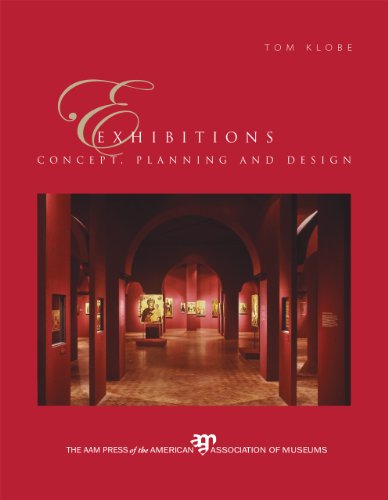
As a Peace Corps Volunteer, I learned the persuasive qualities of quiet leadership that enlightened my 29-year career as Director of the University of Hawaii Art Gallery. I organized and designed over 200 exhibitions, five of which received the prestigious Print Casebooks: Best in Exhibition Design award and authored or edited over 35 publications. My book “Exhibitions: Concept, Planning and Design” was published by the American Association of Museums Press in 2012.
“Exhibitions: Concept, Planning and Design” brings insight and lucid thought to museum exhibition design. It provides extensive advice on the art of exhibition development, while exploring how significant ideas are communicated to museum visitors through exhibit design. Theoretical and interpretive concepts are presented with 50 in-depth, fully illustrated case studies. An excellent textbook for museum training programs at the graduate and undergraduate levels, the book serves also as a valuable guide for working professionals in all types of museums.
Years of planning and designing exhibitions have not diminished the craving for exploration, the challenge of trying the impossible, the willingness to take risks, and the belief that setbacks may be opportunities in disguise. Each exhibition is like a Peace Corps tour of duty—a project that allows me to learn about the world, myself, and others. Each has allowed me to experience again the exultation of discovery that I first experienced as a Peace Corps Volunteer.
I was named a Living Treasure of Hawaii in 2005 and was the recipient of the University of Hawaii Robert W. Clopton Award for Distinguished Community Service in 2003. In 1999 I was honored by the Republic of France as a Chevalier de l’Ordre des Arts et des Lettres for contributions to the arts in France and Hawaii.
Popular items by Tom Klobe
View all offers-
-
Exhibitions – Concept, Planning and Design
Klobe, Tom
Item prices starting from
View 2 offers£ 15.93
Also find
Used