

Joseph Robert Cowles
An introduction to Event Horizon Press titles, by Joseph Robert Cowles
The original blurb I'd posted on this site quite a while ago was extracted from an audio file produced on the spur of the moment. I'd planned to get back to flesh it out soon thereafter. Well, I didn't, and lots of things have happened since then. The bio part I'll leave attached at the end of this writing session. For now I want to bring you up to date regarding our books.
Event Horizon Press has been publishing for twenty-five years, but it wasn’t until September 2011 that we left the antiquarian technologies of book publishing behind and fell in love with the brilliant print-on-demand capabilities of Amazon/CreateSpace, to which another publisher, Deb Coy of Beatlick Press in New Mexico, introduced us. In these last four years we’ve brought out forty titles! (Not quite one per month, but at present we have another couple dozen books in the works, so as a “small press” we’re rolling right along.)
As my chores include editor/publisher as well as author/designer, I feel eligible to sort of skirt around the somewhat embarrassing business of telling you useless things about myself, and will use this opportunity to list our authors and their books.
My wife Barbora and I launched Event Horizon Press in Southern California in the early 1990s with the publication of works by authors Barbara Hauk (“Confetti”); Donna Hilbert (“Deep Red,” “Mansions,” “Two Novellas”, “Waiting For My Baby”); Prince Franz Hohenlohe (“The G.I. Prince”); Marilyn Johnson (“A Necessary Fire”); Gerald Locklin (“A Simpler Time A Simpler Place”,” “Hemingway Colloquium”, “The Firebird Poems”); Lyn Lifshin (“Blue Tattoo”); Jennifer Olds (“Rodeo and the Mimosa Tree”); Hans Raimund (“Verses of a Marriage,” “Viennese Ventriloquies”); Larry Rottmann (“Voices from the Ho Chi Minh Trail”); Joan Jobe Smith (“Jehovah Jukebox”); Gary Tomlinson (“The Funeral,” “Gleaners”); and Fred Voss (“Goodstone”). Somewhere in the mix was one of my own titles, “Third Witness,” and a children’s book by Barbora Holan Cowles, “Why Wasn’t My Teacher in School Today?”
”Two Novellas” brought together Donna Hilbert’s “Waiting” with Gerald Locklin’s “The First Time He Saw Paris.” (Locklin’s “A Simpler Time A Simpler Place” and “Hemingway Colloquium” are now also available on audio disc.) Hans Raimund’s “Verses of a Marriage” was translated from the German by Robert Dassanowsky; his “Viennese Ventriloquies” was translated by David Chorlton.
Whew! What an amazing roster of talented people and their works! (I hope I haven’t forgotten anyone or anything.) You’ll find many of these titles available through Amazon (in short supply and priced quite reasonably, considering that they are now out-of-print collectors’ items).
Titles that have also been reformatted and republished using the exciting CreateSpace technology include Locklin’s “Hemingway Colloquium” and “A Simpler Time A Simpler Place.” (This latter is also a Kindle eBook).
Barb’s “Why wasn’t my teacher in school today” has been enlarged to an 8.5 x 11 trim size and republished through CreateSpace as a bilingual Spanish/English coloring book.
And somewhere in this mix is a work by the late poet/author Gary Lee Tomlinson, “Sometimes I Have These Fears,” which we ope to be able to wrap up and bring to print toward the end of 2016. Gary passed away early in the New Millennium, his nearly finished but unedited book manuscript left to Barb and me for completion and publication. We haven’t forgotten you Gary!
* * *
Meanwhile, our designing, editing and publishing activities include “The Carl Barks Fan Club Pictorial.” It’s a quarterly publication of the international Carl Barks Fan Club, featuring articles and images relating to the amazing worldwide influence on literature, the arts, education and literacy, from the timeless stories and artwork of “The Good Duck Artist.”
For more than seven decades the work of Carl Barks has been translated into every major language, each story published by the millions, and enjoyed by adults and children of all cultures worldwide. The characters Carl created (such as Uncle Scrooge McDuck) have become household names, his stories treasured works of literature. Yet it wasn’t until his retirement in the 1960s that Carl's name was made known to the public, for during the twenty-three years of his comic book career, Carl’s work was presented as that of Walt Disney — specifically, that of The Walt Disney Company.
An American of humble beginnings from rural Oregon, during his lifetime Carl Barks became the single most prolific, most published, most read author and illustrator in history, reportedly with 6,371 pages of duck cartoons (about 50,000 individual drawings) and BILLIONS of copies of his stories in print in all major languages worldwide.
Our ongoing series of beautifully designed and printed CBFC Pictorials explores every aspect of Carl’s work and its continuing global impact, more than one-half century after his retirement from cartooning.
* * *
At the time of this writing we have another two dozen titles in the works, which I’ll be discussing over time. Meanwhile, you’ll find these Event Horizon Press titles and their descriptions presently available through Amazon:
“A Simpler Time A Simpler Place” by Gerald Locklin;
“A Sunday Kind of Love” by David Benjamin
“A Visit to Madame Wu’s” by David W. Cowles
“Behind The Covers” by Ludella Awad
“Billy the Kid Meets His Ghost” by Ray John de Aragón
“Candy City,” by Ray John de Aragón (a bilingual Cuéntame book)
“Cuentos Fabuosos by José Herminio Orlando Vigil
“Exceptional Depravity” by Lloyd Billingsley
“Firestorm” by Capt. Ron Harmon
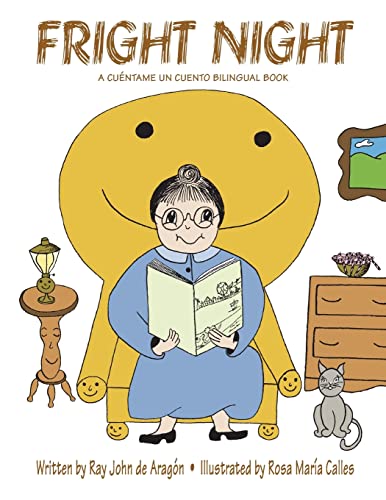
“Fright Night” (a bilingual Cuéntame book) by Ray John de Aragón
“Happy Valley U.S.A.” by J.R. Fisher
“Hemingway Colloquium” by Gerald Locklin
“Hollywood Party” by Lloyd Billingsley (Kindle eBook only)
“L5” by Joseph Robert Cowles
“La Llorona” by Rosalía de Aragón and Rosalinda Pacheco
“Legacy” by Michael Woodworth Fuller
“Mistress of Monterey” by Virginia Stivers-Bartlett
“Recalling Carl” by Joseph Robert Cowles
“Small Island” by Anthony Pignataro
“Somewhere Upriver” by Patrick Loafman
“Stealing Cars with the Pros” by Anthony Pignataro
“The Adventures of J.R. Engels” by James Randall Fisher
“The Barks Fan’s Potpourri” by Joseph Robert Cowles
“The Carl Barks Fan Club Pictorial” — Volumes 1 through 8
“The Common Garden” by Martha Moffett
“The Dead Season” by Anthony Pignataro
“The Shell” by Joseph Robert Cowles
“The Story of Redmanship” by Will E. Cowles
“Three’s a Crowd” by David Benjamin
“Two of Hearts” a screenplay by Deacon-Wren and Sobre-Vega
“Vanished” by Elroy Schwartz
“Video Days” by Nancy Cain
“Why wasn’t my teacher in school today? by Barbora Holan Cowles
You can quickly find many of our titles at Amazon simply by keying in “Joseph Robert Cowles.” Some are also available as Kindle eBooks.
Happy reading!
JRC and BHC
* * *
THE BIOGRAPHY:
I was born at home in a little rented bungalow on Madison Avenue in Culver City California, a block from some motion picture studio that is today owned by Sony. The year was 1941. The date: June 5. I am told my first bath took place in the kitchen sink. I hope they had the courtesy to move the dirty dishes out the way. My brother, David William Cowles, who was seven years my senior, often told the story that he witnessed the event of my birth projected on the wall of his bedroom through a keyhole, in a sort of camera obscura effect. That was his claim. Probably he had his eye glued to the keyhole, and the images he saw were projected on the interior of his cranium.
How long my family lived in Culver City is unknown to me, as we moved around quite a lot in those days, staying at times in Long Beach, North Hollywood, and parts of the San Fernando Valley. Some of my earliest memories are of sitting on the lawn watching Mother uproot dandelions from the dichondra lawn she was growing.
(And that's as far as I managed to get with Dragon Naturally Speaking.) The word dichondra threw it a curve. As it also did my dictionary, the New Oxford American (Third Edition 2101), which I've noticed has lapses here and there. I've begun making note of them, writing the word or term on little sticky notes and affixing them on the page the word should have been, an edge of the note sticking out like a tab. So far, along with "dichondra," I've noted "higher power," "long-sleeved," and "single-most" as missing from this otherwise informative work.
I can understand the absence of dichondra easily enough. It was a popular item back in my infancy days, becoming an attractive lawn that never needed mowing. Evidently, though, as did my mother, it was necessary for folks to spend lots of time on their hands and knees, rooting out the weeds. The dichondra seeds were supposed to be quite valuable, worth their weight in gold, a good reason to grow and maintain a lawn of the stuff if one had the patience and knees for it. Sort of like raising chinchillas or jojoba beans, I suppose. Although I doubt anyone became rich from those fads other than the people who sold the faddists seeds or beans or chinchillas. Remind me to tell you my sad chinchilla story sometime.
But "higher power"? Shouldn't this term be in a modern dictionary? Especially one of 2,016 pages of six-point microscopic type set three columns per page on ultra-thin paper? I find myself constantly praying to a higher power. Are the dictionary folks trying to dissuade me from doing so? Do they know something I don't?
"Long-sleeved" should surely be in the dictionary, don't you agree? I am, as a matter of fact, at the moment wearing a long-sleeved shirt. I find "short-sleeved" in this dictionary, but no "long-sleeved." And "single-most"? I find "single-minded" (also shown as "singleminded"), "single parent," "single-handed" (a.k.a. "singlehanded"), "single malt" (also "single-malt"), but no reference to "single most" (or "single-most or singlemost." This is most distressing, as it's a term I use frequently. Does this mean it's something I've somehow concocted? I hope not, as it's one of my favorite expressions. Not, perhaps, my single-most favorite, but it's pretty high up on the list.
You've noticed that my attempts at reporting biographical information haven't gotten very far. And I skipped from day of birth to maybe 18 months old, sitting on a dichondra lawn. Not the headiest of stuff, I admit. I confess it was my wife, Barb, who put me up to this autobiography business, wanting me to get around to setting up my Author Central page on Amazon. "Our authors are doing it," she admonished me, "and you should, too." What she meant by "our authors" are the writers we've been publishing at Event Horizon Press, which we founded in 1990. Key in my "literary" name, Joseph Robert Cowles, to find many of those works on Amazon. Or, if you're looking for one of our titles in particular, you can probably zip right to it on google. (That's what I did when I wanted to verify the spelling of "dichondra," which wasn't in the NOA.) Google knows everything about anything.
Someone once told me they'd found an online reference to what is one of the earliest books I'd designed and published, from back in 1972 or so: "Spotfin Croaker" by the poet Jeffrey Lu Drake. (Sadly, the late Jeffrey Lu Drake.) It was an interesting experiment in book publishing. A chapbook of Jeff's rather obscure poems, my brush and ink sketches of fishing tackle, an attached cover with a gold-stamped barbed lure, and a dust jacket. (I was in the graphic arts and typesetting business back in those days, so had lots of cool toys to play with.) The lady who mentioned finding the book didn't say how she happened to be googling it, or perhaps googling me, but I tried it and sure enough, there it was. Priced at seven dollars, too. I think that's about double what we sold the books for originally.
For those of you younger than forty, I want you to know that seven dollars went a long way back in 1972. Gasoline was about 27 cents per gallon (and the attendant pumped it for you, cleaned your windshield, checked under the hood for oil and transmission fluid levels, and made sure your tires were properly inflated). The gas pumps only went up to $9.99 and then rolled over to $0.00 again. For six bucks you could fill up the tank and have change left over to buy a round of bottled Cokes for the passengers in your car. (None of that awful corn-syrup-solids stuff in 'em, either.) We only got about fifteen miles to the gallon, but then we didn't have anywhere in particular to go anyway.
This is probably not exactly what Barb had in mind for my Amazon Author Central offering, but I think I'll post it anyway. I'll stop here and get this uploaded, so when Barb returns home from shoplifting I can tell her I've done what she wanted.
Popular items by Joseph Robert Cowles
View all offers-
-
-
La Llorona: Volume 3 (A Cuéntame un Cuento Bilingual Book)
De Aragón, Rosalía; Cowles, Joseph Robert
Item prices starting from
View 3 offers£ 9.52
-
The Carl Barks Fan Club Pictorial: Treasures from the Vault of Kim Weston: Volume 5 (CBFC Pictorial)
Barks, Carl
Item prices starting from
View 1 offer£ 11.42
-
Firestorm: The Homeowner's Guide to Surviving Wildfires
Harmon, Ron
Item prices starting from
View 1 offer£ 8.62
Also find
Used -
-
The Barks Fan's Potpourri: A Medley of Articles from The Carl Barks Fan Club Newsletter
Cowles, Joseph Robert
Item prices starting from
View 5 offers£ 14.42
-
Fright Night: Bilingual Reading: English/Spanish: Volume 1 (Cuéntame un Cuento)
De Aragón, Ray John
Item prices starting from
View 2 offers£ 13.49
Also find
New


You've viewed 8 of 17 titles