

Jacob Field
Jacob F. Field is a historian and writer. He grew up in South London, completed his undergraduate degree in History at the University of Oxford, and then moved to Newcastle University for his PhD. He completed his doctoral thesis on the Great Fire of London (1666) in 2008. From 2008 to 2012 he worked as a research associate at the University of Cambridge at the Cambridge Group for the History of Population and Social Structure. There, he was part of a research project examining the occupational structure of Britain from 1600 to 1900. In 2012 he moved to New Zealand, where he taught at Massey University and the University of Waikato. In 2016 he returned to England, where he continued at Cambridge, working on a research project looking at the economic history of London, and in 2019 he was elected as a Fellow of the Royal Historical Society. I have also appeared on radio, several podcasts, and television, most recently on France 24 Anglais' coverage of the 75th anniversary of the D-Day landings.
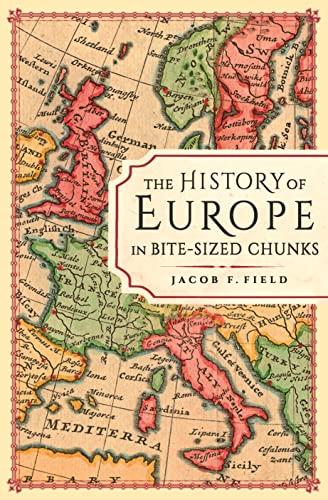
Jacob has contributed to books including 1001 Historical Sites and 1001 Battles That Changed The Course Of History as well as Dorling Kindersley's Women: Our History. His first authored book for a popular audience, One Bloody Thing After Another: The World's Gruesome History, was published in 2012. His other published works include We Shall Fight on the Beaches: The Speeches That Inspired History and D-Day in Numbers: The facts behind Operation Overlord. In 2018 he wrote a title on economics, Is Capitalism Working?, which was published by Thames & Hudson as part of their 'The Big Idea' series. His latest book, The History of Europe in Bite-Sized Chunks, was be published in February 2019 by Michael O'Mara. His next book is entitled The Eccentric Mr Churchill (also published by Michael O'Mara) and will be published in July 2019.
His first academic monograph is about the social and economic impact of the Great Fire of London, entitled London, Londoners and the Great Fire of 1666: Disaster and Recovery, which was published in 2018 by Routledge as part of their Research in Early Modern History series. He has also published articles in journals including Economic History Review, London Journal, Continuity and Change, and Urban History. He is currently working on research into charitable giving in early modern England and property disputes in London after the Great Fire.
Popular items by Jacob Field
View all offers-
Basher Money: How to Save, Spend, and Manage Your Moola!
Field, Jacob
Item prices starting from
View 22 offers£ 3.36
-
-
Is Capitalism Working?: A primer for the 21st century: 1 (The Big Idea)
Field, Jacob
Item prices starting from
View 39 offers£ 4.13
-
Discursos que inspiraron la historia / The Speeches that Inspired History (Clío Crónicas de la Historia)
Field, Jacob
Item prices starting from
View 12 offers£ 13.27
-
-
The History of Europe in Bite-sized Chunks
Field, Jacob F.
Item prices starting from
View 72 offers£ 3.89
-
A Short History of the World in 50 Animals
Field, Jacob F.
Item prices starting from
View 36 offers£ 4.56
-
D-Day in Numbers: The facts behind Operation Overlord
Field, Jacob F.
Item prices starting from
View 8 offers£ 4.96




Showing 8 of 13 titles