Ross J. Wilson
Professor Ross Wilson is Director of Liberal Arts at the University of Nottingham. He holds a BA (Hons) in Archaeology, an MA by Research in Archaeology and History (York, 2004) and a PhD in Archaeology and History (York, 2008). His doctoral thesis examined the experience of British soldiers on the Western Front and the representation of this experience within contemporary politics, media and culture.
My research background is varied, taking approaches from archaeology, anthropology, literature and sociology to examine aspects of modern history and its representation in the present. I have research interests in modern British history and the history of the United States and I have written widely on issues of conflict, consumerism, identity, enslavement, literature, museums, heritage, urbanism, landscapes and material culture.
In 2012, Routledge published my first book, Landscapes of the Western Front: Materiality during the Great War, which provided an anthropologically-informed examination of the British soldiers on the battlefields of France and Flanders during the First World War.
This work then developed into an assessment of how the Great War (1914-1918) is valued and used across contemporary British society. This analysis of cultural history and heritage assesses how individuals and communities use the memory of the conflict to understand current political and social contexts. This work, Cultural Heritage of the Great War in Britain, was published by Ashgate in July 2013.
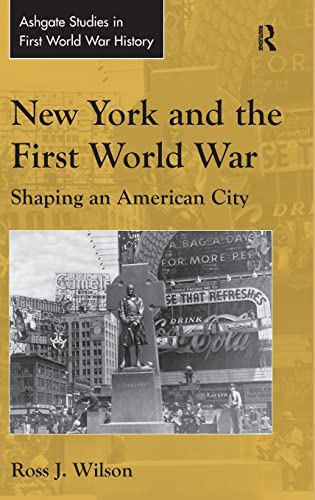
I continued my examination of the experience of the First World War with the 2014 publication with Ashgate, New York and the First World War: shaping an American city. This work examined how the conflict of 1914-1918 had a dramatic effect on the citizens of New York, ensuring that a city of immigrants, which was perceived as a potential threat within the wider United States, was reformed during the war as a metropolis which was dedicated to the principles of the nation.
In conjunction with this research, I have also been involved with the 1807 Commemorated project at the University of York which provided one of the major assessments of the marking of the bicentenary of the abolition of the slave trade in British museums in 2007. This work was published by Routledge in 2011 as Representing Enslavement and Abolition in Museums: Ambiguous Engagements.
My current research examines the history and heritage of health and safety in Britain and the United States, the representation of the First World War in British culture, the history of New York, digital heritage, memory studies and the role of museums and heritage sites as a mode of social and political reform.
Popular items by Ross J. Wilson
View all offers-
Museums and the Act of Witnessing: The Legacy of the Twentieth Century
Wilson, Ross J.
Item prices starting from
View 40 offers£ 40.16
-
Gender and Heritage: Performance, Place and Politics (Key Issues in Cultural Heritage)
Wilson, Ross J.
Item prices starting from
View 36 offers£ 47.49
-
Natural History: Heritage, Place and Politics
Wilson, Ross J.
Item prices starting from
View 39 offers£ 43.71
-
Cultural Heritage of the Great War in Britain (Heritage, Culture and Identity)
Wilson, Ross J.
Item prices starting from
View 37 offers£ 53.69
-
New York and the First World War: Shaping an American City (Routledge Studies in First World War History)
Wilson, Ross J.
Item prices starting from
View 31 offers£ 44.70
-
-
Landscapes of the Western Front: Materiality During the Great War: 15 (Routledge Studies in Modern European History)
Wilson, Ross
Item prices starting from
View 31 offers£ 48.53