Bobbi Sheahan
I am here to tell you the truth about autism. It isn't always pretty, but sometimes it's beautiful. My name is Bobbi Sheahan. My husband, Ben, and I have three children. From the beginning, Grace*, our second-born, was different. Her behavior ranged from quirky to baffling -- and sometimes frightening. When Grace was three, we received confirmation of what we had already figured out through trial and error: Grace has autism. It was because of the three years of "trial and error" that I teamed up with Grace's psychologist, Kathy DeOrnellas, Ph.D., to write "What I Wish I'd Known About Raising a Child With Autism: A Mom and a Psychologist Offer Heartfelt Advice for the First Five Years" (Future Horizons, April 2011). We hope to spare other parents some of the pain, discouragement, and confusion that can accompany the early years of parenting a child who has or may have autism.
The early signs of autism were very confusing to us. When Grace was an infant, she was quiet. So quiet that we began to notice that she didn't babble or make many sounds at all. She didn't cry when you'd expect a baby to cry: not when she got her shots, and not even when she was hurt. Not ever. Not even stitches-to-the-face hurt (twice). She didn't nap, and, as time went by, she made no moves towards speaking or potty training. Frightened by Grace's fearlessness, her ability to defeat childproofing, and her propensity to injure herself, more than one babysitter refused to come back.
Around the age of three, Grace began to speak in precocious bursts: the entire script of a cartoon, complete with voices; her favorite book; all twelve days of Christmas; the whole 23rd Psalm. She didn't make eye contact, and she patrolled the perimeter of the playground instead of playing with other kids. She loved the swings, and she seemed not to understand when she injured other people. Her senses seemed to be completely miscalibrated; her hearing was acute, yet she took an inordinate amount of time to process the speech of others who spoke to her. The not-feeling-pain thing persisted too; I still cringe at the story of the time that Grace grabbed a hot light bulb and didn't respond to the burn, but did cry and cover her ears at my shriek as I pulled her hand from the lamp. Believe it or not, that wasn't the worst light bulb incident; when she was three, Grace ate a light bulb. Well, part of a light bulb. She began eating other things, too, including my anniversary roses.
"Of course it isn't autism," I'd would say. "She's affectionate. Plus, she's a girl - what are the odds?" (More than 80 percent of those diagnosed with autism are male.) A near-tragedy finally moved us to discover Grace's autism. As I read everything that I could get my hands on, I was shocked to realize that a book like "What I Wish I'd Known About Raising a Child With Autism" didn't already exist. I suggested to Dr. DeOrnellas that we write this book to spare other parents some agony, some confusion, and perhaps some lost time and resources.
"What I Wish I'd Known About Raising a Child With Autism" is my third book. My first two books, published by Texas Lawyer Press (a division of American Lawyer Media), are reference books for attorneys. When I left my law practice to turn my full attention to my family and my writing, little did I know where that path would lead. For two decades, I used my writing to persuade courts and educate lawyers, but it was in becoming a mother that I truly found my voice, my inspiration, and my life's work. This book is not only the story of my family's journey of discovery, but my love letter to my daughter and my message of hope for parents.
Contact Bobbi at bobbisheahan@yahoo.com
*I've used pseudonyms for my children's first names to protect their privacy. When I asked my daughter what name she wanted, she suggested "Ariel" and "Snow White," but those names were already taken.
Popular items by Bobbi Sheahan
View all offers-
What I Wish I'd Known About Raising a Child with Autism: A Mom and a Psychologist Offer Heartfelt Guidance for the First Five Years
Sheahan, Bobbi; DeOrnellas, Kathy
Item prices starting from
View 32 offers£ 3.57
-
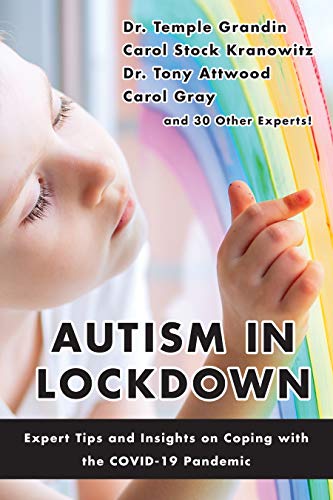
Autism in Lockdown: Expert Tips and Insights on Coping with the COVID-19 Pandemic
Temple Grandin (author)
Item prices starting from
View 15 offers£ 2.03