

James Barlow
Born in Birmingham in 1921, James Barlow spent his early childhood moving around different parts of the potteries and midlands due to his father's job working in a bank. His father retired to Wales, because of ill health caused by his time fighting in the 1914/18 war. When his father died in 1936, Barlow who was 16 at the time, and his family moved back to Birmingham. He spent time at a commercial college and then the Birmingham Corporation Water Department until the war. He joined the RAF where he served as a gunner and gunnery instructor until he was invalided out with tuberculosis. It was during this time in several long stays in a sanatorium, that Barlow began to write. Initially it was aeronautical magazines that he wrote for after a debate on a technical matter with colleagues prompted him to write and submit an article on the subject.
Gradually he started writing articles for other magazines including humorous pieces for Punch. The articles for Punch came about after he had described meeting the family of his soon to be wife, Joyce. He had initially met her when she was 12 years old, before the war. Later on when they met up again, he had to face her seven sisters and four brothers, a daunting prospect for any painfully shy young man. A friend suggested that this would make a good story and Barlow followed his advice, becoming a regular contributor to Punch until there was a change of editor.
Around 1946 Barlow wrote what he later described as a "big sad book" and named it "The Power and the Glory" until he saw the same title by Graham Greene, of whom he had never heard of before. Discarding his own novel, Barlow started writing in earnest whilst employed as a water rates inspector for the Birmingham Corporation Water Board. He described his work as the best training that anyone could have, as it gave him contact with such a variety of people. His first novel 'The Protagonists' was published in 1956, a novel about a murder seen from its three principal character's perspectives. Its early scenes of the heroine Olwen's life in a small Welsh village by the sea drew from his recollections of his adolescence spent in Meliden in Wales and the vivid scenes of the TB sanatorium were drawn from the years he spent fighting TB in a sanatorium. This novel was received with critical success in both the UK and the USA. He wrote a further two novels (The Man with Good Intentions (1958), One Half of the World (1957)) until he hit the big time when The Patriots (1960) was published. This story of 2 paratroopers who had served in Arnhem, but found it difficult to fit back into civvy street after the war, who plan and carry out a train robbery, was a Book Society Choice for 1960. The film rights were bought (although the film was never made due to the great train robbery happening not long after). This success enabled him to leave the water department and work full time as a novelist.
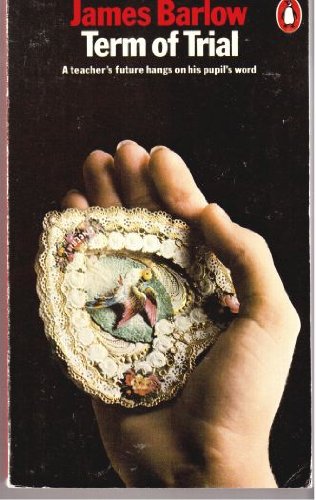
After this success he wrote 'Term of Trial' (1961) which was filmed with Laurence Oliver, Simone Signoret and a host of luminaries making their debut performances in the film ( Sarah Miles and Terence Stamp amongst them). Further novels including 'The Hour of Maximum Danger'(1962), 'This Side of the Sky'(1964), 'One Man in the World'(1966), 'The Burden of Proof'(1968) followed in quick succession.
With the exception of two books, "The Love Chase (which was published under the pseudonym James Forden in the UK in 1967) and "Goodbye England" (1969) a non fiction work which described his reasons for leaving England and going to live in Australia, all his novels were best sellers. Whilst in Australia 'The Burden of Proof' was published. This was later filmed as 'Villain' with Richard Burton and Ian McShane.
He researched and wrote possibly his most successful novel 'Liner'(1970) whilst living in Australia. The research included a 6 week cruise taking most of his family along, and encompassing everything from learning about the technicalities of radar, gyro-pilots, turbines, telegraphs and boilers.
Although he enjoyed living in Australia he brought his family back, settling in Ireland after his sister's husband was killed in a tragic accident. His time in Tasmania produced a book about abortion called 'In all Good Faith' (1971). This was followed up by "Both Your Houses" a Romeo and Juliet type love story set in Belfast in 1971.
His novel 'Black Country', a novel about the build up to a race riot set in Wolverhampton was due to be published in the autumn of 1973 after he died, but the publisher went into receivership and it was therefore not published (although it is at present being edited and will be published for the first time on Kindle in the near future).
James Barlow was working on a novel about a tycoon when he died suddenly on January 30th 1973 at the age of 51. He had many other projects that he planned to write about including a novel about a newspaper magnet, and also one about India, with a visit planned to India in the autumn of 1973.
He was interred a few miles outside of Cork, Eire, leaving a widow and four children.
Print
Popular items by James Barlow
View all offers-
-
-
-
-
-
-
A New Theory, Accounting for the Dip of the Magnetic Needle: Being an Analysis of Terrestrial Magnetism, with a Solution of the Lines of Variation a
Barlow, James
Item prices starting from
View 21 offers£ 15.72
-


Showing 8 of 18 titles