Camden Joy
Camden Joy wrote old-school gonzo rock journalism in the 1990s, primarily about indie and alternative music. He's unique for the emotional wallop of his words, the unusual formats of his projects, and a career-deflating impatience that saw both his multitude of narrative stances along with his eagerness to embrace poorly-distributed indie presses altogether lose any readership.
Joy attained notoriety in the mid-nineties for his New York City postering projects and street manifestos.
Verse Chorus Press published his debut novel in 1998. "The Last Rock Star Book Or Liz Phair: A Rant."
Publisher’s Weekly called it, “a breathless hybrid of fictional autobiography and pop-culture critique.” On Bookslut.com, Michael Schaub wrote, “Joy is a brilliant and original writer who takes more risks per page than most authors do in their entire careers, and it's impossible not to care about his deeply funny, deeply human characters.”
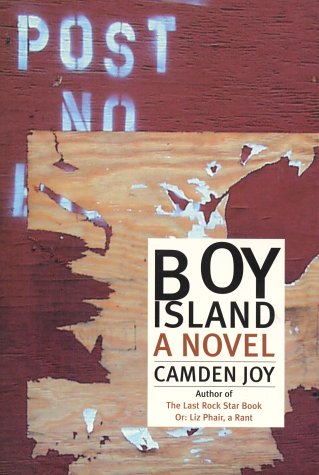
Harper Collins published his second novel in 2000 under its Quill imprint. "Boy Island."
Publisher’s Weekly wrote that Joy, “again proves himself a sharp observer of the contemporary scene... Energetically, if at times sloppily, Joy splashes the band's cross-country odyssey across the landscape of a nation at war and a musical culture in flux.”
In 2001, three new works by Camden Joy were published by Highwater Books: Palm Tree 13, Pan, and Hubcap Diamondstar Halo.
In reviewing the novellas, the Portland Mercury wrote, “Joy is certainly a pioneer in his time.”
In 2002, Joy’s self-published tracts were collected as Lost Joy, which also contains short stories, record reviews, essays, and all of his NYC street posters.
The book was published by TNI Books.
Joy was the pseudonym of American writer and musician Tom Adelman.
Popular items by Camden Joy
View all offers-
-
-
LAST ROCK STAR BOOK, THE: Or: Liz Phair, a Rant
Camden Joy
Item prices starting from
View 27 offers£ 8.54
-