Guy B. Faguet
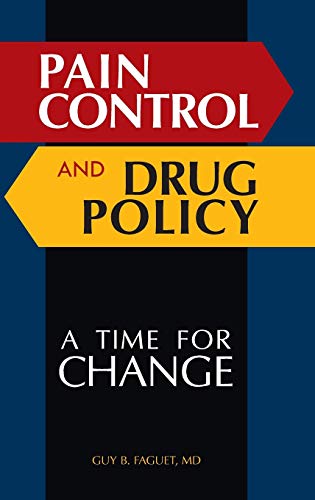
I am a retired clinician-teacher-researcher, a past member of a number of scientific societies, a former grant reviewer and consultant for several national health agencies, and the author and peer reviewer of numerous scientific publications (see www.faguet.net). My 30 year-plus academic career evolved at the Medical College of Georgia (Georgia Regents University) in Augusta, Georgia, and the affiliated VA Medical Center. My bench research was funded by the Department of Veterans Administration through my retirement. I edited two books, one on Hematologic Malignancies (Humana Press 2000), the other on Chronic Lymphocytic Leukemia (Humana Press 2003). Subsequently, I authored five books. In my first book, titled The War on Cancer (Springer 2005), I exposed the near stagnation in the treatment of advanced-stage cancer and its root causes, urged abandoning the failed chemotherapy model that is based on the delusion that high doses of cell-toxic agents can selectively kill cancer cells while sparing their normal counterparts, and proposed a way forward based on proof-of-concept principles. My second book titled Pain Control and Drug Policy (Praeger 2010), was triggered by my observations of the negative impact of drug policy on pain management in the US, and of the devastating consequences of the War on Drugs on the institutions and society of producer countries; especially Colombia producer of 80% of worldwide cocaine and Afghanistan the world's supplier of opium. In it, I urged the repeal of the Control Substances Act, the re-legalization of all illicit drugs, and the dismantling of the DEA. My third book titled, The Affordable Care Act (Algora 2013) offers an objective, factual, and forthright critique of all wanted components of the current American health system; A system driven by the self-interest of caregivers, consumers, insurance and drug companies, malpractice attorneys, and policy makers, none of which are adequately addressed in the Affordable Care Act. My fourth book titled, The Conquest of Cancer (Springer 2014) presents an analysis of the highly complex factors that preclude recent advances in cancer biology and genetics from being translated into progress in the clinical arena, describes major stake holders' interests that impact Oncology practice maintaining the status quo, and proposes a new cancer management paradigm that includes redesigning the search for new cancer agents, restructuring the treatment of advanced-stage cancer, and reviving the art of end-of-life care according to ethical principles of patient care. My fifth book titled, From research to patent care (Kindle, 2023) examines the extent, scope, and impact of the publishing industry’s biased participants, substantiated by an extensive review of the biomedical literature. These documents reveal that, despite remarkable progress made in medical knowledge and patient care over the years, self-serving biases at several levels of the publishing enterprise can have serious consequences on the delivery of effective, safe, and affordable patient care.
Popular items by Guy B. Faguet
View all offers-
The War on Cancer: An Anatomy of Failure, A Blueprint for the Future
Faguet, Guy B.
Item prices starting from
View 14 offers£ 11.38
-
The Affordable Care Act: A Missed Opportunity, A Better Way Forward
Faguet, Guy
Item prices starting from
View 2 offers£ 8.69
-
Pain Control and Drug Policy: A Time for Change
Guy B. Faguet M.D.
Item prices starting from
View 39 offers£ 10.55
-