David Carradine
David Carradine’s lengthy career endeavors span nearly five decades with more than 200 credits in film, television, and theater. As an actor, film director, martial artist, spokesman, artist, writer, and musician, Carradine was most recognized for his legendary role as Kwai Chang Caine, whom he portrayed for three seasons in the television series Kung Fu (1972-1975) and its later series Kung Fu: The Legend Continues (1993-1997). Carradine’s inherent Zen-like quality and dancer’s agility gave him iconoclastic status as a Shaolin monk and he introduced many viewers to Asian marital arts and Chinese Philosophy. He later acquired a revived notoriety for his role in Quentin Tarantino's Kill Bill sagas.
Early Years
David Carradine was born as John Arthur Carradine on December 8, 1936 in Hollywood, California. He went to school at San Francisco State College, where he studied music theory and composition. Carradine followed his father John, who was a star during the golden era of Hollywood, into the family business after discovering his own passion for acting. He then joined a Shakespearean repertory company and started to learn the craft.
After heading to the army for two years, Carradine found work as a commercial artist in New York and later appeared in two Broadway hits The Deputy and The Royal Hunt of the Sun. Accumulating more acting experience, he returned home to Hollywood and landed a role in Kung Fu. This wise career move catapulted him into the public eye for years to come. In his professional career spanning 46 years, Carradine appeared in 200 films, 27 television movies, 32 plays, 35+ guest appearances and 3 television series.
Writer
Carradine was impelled to write about the true nature of the martial arts by his Kung Fu Master Kam Yuen. He wrote and published “The Spirit of Shaolin” in 1991. This book is a heartfelt account of a complex man’s journey into the martial arts as a way of life. Carradine’s genuinely sincere convictions are expressed through an exploration into personal change and growth. His perspective of many traditional teachings is exceptionally uncommon and surprisingly enlightening.
In 1995 Carradine published his autobiography, “Endless Highway”. He said that this took him 8 years to write. This book is an absolutely intriguing and brutally honest portrayal of Carradine’s life and career. In it, he unflinchingly recounts the highs and lows of his life in show business.
Carradine’s, “The Kill Bill Diary: The making of a Tarantino Classic as Seen Through the Eyes of a Screen Legend” was published in 2006. This book captures all the magic of the widely acclaimed Kill Bill films. The actor’s journal takes a close-up look at the filmmaking process and the amazing cast and crew.
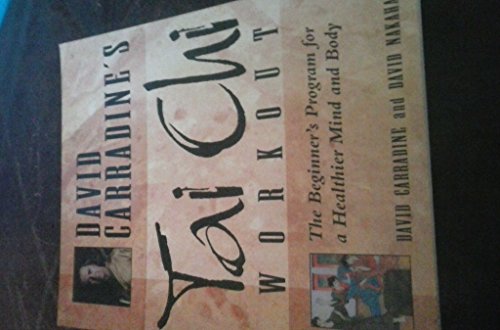
He also co-wrote a couple of books with his longtime friend, David Nakahara, entitled, “David Carradine's Tai Chi Workout: The Beginner's Program for a Healthier Mind and Body” as well as “David Carradine's Introduction to Chi Kung: The Beginner's Program For Physical, Emotional, And Spiritual Well-Being.”
Directing Career
Carradine initially made his directorial debut on three episodes of Kung Fu. During the Kung Fu series, he tried his hand at directing some independent projects of his own. Americana (1983), which took ten years to complete due to financing difficulties. The film featured Carradine in the starring role and several of his friends and family members in supporting roles. It won the People's Choice Award at the Director's Fortnight at Cannes , but failed to achieve critical support and distribution. In addition, he directed You and Me (1972) starring his brothers Robert and Keith, and two unreleased productions: Mata Hari (1978), an epic that starred his daughter, Calista, and a feature length musical called A Country Mile.
Martial Artist
After his stints in the Kung Fu series, Carradine became an avid practitioner of martial arts.
Carradine's portrayal of a Shaolin monk skilled in Kung Fu was so convincingly realistic that it is difficult to believe that he wasn't born a Zen Buddhist. He truly mastered the marital virtues of discipline, restraint, respect, and humility. His mastery of these attributions become his philosophy and reflected spiritual lifestyle.
He later starred in several exercise videos teaching the martial arts of Tai qi and Qi Gong. He was also interested in oriental herbs and philosophy and wrote a personal memoir called Spirit of Shaolin.
Artist
Carradine was a contemporary “Renaissance Man,” he possessed an inborn talent for creativity and became an accomplished artist and sculptor. His artwork was comparable to the proficiency and accomplishments of an expert. As an omnivorous reader of art history, he was influenced by numerous great artists and he mastered a variety of styles and techniques.
In spite of his self-described "color confusion," Carradine actively engaged in artistic endeavors. Truly an innovative "Master of the Arts," he became adept in many aesthetic disciplines: drawing, computer graphics, acting, dancing, writing, filmmaking, photography, and music. Several times throughout his life, Carradine was approached by gallery owners and museums that wanted to display his masterpieces; however, he modestly declined their offers due to his perpetual evolving and perfectionism as an artist.
Music Career
In his early years, Carradine studied musical theory and composition at San Francisco State College. Later on in his life he started writing and composing his music. To date, he has written and recorded over 60 original tunes, including the score for the movie Mata Hari.
A proven talent on the piano, and equally adept with guitar, flute, clarinet, saxophone, drums and the sitar, his musical talents were often integrated into his screen performances.
Popular items by David Carradine
View all offers-
David Carradine's Tai Chi Workout: The Beginner's Program for a Healthier Mind and Body
Carradine, David; Nakahara, David
Item prices starting from
View 24 offers£ 4.28
-
-
-
David Carradine's Introduction to Chi Kung: The Beginner's Program for Physical, Emotional, and Spiritual Well-Being
Carradine, David; Nakahara, David
Item prices starting from
View 13 offers£ 3.87
-
The Kill Bill Diary: The Making Of A Tarantino Classic As Seen Through The Eyes Of A Screen Legend
Carradine, David
Item prices starting from
View 22 offers£ 5.30