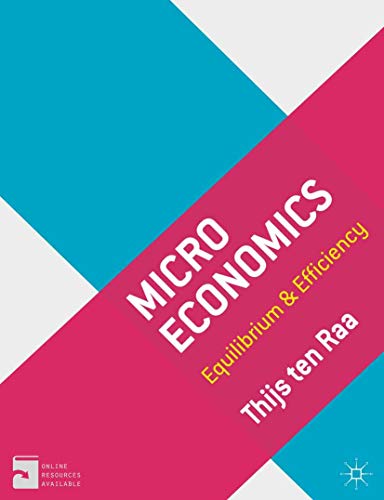
Thijs ten Raa
Thijs ten Raa, Ph.D. (A Theory of Value and Industry Structure, Baumol, NYU, 1981) has published a dozen books and over a hundred articles. His input-output work has been incorporated in the U.N. System of National Accounts. (Klein: 'Thijs ten Raa has taken the established system of economic analysis imbedded in input-output analysis and shown how it underlies the wide body of thought in the whole of the economy's supply side and production activities, both theoretical and applied, in a masterly treatment.') With Ed Wolff he has solved the productivity paradox by imputing back spillovers and showing that computers were the engine of growth early on. He has recently decomposed market power in labor and capital components and revealed their opposite performance effects (negative and positive, respectively). He has shown that discrete choice with large samples yields the best outcome, randomization or the logit model, with the respective domains of attraction different than in extreme value theory. He has resurrected Lindahl prices by showing that they are the limit of the core of an economy under a condition on the nature of public goods. Varian commented on his The Economics of Benchmarking: 'Anyone interested in performance evaluation will want to read this book.' Currently he develops an efficiency measure for the organization of an industry. He applies the principles of international trade to analyze how emission standards can be met without technical change. He analyzes the national accounts of the Dutch Golden Age, measuring entrepreneurship. His micro-economic textbook, Microeconomics: Equilibrium and Efficiency, appeared in 2013. He drafted the first plan for CentER, negotiated its launch with the Ministry of Education, chaired the economics committee of NWO, and shared the Wassily Leontief Centennial Medal with Professors Klein and Solow.
Popular items by Thijs ten Raa
View all offers-
The Economics of Benchmarking: Measuring Performance for Competitive Advantage
Thijs Ten Raa
Item prices starting from
View 17 offers£ 5.02
-
The Economics of Input-Output Analysis
Raa, Thijs Ten
Item prices starting from
View 33 offers£ 13.05
-
Microeconomics: Equilibrium and Efficiency
Thijs Ten Raa
Item prices starting from
View 40 offers£ 31.01
-
Structural Economics (Routledge Frontiers of Political Economy)
Ten Raa, Thijs
Item prices starting from
View 35 offers£ 36.93
-
Shaking up Measures of Consumer Economic Well-being
Ten Raa, Thijs
Item prices starting from
View 13 offers£ 45.03
-
Productivity Growth: Industries, Spillovers and Economic Performance
Ten Raa, Thijs; Wolff, Edward N.
Item prices starting from
View 14 offers£ 150.83
-
INPUT-OUTPUT ECONOMICS: THEORY AND APPLICATIONS - FEATURING ASIAN ECONOMIES: THEO.& APPLN FEATURING
TEN RAA THIJS
Item prices starting from
View 12 offers£ 81.08
-
Efficiency And Input-Output Analyses: Theory And Applications
Ten Raa Thijs
Item prices starting from
View 18 offers£ 99.04