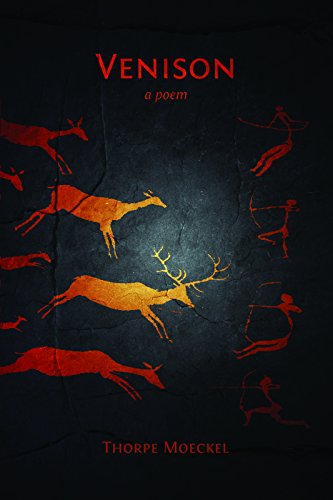
Thorpe Moeckel
Thorpe Moeckel was raised in Atlanta, Georgia. He spent his late teens and early twenties leading trips on rivers and trails throughout the Appalachians (mostly and most adoringly, the Chattooga). He earned a B.A. in English and Environmental Studies from Bowdoin College in 1994 and an MFA in Creative Writing from University of Virginia in 2002, where he was a Henry Hoyns and Jacob K. Javits Fellow. Along the way, he worked in construction, restaurants, outdoor education, adventure-based counseling, farming, and taught at UVA, UNC, Durham Tech, Alamance Community College. Since 2005, he has taught at Hollins University, and he loves to explore the good woods, creeks, and ridges around Roanoke, Virginia, both in writing and with family and friends in real time.
His first book of poems, Odd Botany, won the Gerald Cable Book Award in 2000, as well as the George Garrett Award for New Writing from the Fellowship of Southern Writers. In subsequent poetry books, Making a Map of the River, Venison: a poem, Arcadia Road, and According to Sand, Moeckel has continued to explore the sacred and the profane in probing, surprising language and figures that scrape and squirm against easy piety for landscape, nature, family, love, loss, time, and the void.
Moeckel's work also includes a middle grade novel, True as True Can Be, and the nonfiction/hydrid books Watershed Days: Adventures (a Little Thorny & Familiar) in the Home Range; Down by the Eno, Down by the Haw: A Wonder Almanac; and Closer to Nowhere: Lost & Found in the Lower Canyons of the Rio Grande.
His writings have been widely anthologized and have appeared in many journals and magazines, among them Field, Open City, The Antioch Review, Poetry Daily, Taproot, Orion, Poetry, The Southern Review, and Virginia Quarterly Review.
Over the years, his work has been awarded a Kenan Fellowship at UNC-Chapel Hill, a Sustainable Arts Fellowship, and a National Endowment of the Arts Fellowship.
Popular items by Thorpe Moeckel
View all offers-
Watershed Days: Adventures (a Little Thorny and Familiar) in the Home Range
Thorpe Moeckel (author)
Item prices starting from
View 1 offer£ 8.08
Also find
Used -
-
-
-
-
-
Arcadia Road: A Trilogy
Thorpe Moeckel
Item prices starting from
View 2 offers£ 15.47
Also find
New -
Down by the Eno, Down by the Haw: A Wonder Almanac
Thorpe Moeckel (author)
Item prices starting from
View 7 offers£ 13.99