Peter G. Bourne
Dr Peter G. Bourne is a Visiting Senior Research Fellow at Green Templeton College, University of Oxford, Vice Chancellor Emeritus of St. George's University, Grenada, West Indies, and chairman of the board Medical Education Cooperation with Cuba (MEDICC). He was born in Oxford, England and educated there at the Dragon School. He received his MD from Emory University in Atlanta and an MA in anthropology from Stanford. He was a captain in the US Army assigned to the Walter Reed Army Institute of Research (WRAIR). He spent a year in Viet Nam where he was awarded the Bronze Star, Air Medal and Combat Medics Badge. His studies on the psychological and physiological aspects of stress described in his books, Men, Stress and Viet Nam (Little Brown) and Psychology and Physiology of Stress (Academic Press)are considered classics in the field of psycho-endocrinology.
Early in his career he was a member of the faculty of Emory University Medical School as an assistant professor of psychiatry and of preventive medicine and community health. In that capacity, as well as teaching, he directed a program to rehabilitate arrested alcoholics in the city jail and subsequently founded and directed the first community mental health center in the State of Georgia. In 1971 he was appointed director of the Georgia Narcotics Treatment Program, an agency providing statewide drug abuse treatment services. He worked for then Governor of Georgia, Jimmy Carter and was instrumental in convincing him to run for president of the US. He was a deputy campaign director for Carter's successful 1976 race.
As Special Assistant to the President for Health Issues in the Carter White House he led the fight to get the administration's national health insurance plan through the Congress. He simultaneously held the job of director of the Office of Drug Abuse Policy (ODAP) the position generally referred to as the "drug czar" where he was responsible for coordinating the law enforcment, treatment, and foreign policy aspects of of America's drug policy. He also established for President Carter national commissions on World Hunger and Malnutrition and on mental health. He served as an official emissary of the presidentin negotiations with heads of state or government of several nations and represented the US government on the governing bodies of several UN agencies, including UNDP, WHO, UNICEF, and the UN Cmmission on Narcotic Drugs.
As an Assistant Secretary General at the United Nations he established and ran the "International Drinking Water and Sanitation Decade" (1980-1990) that in ten years rpovided clean drinking water to 500 million people worldwide. In that capacity he launched the global campaign to eradicate dracunculiasis, caused by guinea worm: a program now near to reaching total success. After leaving the UN for the rpvate sector he was partner in Tropica Development Ltd. a company devoted to the creation of business enterprises to improve health and economic development in Third World countries, especially in Africa. He served also as a consultant to and on the boards of several non-profit organizations including, Save the Children, Health and Development International, Global Water, and the American Association for World Health. He has visited more than fifty countries in a professional capacity.
Dr Bourne used his wide network of international contacts to help then-Congressman Bill Richardson to secure the release of prisoners being held in Iraq, Cuba, Bangladesh and other countries.
In 1995 he directed a year-long, foundation-supported study of the impact of the US embargo on Cuba resulting in a report "Denial of Food and Medicine: The Impact of the US Embargo on Cuba". He now chairs Medical Education Cooperation with Cuba (MEDICC) an organization that in the last five years has sent over fifteen hundred USA medical studnets and public health students to Cuba for electives as part of their academic program. The organization also publishes MEDICC Review, the only English language, peer-reviewed journal on Cuban medicine and health care.
As Vice Chancellor of St. George's University, where he had previously been chairman of the psychiatry department, he established a school of veterinary medicine, created a program in public health (giving and MPH), started a multi-disciplinary Institute for Caribbean and International Affairs and created, in collaboration with the University of Plymouth in the UK, a new marine biology program. He expanded the existing medical school and increased its efforts to recruit from developing countries as well as enlarging the college of Arts and Sciences to try to meet the Caribbean educational needs. During his tenure there were students from 80 countries. He also established on campus the Shell Cricket Academy a key training facility for the future of West Indian cricket.
He currently divides his time between Washington, D.C., Green Templeton College at Oxford University and his farm in Wales where he has 75 llamas and a half dozen bison.
He is married to Dr Mary E. King, professor of Peace and Conflict studies of the University for Peace, and a fellow of the Rothermere American Institute and of Mansfield Collgee at the University of Oxford.
For more see www.petergbourne.co.uk
Popular items by Peter G. Bourne
View all offers-
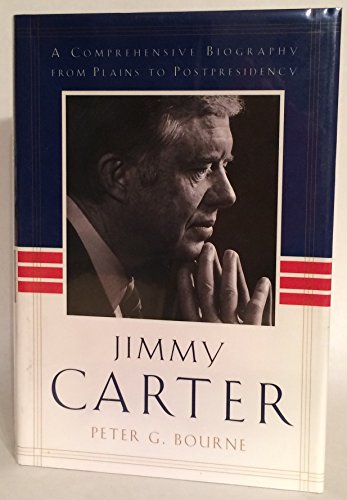
Jimmy Carter: A Comprehensive Biography from Plains to Post-Presidency
Bourne, Peter G.
Item prices starting from
View 28 offers£ 3.74
-