Anthony B. Wolbarst
Anthony Brinton Wolbarst
I attended Trinity College in Hartford, and then received a PhD in solid state physics from Dartmouth with a thesis on magnetic resonance studies of point defects in crystals. After continuing that work in the US and in Johannesburg for a few years, and then doing an NIH Postdoctoral Fellowship in medical physics at Tufts Medical Center, I was on the faculty of Harvard Medical School for three years, and then moved to the National Cancer Institute of the National Institutes of Health in D.C. While at Harvard and NCI, I developed a probabilistic approach (the Complication Probability Function) for assessing the effects of high doses of radiation on healthy tissues, to be used in radiotherapy treatment planning. I am certified by the American Board of Radiology in the three fields of radiological physics (diagnostic radiological physics, medical nuclear physics, and therapeutic radiological physics), and am Past President of the Mid-Atlantic Chapter of the American Association of Physicists in Medicine (AAPM).
After NIH, I joined the Environmental Protection Agency, where I led the group that provided the scientific/ technical analysis (mainly environmental pathway modeling – if some bad stuff is spilled here, how many people will suffer a cancer over time because of it) in support of the EPA’s development of national standards for the cleanup of sites contaminated with radioactivity (such as commercial nuclear power plants, and the DOE’s nuclear weapons production facilities). A highlight of that career was the year I spent as a LEGIS Fellow on the staff of the Senate Governmental Affairs Committee, chaired by Sen. John Glenn, who really impressed me. I was editor of Environment in Peril, Smithsonian Press (1991), which was based on a program of seminars I established that brought Jacques Cousteau, John Kenneth Galbraith, Jane Goodall, Ralph Nader, Carl Sagan, Ted Turner, and others to EPA (at no cost to tax-payers) to tell us what they considered to be the most important of environmental problems. The second volume in this series, Solutions for an Environment in Peril, was published by the Johns Hopkins University Press in 2001. During the stint at EPA, I was also an Adjunct Associate Professor in the radiation therapy department at Georgetown Medical School, and I returned to NIH for a year in there somewhere as a Program Director at the National Institute for Biomedical Imaging and Bioengineering (NIBIB).
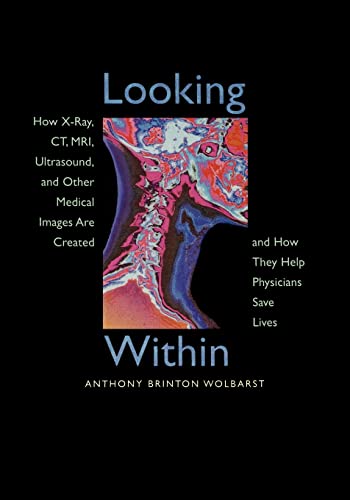
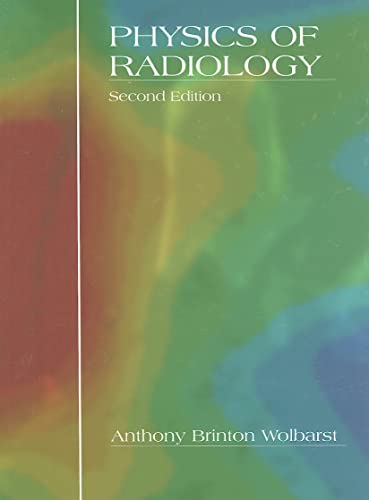
I been sole or lead author of over thirty peer-reviewed papers in medical, environmental, and solid state physics journals, and of more than a dozen Federal reports and chapters in books. I have written two textbooks, Symmetry and Quantum Systems: An Introduction to Group Representations (Van Nostrand Reinhold), and Physics of Radiology (Simon and Schuster; Second Edition 2005), both of which got nice reviews; hopefully there will be a 3rd edition by 2015. My book for the general public, Looking Within: How X-ray, CT, MRI, Ultrasound, and Other Medical Images Are Created, and How They Help Physicians Save Lives, was published by the University of California Press in 1999, and it did, too. Bill Hendee and I are founding editors of an ongoing biennial series of review books entitled Advances in Medical Physics, Medical Physics Publishing, publisher for the AAPM, the third volume of which appeared in June 2010.
I retired from government in 2007, and joined the University of Kentucky College Departments of Diagnostic Radiology and Radiation Science, where my lovely wife (a computer person from Xi’an, China), 15-year-old (i.e., a teen-ager) daughter, and I live on a beautiful farm 15 miles from Lexington.
Popular items by Anthony B. Wolbarst
View all offers-
-
Medical Imaging: Essentials for Physicians
Wolbarst, Anthony B.; Capasso, Patrizio; Wyant, Andrew R.
Item prices starting from
View 19 offers£ 69.30
-
Looking Within: How X-Ray, CT, MRI, Ultrasound, and Other Medical Images Are Created, and How They Help Physicians Save Lives
Wolbarst, Anthony Brinton Brinton
Item prices starting from
View 37 offers£ 5.01
-