

Charles K. Wilber
I received my B.B.A.(1957) and M.S.(1960) from the University of Portland and my Ph.D(1966) from the University of Maryland. I worked in public accounting and received my CPA certificate from the state of Oregon (1959). I taught at Multnomah College, Portland, Oregon (1958-60): Catholic University, Ponce, Puerto Rico (1960-61); Trinity College, Washington, D.C. (1961-64); The American University, Washington, D.C. (1964-75); and since 1975 at the University of Notre Dame. I was Chair of the Economics Department from 1975 to 1984. I was a consultant to the Peace Corps, Interamerican Development Bank, George Meany Center for Labor Studies, and the United States Bishops' Committee on Catholic Social Thought and the U.S. Economy. Over the past 10 years at the Kroc Institute I have been, at different times, Acting Director, Director of Graduate Studies, and Counselor to the Director. In 2003 I was president of the Association for Social Economics. My major research areas are economic development, economic ethics, and economic methodology.
Beyond the professional world I have been active in social concerns: 1958-60 Member of NAACP; 1960-61 Lay Missionary, Ponce, Puerto Rico; 1962-65 Member of Congress of Racial Equality (CORE); 1965-68 President, Catholic Interracial Council, Prince George's County, Maryland; 1985-1998 Co-founder and Board member, Holy Family Catholic Worker House, South Bend, Indiana; 1999-2006 Front Desk Volunteer, South Bend Center for the Homeless; 2007-09 Treasurer, Our Lady of the Road Cafe and Drop-in Center.
I have published over 100 articles and reviews in both professional journals and more popular venues-- Review of Social Economy, Journal of Economic Issues, World Development, Soviet Studies, Eastern Economic Review, Religious Studies Review, Commonweal, New Oxford Review, Salt, National Catholic Reporter, America. He has published a number of books. I authored The Soviet Model and Underdeveloped Countries (University of North Carolina, 1969) and co-authored with Kenneth Jameson An Inquiry into the Poverty of Economics (University of Notre Dame Press, 1983) and Beyond Reaganomics: A Further Inquiry into the Poverty of Economics (University of Notre Dame Press, 1990). I co-edited, also with Jameson, Directions in Economic Development (University of Notre Dame Press, 1979), Religious Values and Development (Pergamon Press, 1980), Socialist Models of Development (Pergamon Press, 1982), and The Political Economy of Development and Underdevelopment, 6th ed. (McGraw-Hill, 1996). I also edited, with Mary Evelyn Jegan, Growth with Equity: Essays on Economic Development (Paulist Press, 1979); with Richard D. Coe, Capitalism and Democracy: Schumpeter Revisited (University of Notre Dame Press, 1985); and with Amitava Dutt, New Directions in Development Ethics (University of Notre Dame Press, 2010).
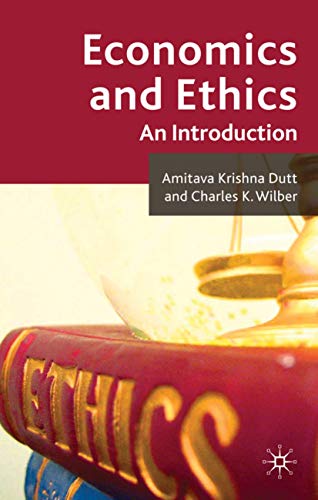
My current research is on moral values and the economy. The first stage was a book of readings, Economics, Ethics and Public Policy, published in January 1998 by Rowman & Littlefield. I have finished, as part of a team, preparing ethics lessons to become part of the high school economics course, funded by a grant from the Templeton Foundation, published as Teaching the Ethical Foundations of Economics (National Council on Economic Education. 2006). The final stage of this research project is a book (with Amitava Dutt), Economics and Ethics: An Introduction, with Palgrave Press (2010) that pulls-together the relations among moral values, economic theory, and economic development and change.
While teaching and researching economics is my vocation, photography is my passion. An amateur is defined as one who does something for the love of it. I am proud to be an amateur photographer. It is relaxing, diverting and exciting when you capture an image you are proud to have made. My book of photographs, Hope and Despair" Moments in Time (Llumina Press, 2009), attempts to uncover the spiritual in everyday life. My approach to photography resides in the use of the camera primarily as a contemplative instrument. I try to photograph the natural, unarranged scenes in real life that provoke thoughtful contemplation, seeking not to alter the scene but to preserve it in my photographs. If successful the photographs need less to be studied than to be contemplated if they are to carry their full impact.
Popular items by Charles K. Wilber
View all offers-
Political Economy of Development and Underdevelopment
Wilber, Charles K.; Jameson, Kenneth P.
Item prices starting from
View 21 offers£ 2.32
-
Beyond Reaganomics: A Further Inquiry into the Poverty of Economics
Wilber, Charles K.; Jameson, Kenneth P
Item prices starting from
View 4 offers£ 3.85
Also find
Used -
THE POLITICAL ECONOMY OF DEVELOPMENT AND UNDEVELOPMENT
Wilber, Charles K
Item prices starting from
View 13 offers£ 4.20
Also find
Used -
Confronting Reality: America's Economic Crisis and Beyond
Wilber, Charles K.; Jameson, Kenneth P
Item prices starting from
View 5 offers£ 9.05
Also find
Used -
Soviet Model and Underdeveloped Countries
Wilber, Charles K.
Item prices starting from
View 18 offers£ 13.89
-
Catholics Spending Faithfully: A Small Group Guide for Living Economic Stewardship
Wilber, Charles K.
Item prices starting from
View 2 offers£ 77.18
Also find
Used -
Was the Good Samaritan a Bad Economist?
Charles K. Wilber
Item prices starting from
View 16 offers£ 103.62
-
Economics and Ethics: An Introduction
Dutt, A.; Wilber, C.
Item prices starting from
View 45 offers£ 2.71



Showing 8 of 14 titles