

Julian Cremona
Although born and growing up in the urban environment of Southampton, Julian Cremona never lost the childhood excitement of nature. Luckily very near to his house was a large valley with a spring so that housing was difficult to build. From the age of 5 this was where nature could be explored from playing with newts, climbing trees, watching birds and catching insects. Collecting was second nature and by the time teenage years arrived the bedroom was filled with large, pinned collections of insects and jars of seashore creatures from the Solent. By the time Julian left for Royal Holloway College, London University, to study zoology his father was questioning the need to kill so many insects. “Why not take photos?”. The ambition now was not just to be an exploring naturalist but a photographer as well. A cheap Russian Zenit camera with ancient lenses and toilet rolls to make extension tubes began the new way of building collections. Technicians in the zoology department showed how to develop film and use their darkroom at night when no one else needed it.
50 years on a few things have changed but the exploring naturalist and photographer is still there. After retirement from the Field Studies Council (FSC) in 2012 as head of Dale Fort Field Centre, Pembrokeshire, there was more time to pursue these with extensive travel in Central America, Madagascar, Namibia and Europe. The collection of worldwide habitats, fauna and flora grows ever bigger. Microscopy had been a huge part of the teenage years and is now a major component of his photography. Invertebrates of every habitat and diversity continue to be at the heart of all exploration. Over decades, different methods have been researched and developed to find ways of photographing the obscure and difficult species without the need to kill them. This particularly relates to small organisms living in water, like tiny flatworms or plankton in the sea.
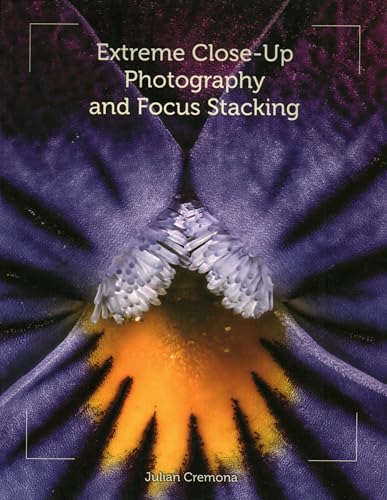
Throughout Julian’s career education has been the essential element, through teaching in schools or working for the FSC. He always enjoys sharing his knowledge both of nature and photography. This continues to be in formal sessions of workshops or visits to schools and colleges; walks for local groups and through online forums. Since 1986 with the publication of the Field Atlas of the Seashore published by Cambridge, writing books has been an enjoyable way of passing on knowledge. Driving Land Rovers and 4x4 vehicles as part of exploration around the world developed a passion and knowledge that he had never particularly recognised until being asked to become a part-time Expeditions Editor for an off-road magazine leading to several editions of the popular Handbook of Off-road Driving with Keith Hart during the 1990s. Not until retirement was there a chance to write more photography books, in particular the need to produce one that did not just stop at macro photography but to go even closer. By this time Julian had been working for more than a decade on techniques to increase the depth of field in photography. It was Crowood Press which offered the opportunity to include Extreme Close-up Photography and Focus Stacking in their series on Art and Techniques. The book continues to sell well as it is quite unique and occasionally is updated on reprints. Beyond Extreme Close-up Photography was written in 2018 as a complement and sequel, taking the subject yet further in terms of magnification and techniques. Both books attempt to demonstrate how you can photograph any organism of whatever size and habitat, in air or water, and to do this whenever possible while it is alive. In this way the collection of living things now reaches many tens of thousands: all on a computer hard drive.
These photographs are used to illustrate books and publications, often through agencies like Shutterstock and Alamy. Most satisfying, though, is to use them in his own seashore books like Seashores - an Ecological Guide or most recently in the co-authored (John Archer-Thomson) book Rocky Seashores published by Bloomsbury.
Privileged to live in the beautiful countryside of Pembrokeshire, exploring nature with a camera continues whether for the gorgeous flowers in the hedgerows, mosses in the hills, seaweeds in the rock pools, birds on the cliff-tops, dragonflies over the streams or flies and beetles living in the seashore strandline. Even in the back garden.
Popular items by Julian Cremona
View all offers-
-
Extreme Close-Up Photography and Focus Stacking
Cremona, Julian
Item prices starting from
View 39 offers£ 4.66
-
A Field Atlas of the Seashore
Cremona, Julian
Item prices starting from
View 9 offers£ 3.81
Also find
Used -
-
Photographic Image Enhancement and Workflow
Cremona, Julian
Item prices starting from
View 1 offer£ 8.36
Also find
Used -
Digital Photography Made Easy: From Camera to Computer
Cremona, Julian
Item prices starting from
View 3 offers£ 8.62
Also find
Used -
Handbook of Off-road Driving
Cremona, Julian; Hart, Keith
Item prices starting from
View 5 offers£ 25.97
Also find
Used -
Seashore Plankton: A Practical Introduction to Biology and Identification
Cremona, Julian
Item prices starting from
View 10 offers£ 31.26



Showing 8 of 9 titles