Johnson M. Hart
I've been in the software industry for many years, but I'll refrain from boring you with entertaining stories about punch cards or obsolete systems I've known. I'm much more interested in current trends.
This long view does, however, make it particularly exciting to witness the arrival of inexpensive, fast, multicore, 64-bit systems, along with operating system support to exploit the hardware. I've anticipated this development for a long time as it makes it possible to tackle large problems, with lots of data, and get great performance. Here's a recent article that talks about some recent results: http://msdn.microsoft.com/en-us/magazine/gg535673.aspx.
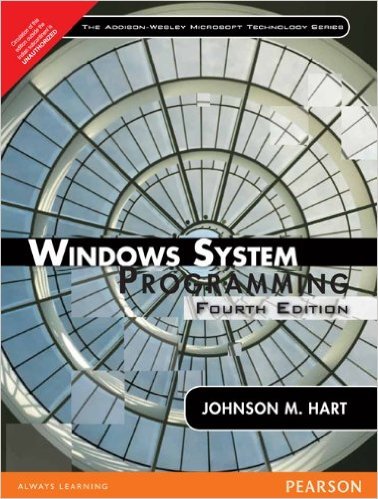
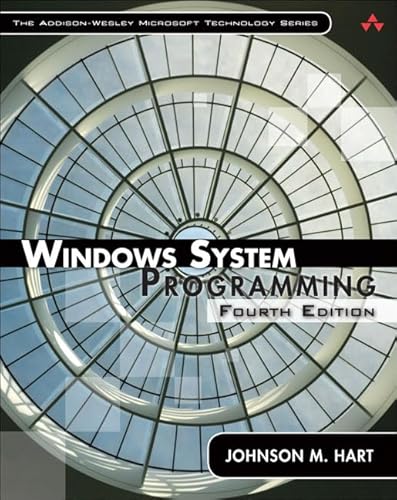
While my book, Windows System Programing Edition 4 ("WSP"), shows some of the possibilities using threads, but the book covers the entire "core" API, exclusive of the GUI. Creating 4 editions over a period of 14 years has been a great experience. In particular, I've enjoyed communicating with readers from around the world. Edition 4 is about twice as long as Edition 1, and I've attempted to double the coverage, accuracy, and every other metric. Will there be a fifth edition? That's hard to tell, and we'll have to see if new developments and Windows evolution warrant another edition in 5 years or so.
Recently, I've been working mostly with .NET 4.0, C#, and PLINQ. Detailed Windows API knowledge really helps to understand how .NET works with Windows and helps to identify performance and reliability issues. Even if you work exclusively with .NET, WSP may be helpful, and a couple of the Amazon reviews make this same point.
I also use Linux and UNIX, generally using C++ but occasionally venturing into Java and other languages. When it's all said and done, I've found that Visual Studio is really a superior development environment, and C# 4.0 has some excellent features.
It's not all work and no play, so I'll add a bit of personal information soon. In the meantime, please feel free to visit my web site; there's all sorts of technical stuff there: www.jmhartsoftware.com.
Popular items by Johnson M. Hart
View all offers-
-
Win32 System Programming
Hart, Johnson M.
Item prices starting from
View 3 offers£ 10.23
Also find
Used -
Windows System Programming 4 ed
Johnson M. Hart
Item prices starting from
View 2 offers£ 9.98
Also find
Used -
Windows System Programming (Addison-Wesley Microsoft Technology Series)
Hart, Johnson M.
Item prices starting from
View 8 offers£ 26.87
-
Client/Server Computing for Technical Professionals: Concepts and Solutions
Hart, Johnson M.; Rosenberg, Barry J.
Item prices starting from
View 7 offers£ 28.69
-
Win32 System Programming: A Windows 2000 Application Developer's Guide (Addison-Wesley Microsoft Technology)
Hart, Johnson; Gary Clarke
Item prices starting from
View 10 offers£ 5.47