Japan. March 11, 2011. 2:46 P.M. The biggest earthquake in Japan's history—and one of the world's five most powerful since 1900—devastated the Tohoku region, 320 kilometers (200 miles) northeast of Tokyo. It triggered a huge tsunami that left crippling damage in its wake. More than 13,000 people drowned, and thousands of buildings and homes were reduced to rubble.
As people assessed the damage, they made the most frightening discovery of all: the Fukushima #1 nuclear power plant was seriously damaged and three of its six reactors were heading for meltdowns. Workers tried desperately—but unsuccessfully—to save them. Explosions and fires released radioactivity into the air. Within days the Japanese government declared a 20-kilometer (12-mile) evacuation zone. The future of the plant, the long-term health of those exposed to radiation, and the effects on the environment remained uncertain.
Learn more about this massive catastrophe as Dr. Fred Bortz examines both the human tragedy and the scientific implications of the nuclear meltdown. Compare this disaster to similar nuclear events in the United States and in Ukraine, and move ahead with Dr. Bortz as he explores the global debate about the future of nuclear power and alternative sources of energy.
"This is a well written book on a difficult topic. The arc of the book starts with introducing what a tsunami is and how it is created by an earthquake. The history of nuclear power is given a quick overview before the nuclear power plant is introduced in the story. The combination of the wave and design of the power plant prove to be a deadly mixture. The accident at the Fukushima reactors is put into historical context with the Three Mile Island accident and the Chernobyl reactor accident. After presenting these ideas in a concise manner that is very suitable for the 5th to 8th grade student, the book moves on to present the future of power consumption in the world. This last part of the book is written with a positive, bias free outlook. Overall this is a well written presentation of a very difficult and complex topic. The young reader will be presented with the background and timeline of the accident and how this accident will affect the world in the future. Meltdown would be a welcome addition to any school or public library."--Science Books & Films
--Journal
"A physicist examines the latest nuclear disaster and its ramifications for the world's energy future. On March 11, 2011, at 2:46 p.m., the biggest earthquake in Japan's history hit the Tohoku region, northeast of Tokyo. A wall of water as high as 128 feet and 110 miles wide surged onto the closest land, damaging or destroying more than 125,000 buildings. Thirty thousand people were killed, injured or missing, and more bad news was to come: Three nuclear reactors were about to undergo meltdowns. Using the disaster as a case study to examine how earthquakes, tsunamis and nuclear reactors work, Bortz offers a clearly written volume, nicely embellished with photographs, maps and diagrams. All lead into the key question: 'Why would any government take the risk of using nuclear power?' In a straightforward, dispassionate tone, he proceeds to answer his own question and lay out the potential of other energy options--hydroelectric, wind, geothermal and solar. Given the catastrophe that spawned this volume, the discussion is curiously non-alarmist, telling young readers that future energy decisions are theirs to make and that wise choices rooted in solid information will be crucial. Regardless of tone, this clear and wide-ranging introduction to essential energy issues has much to offer." --Kirkus Reviews
--Journal
"This is a detailed, comprehensive look at the Fukushima Daiichi nuclear power plant catastrophe that occurred in the spring of 2011. Bortz begins with the earthquake, and takes readers through the tsunami and resulting devastation leading to the world's worst nuclear meltdown and its ultimate impact on world energy. Bortz is meticulous in his detailing of the events, using spectacular photography, charts, and diagrams to aid the reader in understanding the magnitude of this disaster. The text and accompanying data can be overwhelming to the average reader; the book is written for advanced middle schoolers and high school students, and would be a welcome addition to any science teacher's reference shelf." --Library Media Connection
--Journal
"The first chapter head--'Earthquake! Tsunami! Meltdown!'--and frequent use of present-tense narrative cranks up the melodrama in this account of the Great Tohoku Earthquake of March 2011 and the tsunami-triggered meltdowns at the Fukushima nuclear facilities. Bortz surrounds his blow-by-blow description of the catastrophe with an explanation of what causes earthquakes, histories of the discovery of nuclear fission and the growth of the nuclear-power industry, and relatively detailed analyses of the causes and effects of other nuclear disasters. After (arguably) concluding that the still-ongoing disaster is 'much worse than [Three Mile Island] and not as bad as Chernobyl, ' he closes with a pro-nuclear look at alternative energy sources. Maps, charts, color photos of tsunami-wracked landscapes, and a well-maintained update page on the author's website enhance this broadly informative, if not exactly evenhanded, view of the disaster and its lingering effects." --Booklist
--Journal
"Bortz clearly explains the science underlying the 2011 disaster at Japan's Fukushima Daiichi nuclear power plant. After a discussion of earthquakes and tsunamis, the focus shifts to nuclear physics, notorious disasters (including Fukushima), and the debate about the safety of nuclear power and its alternatives. Color diagrams and photographs effectively illustrate the aftermath of the disasters." --The Horn Book Guide
--Journal
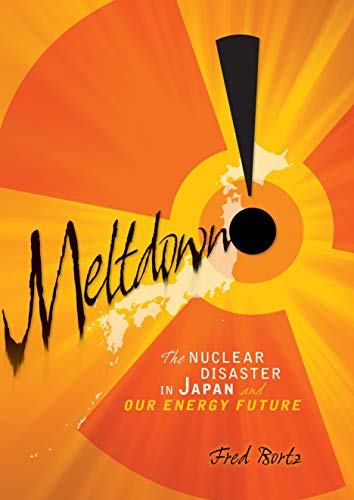
"In this book, the orange-alert color scheme, frequent use of adaptations of the radiation symbol, and abundance of exclamation marks give a first impression of urgency. Soon, though, the reader is able to calm down and realize that this thin book is packed with facts necessary to make informed choices, and there is no need to panic. The subtitle serves as an overview of the book. The recounting of the disaster in Japan is a compelling opening for adiscussion of available energy sources. The step-by-step sequence of events, from earthquake to tsunami to nuclear emergency, leads into the power choices to be made now and in the future, with benefits and drawbacks explored.
Besides the table of contents and index, there is also a brief glossary and a list of source notes organized by page number, but not footnoted in the text. A selected bibliography is included, as well as a further reading booklist and a short list of websites. Free educational resources are available for download at a companion publisher website." --
VOYA--Journal