
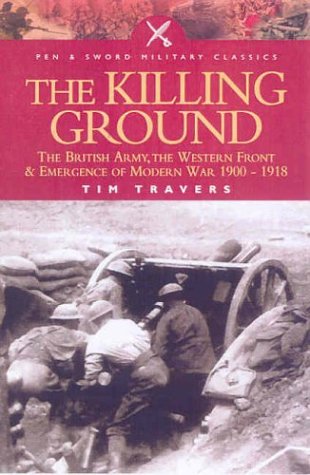

KILLING GROUND: The British Army, the Western Front and Emergence of Modern Warfare 1900-1918 (Pen & Sword Military Classics)
Travers, Tim
ISBN 10: 0850529646 ISBN 13: 9780850529647
Published by Pen and Sword Military, 2003
Used
Hardcover
From
ZBK Books, Carlstadt, NJ, U.S.A.
Seller rating 5 out of 5 stars

AbeBooks Seller since 10 March 2023
This specific item is no longer available.
About this Item
Description:
Fast & Free Shipping â A well-used but reliable copy with all text fully readable. Pages and cover remain intact, though wear such as notes, highlighting, bends, or library marks may be present. Supplemental items like CDs or access codes may not be included. Seller Inventory # ZWV.0850529646.A
Synopsis:
This books explains why the British Army fought the way it did in the First World War. It integrates social and military history and the impact of ideas to tell the story of how the army, especially the senior officers, adapted to the new technological warfare and asks: Was the style of warfare on the Western Front inevitable? Using an extensive range of unpublished diaries, letters, memoirs and Cabinet and War Office files, Professor Travers explains how and why the ideas, tactics and strategies emerged. He emphasises the influence of pre-war social and military attitudes, and examines the early life and career of Sir Douglas Haig. The author's analysis of the preparations for the Battles of the Somme and Passchendaele provide new interpretations of the role of Haig and his GHQ, and he explains the reasons for the unexpected British withdrawal in March 1918. An appendix supplies short biographies of senior British officers. In general, historians of the First World War are in two hostile camps: those who see the futility of lions led by donkeys on the one hand and on the other the apologists for Haig and the conduct of the war. Professor Travers' immensely readable book provides a bridge between the two.
About the Author: Tim Travers is Professor of History at the University of Calgary. He has written widely on British military history and his books include How the War Was Won: Command and Technology in the British Army on the Western Front 1917-1918. His most recent book is Gallipoli 1915.
"About this title" may belong to another edition of this title.
Bibliographic Details
Title: KILLING GROUND: The British Army, the ...
Publisher: Pen and Sword Military
Publication Date: 2003
Binding: Hardcover
Condition: acceptable