From
Kennys Bookshop and Art Galleries Ltd., Galway, GY, Ireland
Seller rating 5 out of 5 stars
AbeBooks Seller since 27 February 2001
Seller Inventory # V9781032842745
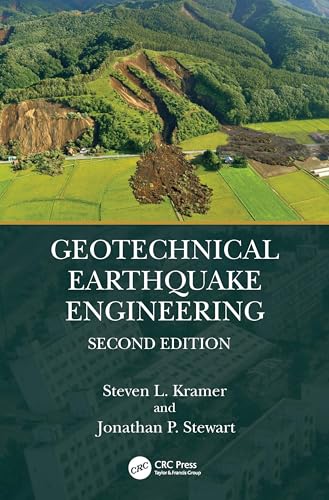
This fully updated second edition provides an introduction to geotechnical earthquake engineering for first-year graduate students in geotechnical or earthquake engineering graduate programs with a level of detail that will also be useful for more advanced students as well as researchers and practitioners. It begins with an introduction to seismology and earthquake ground motions, then presents seismic hazard analysis and performance-based earthquake engineering (PBEE) principles. Dynamic soil properties pertinent to earthquake engineering applications are examined, both to facilitate understanding of soil response to seismic loads and to describe their practical measurement as part of site characterization. These topics are followed by site response and its analysis and soil–structure interaction. Ground failure in the form of soil liquefaction, cyclic softening, surface fault rupture, and seismically induced landslides are also addressed, and the book closes with a chapter on soil improvement and hazard mitigation. The first edition has been widely used around the world by geotechnical engineers as well as many seismologists and structural engineers.
The main text of this book and the four appendices:
About the Author:
Dr. Steven L. Kramer is Professor Emeritus of Civil and Environmental Engineering at the University of Washington. He received his BS, M.Eng., and PhD degrees from U.C. Berkeley. Kramer joined the geotechnical group in the Department of Civil Engineering in 1984. His primary research interests included soil liquefaction, site response analysis, seismic slope stability, and hazard analysis. He has conducted research work in the area of performance-based earthquake engineering, specifically the integration of probabilistic response analyses with probabilistic seismic hazard analyses, and remains active in soil liquefaction research. Kramer has served as a consultant to private firms and government agencies on projects including high-rise structures, bridges, dams, seawalls, levees, underground structures, offshore structures/facilities, and nuclear facilities in the U.S. and abroad. He holds numerous honors and awards, including being elected into the National Academy of Engineering, and being named as a Distinguished Member of ASCE and an Honorary Member of the IAEE.
Dr. Jonathan P. Stewart is a Professor in the Samueli School of Engineering at UCLA. He received his BS, MS, and Ph.D. degrees from U.C. Berkeley. He focuses his research on geotechnical earthquake engineering and engineering seismology, with emphases on seismic soil-structure interaction, earthquake ground-motion characterization, site response, seismic ground failure, and the seismic performance of structural fills and levee embankments. Findings from his research have been widely utilized in engineering practice, including through the National Seismic Hazard Model, produced by the U.S. Geological Survey, and the American Society of Civil Engineers’ guidelines for new and existing structures. He maintains an active consulting practice related to seismic hazard analysis, site response, seismic performance assessment, and geotechnical engineering for private and public agencies world-wide. His work has been recognized with best-paper awards, honorary lectures, teaching awards, and election to the National Academy of Engineering.
Title: Geotechnical Earthquake Engineering
Publisher: CRC Press
Publication Date: 2024
Binding: Hardcover
Condition: New
Edition: 2nd Edition
Seller: Romtrade Corp., STERLING HEIGHTS, MI, U.S.A.
Condition: New. This is a Brand-new US Edition. This Item may be shipped from US or any other country as we have multiple locations worldwide. Seller Inventory # ABNR-276822
Seller: Basi6 International, Irving, TX, U.S.A.
Condition: Brand New. New. US edition. Expediting shipping for all USA and Europe orders excluding PO Box. Excellent Customer Service. Seller Inventory # ABEOCT25-316335
Seller: GreatBookPricesUK, Woodford Green, United Kingdom
Condition: New. Seller Inventory # 47522936-n
Quantity: 10 available
Seller: BuchWeltWeit Ludwig Meier e.K., Bergisch Gladbach, Germany
Buch. Condition: Neu. This item is printed on demand - it takes 3-4 days longer - Neuware -This fully updated second edition provides an introduction to geotechnical earthquake engineering for first-year graduate students in geotechnical or earthquake engineering graduate programs with a level of detail that will also be useful for more advanced students as well as researchers and practitioners. It begins with an introduction to seismology and earthquake ground motions, then presents seismic hazard analysis and performance-based earthquake engineering (PBEE) principles. Dynamic soil properties pertinent to earthquake engineering applications are examined, both to facilitate understanding of soil response to seismic loads and to describe their practical measurement as part of site characterization. These topics are followed by site response and its analysis and soil-structure interaction. Ground failure in the form of soil liquefaction, cyclic softening, surface fault rupture, and seismically induced landslides are also addressed, and the book closes with a chapter on soil improvement and hazard mitigation. The first edition has been widely used around the world by geotechnical engineers as well as many seismologists and structural engineers.The main text of this book and the four appendices:Cover fundamental concepts in applied seismology, geotechnical engineering, and structural dynamicsContain numerous references for further reading, allowing for detailed exploration of background or more advanced materialPresent worked example problems that illustrate the application of key concepts emphasized in the textInclude chapter summaries that emphasize the most important pointsPresent concepts of performance-based earthquake engineering with an emphasis on uncertainty and the types of probabilistic analyses needed to implement PBEE in practicePresent a broad, interdisciplinary narrative, drawing from the fields of seismology, geotechnical engineering, and structural engineering to facilitate holistic understanding of how geotechnical earthquake engineering is applied in seismic hazard and risk analyses and in seismic design 1042 pp. Englisch. Seller Inventory # 9781032842745
Seller: GreatBookPricesUK, Woodford Green, United Kingdom
Condition: As New. Unread book in perfect condition. Seller Inventory # 47522936
Quantity: 10 available
Seller: GreatBookPrices, Columbia, MD, U.S.A.
Condition: New. Seller Inventory # 47522936-n
Seller: GreatBookPrices, Columbia, MD, U.S.A.
Condition: As New. Unread book in perfect condition. Seller Inventory # 47522936
Seller: moluna, Greven, Germany
Condition: New. Dr. Steven L. Kramer is Professor Emeritus of Civil and Environmental Engineering at the University of Washington. He received his BS, M.Eng., and PhD degrees from U.C. Berkeley. Kramer joined the geotechnical group in the Department of Civil Engineering. Seller Inventory # 1477887720
Seller: Majestic Books, Hounslow, United Kingdom
Condition: New. pp. 1060 This item is printed on demand. Seller Inventory # 394449142
Quantity: 3 available
Seller: AHA-BUCH GmbH, Einbeck, Germany
Buch. Condition: Neu. nach der Bestellung gedruckt Neuware - Printed after ordering - This fully updated second edition provides an introduction to geotechnical earthquake engineering for first-year graduate students in geotechnical or earthquake engineering graduate programs with a level of detail that will also be useful for more advanced students as well as researchers and practitioners. It begins with an introduction to seismology and earthquake ground motions, then presents seismic hazard analysis and performance-based earthquake engineering (PBEE) principles. Dynamic soil properties pertinent to earthquake engineering applications are examined, both to facilitate understanding of soil response to seismic loads and to describe their practical measurement as part of site characterization. These topics are followed by site response and its analysis and soil-structure interaction. Ground failure in the form of soil liquefaction, cyclic softening, surface fault rupture, and seismically induced landslides are also addressed, and the book closes with a chapter on soil improvement and hazard mitigation. The first edition has been widely used around the world by geotechnical engineers as well as many seismologists and structural engineers.The main text of this book and the four appendices:Cover fundamental concepts in applied seismology, geotechnical engineering, and structural dynamicsContain numerous references for further reading, allowing for detailed exploration of background or more advanced materialPresent worked example problems that illustrate the application of key concepts emphasized in the textInclude chapter summaries that emphasize the most important pointsPresent concepts of performance-based earthquake engineering with an emphasis on uncertainty and the types of probabilistic analyses needed to implement PBEE in practicePresent a broad, interdisciplinary narrative, drawing from the fields of seismology, geotechnical engineering, and structural engineering to facilitate holistic understanding of how geotechnical earthquake engineering is applied in seismic hazard and risk analyses and in seismic design. Seller Inventory # 9781032842745