
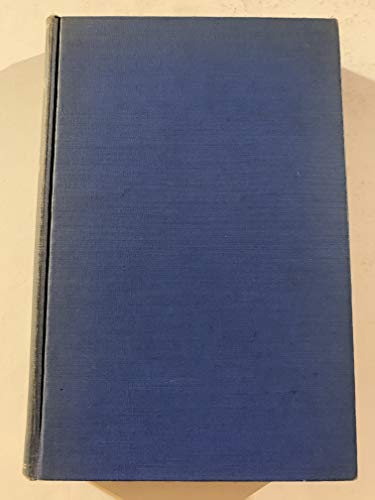
Geometry and the Imagination
D. Hilbert; S. Cohn-Vossen
ISBN 10: 0828400873 ISBN 13: 9780828400879
Published by Chelsea Publishing House, 1952
Used
Hardcover
From
ThriftBooks-Atlanta, AUSTELL, GA, U.S.A.
Seller rating 5 out of 5 stars

AbeBooks Seller since 24 March 2009
This specific item is no longer available.
About this Item
Description:
Missing dust jacket; Pages can have notes/highlighting. Spine may show signs of wear. ~ ThriftBooks: Read More, Spend Less. Seller Inventory # G0828400873I3N01
Synopsis:
This remarkable book has endured as a true masterpiece of mathematical exposition. There are few mathematics books that are still so widely read and continue to have so much to offer - even after more than half a century has passed! The book is overflowing with mathematical ideas, which are always explained clearly and elegantly, and above all, with penetrating insight. It is a joy to read, both for beginners and experienced mathematicians. 'Hilbert and Cohn-Vossen' is full of interesting facts, many of which you wish you had known before. It's also likely that you have heard those facts before, but surely wondered where they could be found. The book begins with examples of the simplest curves and surfaces, including thread constructions of certain quadrics and other surfaces.The chapter on regular systems of points leads to the crystallographic groups and the regular polyhedra in $\mathbb{R}^3$. In this chapter, they also discuss plane lattices. By considering unit lattices, and throwing in a small amount of number theory when necessary, they effortlessly derive Leibniz's series: $\pi/4 = 1 - 1/3 1/5 - 1/7 - \ldots$. In the section on lattices in three and more dimensions, the authors consider sphere-packing problems, including the famous Kepler problem.One of the most remarkable chapters is 'Projective Configurations'. In a short introductory section, Hilbert and Cohn-Vossen give perhaps the most concise and lucid description of why a general geometer would care about projective geometry and why such an ostensibly plain setup is truly rich in structure and ideas. Here, we see regular polyhedra again, from a different perspective. One of the high points of the chapter is the discussion of Schlafli's Double-Six, which leads to the description of the 27 lines on the general smooth cubic surface. As is true throughout the book, the magnificent drawings in this chapter immeasurably help the reader.A particularly intriguing section in the chapter on differential geometry is Eleven Properties of the Sphere. Which eleven properties of such a ubiquitous mathematical object caught their discerning eye and why? Many mathematicians are familiar with the plaster models of surfaces found in many mathematics departments. The book includes pictures of some of the models that are found in the Gottingen collection. Furthermore, the mysterious lines that mark these surfaces are finally explained!The chapter on kinematics includes a nice discussion of linkages and the geometry of configurations of points and rods that are connected and, perhaps, constrained in some way. This topic in geometry has become increasingly important in recent times, especially in applications to robotics. This is another example of a simple situation that leads to a rich geometry. It would be hard to overestimate the continuing influence Hilbert-Cohn-Vossen's book has had on mathematicians of this century. It surely belongs in the 'pantheon' of great mathematics books.
Review:
“This book is a masterpiece – a delightful classic that should never go out of print.”
-- MAA
"About this title" may belong to another edition of this title.
Bibliographic Details
Title: Geometry and the Imagination
Publisher: Chelsea Publishing House
Publication Date: 1952
Binding: Hardcover
Condition: Good
Dust Jacket Condition: No Jacket