CHAPTER 1
FRANK A. RINEHART—OFFICIAL PHOTOGRAPHER
The reason Rinehart left Denver and his association with William Henry Jackson can only be left to conjecture. He had met his wife, Anna, in Denver. She was originally from Milwaukee, so perhaps she wanted to be closer to her family. Or, perhaps, he became aware of the opportunities in Omaha. It was a fortunate move in that he soon became the pre-eminent photographer in the city. He apparently had an affinity for attracting the most prominent persons in the area to having their portraits made. He probably had a good mixture of selling and artistic skills.
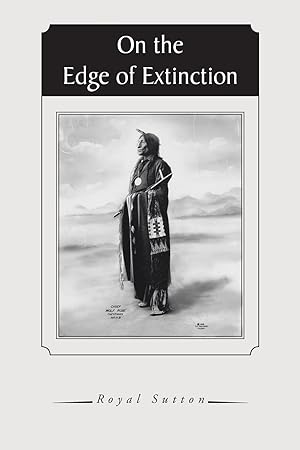
Then came the opportunity of a lifetime, the Trans-Mississippi Exposition. He negotiated a contract whereby he was the official and exclusive photographer. Individual roll film cameras were recently introduced to the public and threatened the exclusivity of Rinehart's work. His contract required that anyone bringing a camera to the Exposition pay a $1.00 fee, half of which went to Rinehart. His duties required that he photograph the progress of the construction of the buildings at the Exposition plus photographing the special events associated with the Exposition. Then, came the crowning event! The Indians living West of the Mississippi were brought in as an "exhibit".
A studio was built on the grounds where Rinehart could photograph the Indians in groups and individually. Much credit has been given to Rinehart's employee, Adolph Muir, Some saying Muir was really the photographer of the Indians. In reality, Muir was the employee of Rinehart and did take some of the photographs but under the direction of Rinehart. When it came to the decisions as to the settings, negotiations with the various Indians plus the marketing and sales of the images, Rinehart was in charge. Muir, no doubt was an able and talented associate, working well with Rinehart, but he cannot be given credit for the success of the project. Later Muir did go on to be a major aide to Edward Curtis on his treks to photograph the Native American Indians in their natural settings. A fascinating book by Timothy Egan, "Short Nights of the Shadow Catcher: The Epic Life & Immortal Photographs" of Edward Curtis wonderfully describes the hard work and dedication, plus the strong desire to help others to understand the Native American people at the time when they were truly on the edge of distinction.
Rinehart was born in Lodi, IL in 1862. According to an article in the Omaha World Herald on April 15, 1976, his original name was Franz Reinehardt. At the age of 16 he left for Denver to seek his fortune. There is evidence he was a photographer for the railroad. Soon after he became associated with Jackson, the prominent Denver photographer. The studio receptionist was a young lady, Anna, who had followed her sister to Denver from Milwaukee. Anna's sister worked as a reporter for the Rocky Mountain Times. Rinehart and Anna were married producing two daughters, Ruth and Helen. Ruth became a teacher, dying of Myocarditis on August 1, 1943. Helen married George Marsden. Helen died on October 23, 1921. One George Steffens became associated with Rinehart in 1917. When Rinehart moved his studio from the Wead Building located on the southwest corner of 18th & Farnam to the Brandeis Department Store at 16th and Douglas about 1936, Steffens was replaced by George Marsden. Rinehart left the business in about 1920. Anna continued the operation in partnership with Marsden. Anna died August 26, 1955, leaving the business in the hands of Marsden. This author continued the business until closing it in the late 1960's.
Fortunately for Rinehart the dry plate was in production and readily available. Not that many years before he had to take a glass plate coating it with collodian, then apply silver nitrate. After that, he could make his exposure, process it through the developer, chemically "fix" the image, thoroughly wash the negative and finally make the print. Now, thanks to the dry plate, the process was substantially shorter but still tedious.
Air conditioning was non-existent. Nebraska summer heat can be oppressive and non stop even at night. Keeping the chemistry at the right temperature was a constant battle. Then, too, the human element in dealing with this heat made for more difficulty in not only doing the physical work but also the everyday relationships to include convincing the Indians to be photographed. The dignitaries had tight schedules to keep and some of the Indians were superstitious about having their images transferred to a photograph. Some Indians had to be bribed. Mrs. Rinehart was the briber. It was said that one of the most effective bribes were marshmallows.
There have been questions as to the costuming of the Indians for the photographs. Some have noticed that an Arapahoe is wearing Souix ornamentations or holding Cheyenne artifacts. Several things account for these discrepancies. Rinehart probably had extra costumes and artifacts available so as to create what he thought would be more interesting photographs. He made little or no effort for authenticity. Secondly, there was a great deal of trading among the tribes themselves. With all the various tribes in this relatively small area in Omaha, there was plenty of opportunity for trading.
There was no large staff to assist Rinehart outside of Adolph Muir and Mrs. Rinehart. Photographing the Indians, the events staged at the Exposition, the dignitaries who attended, production of prints made available for sale to the public, keeping supplies on hand as well as keeping the management of the Exposition apprised of his progress, there is little doubt it was very physically and emotionally stressful period.
Rinehart had been under contract to the U.S. Bureau of American Ethnology to provide a complete set of the photographs of the Indians. He then copyrighted a different set for his personal use. He realized some income from the sale of the photographs he made of the views of the Exposition, activities and dignitaries.
After the Exposition closed, he made postcards and other prints marketing them in several venues. Additionally, he licensed various companies who used the portraits for calendars and various advertising campaigns. At the 1900 Paris Exposition he exhibited the collection and came away with a gold medal.
Although his physical, emotional and financial conditions declined severely several years later, Rinehart's contribution to the photographic history of this country is huge and we owe him a debt of gratitude and respect.
Rinehart died on December 7, 1928 of "chronic endocartis. Interstitial Nephritis" at the age of 67 years, 10 months and 11 days according a document from the Office of the Superintendent of the Springfield, MA cemetery. He was cremated and his ashes placed in Niche #61 at Forest Lawn Cemetery Chapel in Omaha.
CHAPTER 2
1898—A HISTORICAL PERSPECTIVE
To give some perspective to events that were occurring at the time of the Trans-Mississippi Exposition:
January 1. The City of New York annexed the counties which surrounded it.
Brooklyn, the Bronx, Manhattan, Queens and Staten Island became the five boroughs.
February 1. The first automobile insurance policy written in the United States went to Dr. Truman Martin of Buffalo, NY issued by the Travelers Insurance Co. of Hartford, CT. For liability coverage of $5,000 he paid a premium of $11.25.
February 15. A battleship, the USS Maine, was sent to Havana, Cuba primarily to get the attention of Spain. It was sunk with the loss of 266 lives. The cause of the explosion which sank the Maine has been questioned ever since. Nevertheless, the sinking did offer a reason for the onset of the Spanish-American War.
March 24. Robert Allison of Port Carbon, PA bought the first car produced in America.
June 13. The Yukon Territory was created. Dawson was designated its capitol.
June 15. The U.S. House of Representatives voted to annex Hawaii.
June 18. The first amusement park in the United States was opened in Atlantic City, NJ.
June 21. Guam became a U.S. territory.
July 7. The U.S. took possession of Wake Island as part of a program to create refueling stations to supply the ships crossing the Pacific.
July 13. Marconi patented his radio.
August 16. One Edwin Prescott received a patent on the roller coaster.
Other events of 1898:
H.G. Wells published his "War of the Worlds".
Promoting real estate sales, the Southern Pacific Railroad began publishing Sunset Magazine.
The telephone excise tax was established to help pay for the Spanish-American War. This tax was not repealed until the 21st century. Another example of the all too often pattern of government not giving up on a tax once it starts collecting it.
In the Chesapeake Bay, the first successful submarine named Argonaut First, was sailed by Simon Lake.
Other points of interest regarding 1898:
Bathtubs were found in less than 14% of homes in the United States but yet 18% had at least one servant.
The average wage earner made $200 to $400 per year at the rate of about 22 cents per hour. For instance a veterinarian made $1500 to $4000, a dentist, $2500, an accountant, $2000.
Although sugar cost 4 cents per pound, eggs were 14 cents per dozen and coffee was 15 cents, a telephone call from Denver to New York City would cost nearly $11.00. But less than 8% had a telephone.
Even in 1906, a mere 8 years later, there were only 8,000 cars in the United States with about 144 miles of paved roads. Most cities allowed speed limits of only 10 miles per hour.
Heart disease and stroke were the 4th and 5th leading causes of death while flu and pneumonia, TB and diarrhea were the leading causes of death. Murder only accounted for less than 200 deaths in the entire country. The average life span was about 47 years.
Nearly all babies were born at home. All but 10% of all doctors had no college training. They attended what were called "medical schools" which were roundly criticized not only by the press but also by the government. Two out of 10 adults could neither read nor write and less than 6 percent of all Americans had graduated from High School.
Drug problems? Marijuana, heroin and morphine could be purchased over the counter at the local drug store. Your pharmacist would pronounce that Heroin clears the complexion and gives "buoyancy" to the mind as well as regulating the stomach and the bowels.
CHAPTER 3
OMAHA
In the 1950's a sign was erected in Omaha that read, "Omaha. Where the West Begins and the East Peters Out".
Omaha was and still is a city with visions of grandeur.
Many of those visions have led to actualities. Notable among these was the vision initiated in 1895 at the prodding of Edward Rosewater, the editor of the Omaha Daily Bee newspaper. His vision called for a World's Fair to be called the Trans-Mississippi Exposition. Economic depression gripped the country at the time and a spotlight was needed to show off to the rest of the country, the bounty available in the vast part of the country west of the Mississippi River.
William Jennings Bryan, the great orator, summed it up at the Trans-Mississippi Congress held in Omaha in 1896, "Whereas, we believe that an exposition of all the products, industries and civilizations of the states west of the Mississippi River, made at some central gateway, where the world can behold the capabilities of those great wealth producing states, would be of great value ..."
Why Omaha?
In the 1880's there was a spectacular economic boom in Omaha. Home building and business growth was on the fast track. It was wide and it was deep growth causing many suburban communities to rise on the prairie at the outskirts of the city. A streetcar system provided public transportation thus enhancing this growth.
Economics has always experienced cycles. The boom cycle ended in 1893 perhaps due in part to over expansion and because the economy was agriculturally based, the drought in the area wreaked havoc. As is the case, building ceased, manufacturers relocated out of town thus causing stores to close with jobs and opportunities fading.
Then the pendulum swung back again. As usual, it took hard headed and focused leadership to affect the changes. It takes visionaries who not only can properly assess the assets and further, understand how these assets can be used for growth. Normally this is through the efforts of one person who surrounds himself with like-minded persons with diverse skills. The spokesman was Edward Rosewater, editor of the Omaha Daily Bee newspaper. Rosewater not only had the Daily Bee to promote his ideas, he had outstanding political skills. Add Gordon Wattles, a banker, to arrange financing. Without money, nothing moves and Wattles had the forcefulness and skills needed to raise the money.
In the 1880's the Omaha Bee editorialized that the Omaha business community was a "do-nothing" group. This scolding seemed to light a fire under some people. There began a period of building of meat processing plants, flour mills, breweries and other food processing plants. There was an abundance of commodities needed to supply these facilities. The expansion of the railroads made it possible to distribute the finished goods. Jobbers and wholesalers set up shop. Not only did they sell their goods, they promoted the value of Omaha as a place to do business.
There was no lack of diversions for the Omaha citizenry in the 1890's. Lake Manawa was just across the Missouri River where swimming, boating and fishing were to be had in season. A pavilion was the stage for magic and burlesque shows. The Riverview Zoo was home to some 125 animals to include several buffalo donated by Buffalo Bills Wild West Show. The 10 story New York Life building in downtown Omaha featured an elevator which would carry the curious to the top for a bird's eye view of the city. More refined activity was offered by a major library built in the downtown and the Tuesday Musical Society presented regular concerts.
Wardrobes did not include jeans, shorts, t-shirts or tank tops. Clothing was heavy and dark and required for every occasion. The ladies wore long skirts, underskirts, a cape or a jacket over a full-sleeved blouse. Beneath that were knee length drawers of muslin and a corset required even of girls age 13 and over. Hats were required attire. Tall to the point of adding a full foot to the ladies height, covered with flowers, feathers, ribbons, lace or a combination. A parasol completed the wardrobe.
Two dollars and fifty cents would buy a good suit for the man. It would be dark, heavy and removing the jacket almost never happened. Out of doors, a hat was always worn. Add starched shirts, suspenders and a very stiff collar.
For the home, most furnishings could be bought from the Sears & Roebuck catalog. For $2.93 you could have an icebox. Not a refrigerator, but an icebox. A kitchen stove that burned either coal or wood could be yours for $5.64. Sears could supply a sofa. Need a spittoon for 16 cents. Even denim, bibbed overalls for 35 cents. All this is relative as the average blue collar family earned approximately $40.00 per month.
Street cars, bicycles, walking and the horse provided transportation. Riding the street car cost a nickel. Want to get out of Omaha, the train was available. The economy of Omaha was impacted greatly by the train. Fourteen separate railroads served the Omaha area. Only the wealthier could afford a horse-drawn carriage. Cars would not be available until an electric car was exhibited at the Trans-Mississippi Exposition by Montgomery Ward. In 1899, H.E. Frederickson opened the first dealership but sold only one car.
Growth created suburbs to Omaha. South Omaha became the third largest livestock market in the United States. Immigrants from Germany, Poland, Ireland, Sweden and other European countries supplied the labor. The neighborhoods were "segregated" in that the Polish lived in one area, the Germans in another around the stockyards. Intermarriage was frowned on well into the mid nineteen hundreds although it did happen on occasion. The Union Stockyards were organized by William Paxton to give the industry added strength. Residential suburbs of Benson and Dundee developed to the west and across the Missouri River to the east, Council Bluffs in Iowa, commuters paid 5 cents toll.
Omaha became a destination following the Trans-Mississippi Exposition. Business expanded for hotels, restaurants, saloons and other businesses due to the conventions and meetings being booked in the wake of the Exposition. Omaha was firmly placed on the map