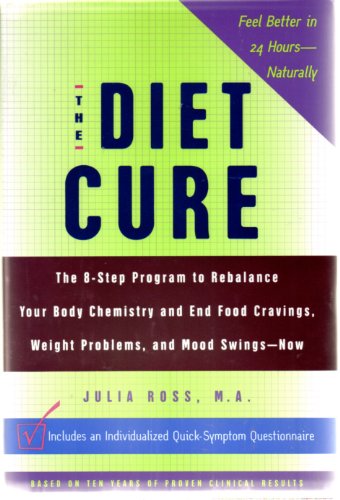
A myth-destroying examination of the actual causes of overeating and weight gain offers an eight-step plan to individualize specific problems and needs, helping to address biochemical imbalances, food allergies, and much more. 50,000 first printing. Tour.
For most health books, the word "cure" in the title is a definite sign to steer clear.
The Diet Cure is a refreshing exception. Author Julia Ross has the unusual job description of "nutritional psychologist", which means that she works with people to eradicate food cravings, addictions, and eating disorders (including overeating). The gist of
The Diet Cure plan is that food allergies, hormonal irregularities, blood sugar swings and thyroid dysfunction, among other factors, cause biochemical imbalances that lead to food addiction and weight gain and that these problems can usually be lessened or eradicated with the proper diet and supplements.
To be sure, most of these health problems ought to be diagnosed by a medical professional, but they often go overlooked because their symptoms can be numerous and vague (fatigue, depression, inability to concentrate). They're not easily diagnosed by the common managed-care tests (such as the TSH, or thyroid stimulating hormone, blood test; Ross advises several more specific tests if a thyroid problem is suspected). Ross's questionnaires, worksheets, and profiles of case studies from her 10 years of clinical experience will enable you to determine what may be the hidden causes that sabotage your weight-loss efforts.
Ross's book should be lauded for its educational tone. She warns of the dangers of zinc and vitamin B1 deficiencies, two common problems found in chronic dieters, along with protein and fat deficiencies and adrenal exhaustion (which is particularly common in caffeine fiends). She rails against the most popular diet books including the Zone, the Atkins Diet, and even Weight Watchers for (among other things) their ignorance of food allergies such as grains, dairy products and sugar. While it might sound downright frightening to be called a sugar addict or a "recreational sugar user", Ross suggests an amino acid and fish oil supplement plan to curb sugar cravings and aid weight loss. Many of her patients over the past decade testify in the book that their environmental allergies and weight loss problems disappeared after they cut sugar from their diets.
Ross's suggestions may seem radical to many primary-care physicians; her approach to health and weight loss definitely takes a holistic approach. She does, however, back up her suggestions and plan with references to medical studies, along with dozens of print and online resources on finding a nutritionist, naturopathic physician, holistic M.D., testing labs (many of them mail-order). It makes very interesting reading for anyone interested in losing weight. -- Amazon.com