
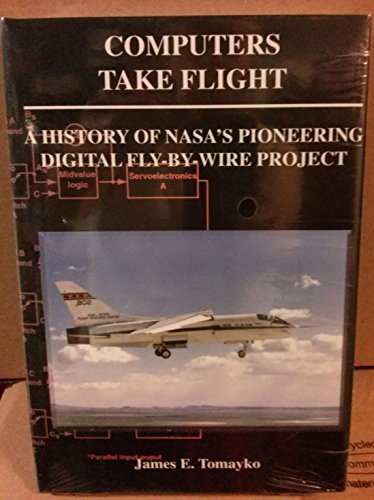
Computers Take Flight: A History of NASA's Pioneering Digital Fly-By-Wire Project (033-000-01220-9)
Tomayko, James E.
ISBN 10: 0160590531 ISBN 13: 9780160590535
Published by United States Govt Printing Of, 2000
Used
hardcover
From
YESIBOOKSTORE, MIAMI, FL, U.S.A.
Seller rating 4 out of 5 stars

AbeBooks Seller since 11 July 2025
This specific item is no longer available.
About this Item
Description:
Seller Inventory # 0160590531-VB
Synopsis:
One hundred years after the Wright brothers’ first powered flight, airplane designers are unshackled from the constraints that they lived with for the first seven decades of flight because of the emergence of digital fly-by-wire (DFBW) technology. New designers seek incredible maneuverability, survivability, efficiency, or special performance through configurations which rely on a DFBW system for stability and controllability. DFBW systems have contributed to major advances in human spaceflight, advanced fighters and bombers, and safe, modern civil transportation. The story of digital fly-by-wire is a story of people, of successes, and of overcoming enormous obstacles and problems. The fundamental concept is relatively simple, but the realization of the concept in hardware and software safe enough for human use confronted the NASA-industry team with enormous challenges. But the team was victorious, and Dr. Tomayko tells the story extremely well. Today, digital fly-by-wire systems are integral to the operation of a great many aircraft. These systems provide numerous advantages over older mechanical arrangements. By replacing cables, linkages, push rods, pull rods, pulleys, and the like with electronic systems, digital fly-by-wire reduces weight, volume, the number of failure modes, friction, and maintenance. It also enables designers to develop and pilots to fly radical new configurations that would be impossible without the digital technology. Digital fly-by-wire aircraft can exhibit more precise and better maneuver control, greater combat survivability, and, for commercial airliners, a smoother ride. The F-8 Digital Fly-By-Wire Project made two significant contributions to the new technology: (1) a solid design base of techniques that work and those that do not, and (2) credible evidence of good flying qualities and the ability of such a system to tolerate real faults and to continue operation without degradation. The narrative of this study captures the intensity of the program in successfully resolving the numerous design challenges and management problems that were encountered. This, in turn, laid the groundwork for leading, not only the U.S., but to a great extent the entire world’s aeronautics community into the new era of digital fly-by-wire flight controls. The book also captures the essence of what NASA is chartered to do—develop and transfer major technologies that will keep the U.S. in a world leadership role as the major supplier of commercial aviation, military, and aerospace vehicles and products. The F-8 project is an example of how advanced technology developed in support of the agency’s space program, in this case the Apollo endeavor, can be successfully transferred to also address the agency’s aeronautics research and development goals, greatly multiplying payoff on taxpayer investments and resources.
"About this title" may belong to another edition of this title.
Bibliographic Details
Title: Computers Take Flight: A History of NASA's ...
Publisher: United States Govt Printing Of
Publication Date: 2000
Binding: hardcover
Condition: As New