

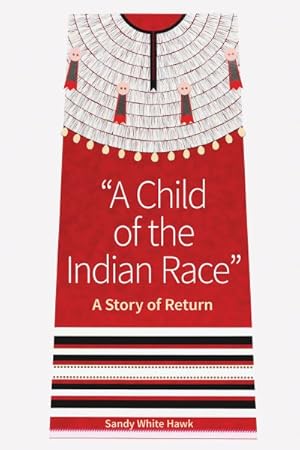
Child of the Indian Race : A Story of Return
Hawk, Sandy White; Elk, Gene Thin (FRW); Cross, Terry (INT)
ISBN 10: 1681342413 ISBN 13: 9781681342412
Published by Minnesota Historical Society Press, 2022
New
Soft cover
From
GreatBookPrices, Columbia, MD, U.S.A.
Seller rating 5 out of 5 stars

AbeBooks Seller since 6 April 2009
This specific item is no longer available.
About this Item
Description:
Seller Inventory # 44548846-n
Synopsis:
An adoptee reconnects with the Lakota family and culture she was born into--and nurtures a new tradition that helps others to do the same.
In the 1950s, when Sandy White Hawk was a toddler, she was taken from her Lakota family on the Rosebud Indian Reservation in South Dakota. Her adoption papers identify her as "a child of the Indian race," and her adoptive mother never let her forget it, telling her she was unwanted and shaming her for being "Indian." White Hawk medicated her traumas with drugs and alcohol. At age twenty-eight, she gained sobriety and reconnected with her birth relatives. As she learned what it means to be Lakota, she also learned that thousands of Native adoptees shared her experience--left to navigate racial and cultural complexities as children, with no way to understand what was happening to them. Mentored by a respected elder, White Hawk began to work with relatives who also had been separated by adoption and foster care, taken away from their families and communities. Fighting through her feelings of inadequacy, she accepted that she could use her voice to advocate. Ultimately, White Hawk founded the First Nations Repatriation Institute, an organization that addresses the post-adoption issues of Native American individuals, families, and communities.White Hawk lectures and presents widely on the issues around adoption. She exposes the myth that adoption is a path to protecting "unwanted children" from "unfit mothers," offering a child a "better chance at life." Rather, adoption, particularly transracial adoption, is layered in complexities. "A Child of the Indian Race" is Sandy White Hawk's story, and it is the story of her life work: helping other adoptees and tribal communities to reconcile the enormous harms caused by widespread removals.
About the Authors:
Sandy White Hawk is a Sicangu Lakota adoptee from the Rosebud Reservation, South Dakota. She is the founder and director of First Nations Repatriation Institute, which offers resources for First Nations people impacted by foster care or adoption to return home, reconnect, and reclaim their identity. White Hawk is the Director of Healing Programs at the National Native American Boarding School Healing Coalition and was formerly an elder-in-residence at the Indian Child Welfare Law Office in Minneapolis. She is the subject of several documentaries, including Blood Memory: A Story of Removal and Return.
Gene Thin Elk (Sicangu Nation) is an internationally known consultant in the area of Indigenous healing methods.
Terry Cross (Seneca Nation) is the founding executive director of the National Indian Child Welfare Association. He is the author of the Heritage and Helping and Positive Indian Parenting curriculum, as well as Cross-Cultural Skills in Indian Child Welfare.
"About this title" may belong to another edition of this title.
Bibliographic Details
Title: Child of the Indian Race : A Story of Return
Publisher: Minnesota Historical Society Press
Publication Date: 2022
Binding: Soft cover
Condition: New