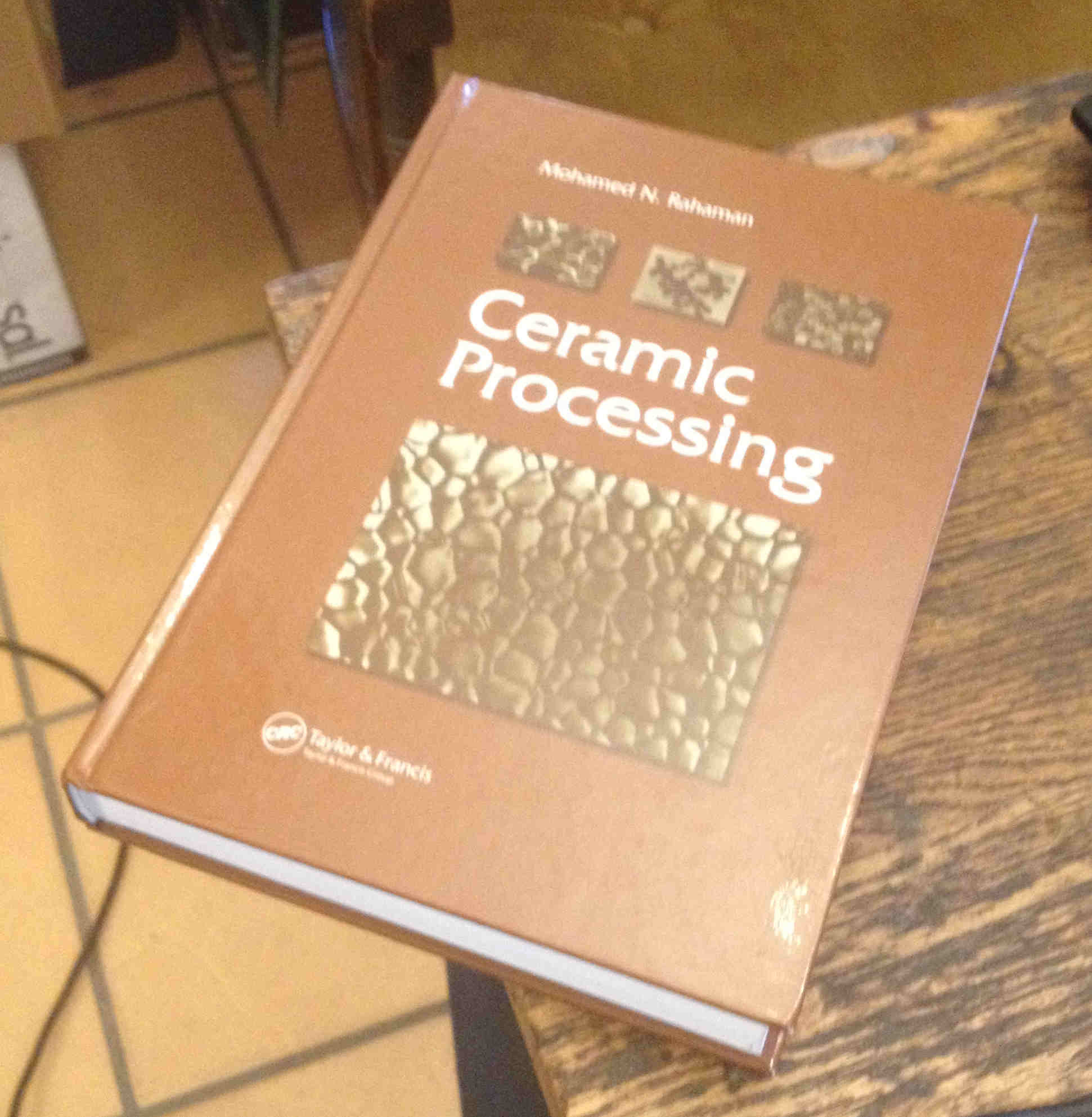
Materials scientists continue to develop stronger, more versatile ceramics for advanced technological applications, such as electronic components, fuel cells, engines, sensors, catalysts, superconductors, and space shuttles. From the start of the fabrication process to the final fabricated microstructure, Ceramic Processing covers all aspects of modern processing for polycrystalline ceramics.
Stemming from chapters in the author's bestselling text, Ceramic Processing and Sintering, this book gathers additional information selected from many sources and review articles in a single, well-researched resource. The author outlines the most commonly employed ceramic fabrication processes by the consolidation and sintering of powders. A systematic approach highlights the importance of each step as well as the interconnection between the various steps in the overall fabrication route. The in-depth treatment of production methods includes powder, colloidal, and sol-gel processing as well as chemical synthesis of powders, forming, sintering, and microstructure control. The book covers powder preparation and characterization, organic additives in ceramic processing, mixing and packing of particles, drying, and debinding. It also describes recent technologies such as the synthesis of nanoscale powders and solid freeform fabrication.
Ceramic Processing provides a thorough foundation and reference in the production of ceramic materials for advanced undergraduates and graduate students as well as professionals in corporate training or professional courses.
"The approach is clearly very thorough and seems as if it will be pretty detailed. This book appears to be very thorough in terms of the facts about processes used and how / why they work..."
―Jon Binner, University of Birmingham, United Kingdom
"The book covers a vast amount of information about ceramic processing. The complexity of the field makes it extremely difficult to present in a coherent and educational manner. Rahaman’s book achieves this goal by building on the success of the first edition, with topics being covered in enough depth to provide a comprehensive understanding, while not impounding the massive complexities that can sometimes deviate the reader’s attention and discourage reading. The book catches the readers’ attention by connecting theories with a balanced number of examples, case studies and problems so that concepts are more easily understood and translated to actual processing.
―Ricardo Castro, University of California, Davis, USA
"An excellent book for students and researchers in the field of ceramic processing."
―Jim Song, Brunel University, Uxbridge, London, United Kingdom
"Rahaman’s book is an excellent text book from which to teach/learn the principles of ceramic processing. He develops the underlying science in a systematic manner where the science can be correlated with other related topics in disciplines such as chemistry and physics. The book covers all the main areas of the field and is up to date. I do not want to put any other books down, but this is the only text book which I have found to cover the field of ceramic processing in sufficient systematic breadth and also depth."
―Waltraud M. Kriven, University of Illinois at Urbana-Champaign, USA
"This book is an invaluable addition to the literature on making ceramics. It covers the various steps in manufacture of ceramic components in sufficient depth to be useful to researchers, but in an accessible fashion for teaching undergraduates and graduate students. It will also find a place on the bookshelves of anyone involved with commercial ceramic manufacturers."
―William E Lee, Imperial College London, United Kingdom
"Ceramic processing by Rahaman is an excellent text that introduces undergrad student to the complex and highly varied topic of making ceramics from molecules or powder to the final product. It is furthermore an excellent resource for graduate students and professionals. The chapters are easy to read and understand, yet in depth and high quality. I highly recommend this book to anyone who wants to know more about the field of ceramic processing."
―Wolfgang Sigmund, University of Florida, USA
"Ceramic Processing provides a clear and complete coverage of the fundamental principles and practical aspects of ceramic processing. The book follows a clear logic flow both in its entire structure and local content. It contains conventional techniques as well as modern processes in the field such as sintering of nano-powders, use of additive manufacturing methods, spark plasma sintering and microwave sintering. Very little is missed as far as ceramic processing techniques are concerned. The book can be used as either a text book for students or a good reference for researchers in this field."
―Jingzhe Pan, University of Leicester, United Kingdom