
Items related to THE COMPLETE DUCK HANDBOOK: From Duckling to Flock:...
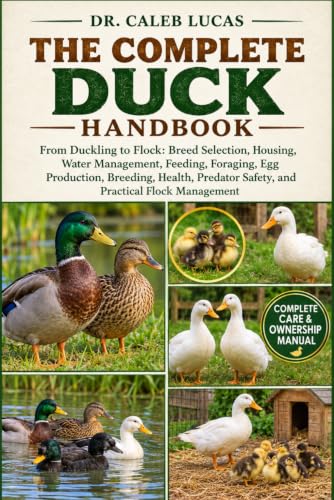
THE COMPLETE DUCK HANDBOOK: From Duckling to Flock: Breed Selection, Housing, Water Management, Feeding, Foraging, Egg Production, Breeding, Health, Predator Safety, and Practical Flock Management - Softcover
Synopsis
D
ucks are often described as easygoing, entertaining, and relatively
simple to keep. While they can be rewarding animals, good duck
keeping involves much more than providing food and a place
to sleep. Ducks need appropriate housing, clean water, suitable nutrition,
companionship, protection from predators and weather, regular observation,
and opportunities to behave naturally.
Whether you are preparing for your first Pekin duck, caring for a flock of
Indian Runners, raising Muscovy ducks, keeping Call Ducks, or working with
several breeds, the basic principle remains the same: learn what the animals
need, prepare their environment properly, establish dependable routines, and
pay attention to changes.
This handbook is designed to help you do exactly that. It is not about
making duck care complicated. Instead, it is about making good care
understandable and manageable.
A confident caretaker is not someone who knows every answer immediately.
A confident caretaker knows how to observe, prepare, prevent problems,
respond calmly, and seek qualified veterinary assistance when something
falls outside normal care.
2Chapter 1 — The Complete Duck Handbook: Your Guide to...
1.1 What This Handbook Covers and How to Use It
This handbook is designed as a practical reference for beginners, experienced
caretakers, hobbyists, breeders, animal lovers, and anyone interested in
keeping ducks responsibly.
Because duck breeds can differ considerably in size, temperament, activity
level, body shape, and typical use, the book considers both shared duck-care
principles and differences among breeds. Pekins, Rouens, Khaki Campbells,
Cayugas, Welsh Harlequins, Swedish Blues, Buff Orpingtons, Saxonies, Silver
Appleyards, Anconas, Indian Runners, Muscovies, Call Ducks, Mallards, and
other types should not automatically be treated as identical.
The easiest way to use this handbook is to combine general principles with
breed-specific observations.
For example, a caretaker might begin by learning the basic requirements
for shelter, water, food, hygiene, fencing, and companionship. After that, the
caretaker can consider whether the particular breed being kept has special
considerations involving size, activity, temperament, or environmental
management.
Start With the Fundamentals
Before bringing ducks home, work through these questions:
1. Where will the ducks sleep?
2. Where will they exercise during the day?
3. How will they be protected from predators?
4. Where will they obtain clean drinking water?
5. How will wet and dirty areas be managed?
6. What appropriate feed will be available for their life stage?
7. Who will care for them every day?
8. What will happen when you travel or become unavailable?
9. Where will you turn if a duck develops a concerning health problem?
10. Is the space large and safe enough for the number of ducks you plan to
3THE COMPLETE DUCK HANDBOOK
keep?
If you cannot answer these questions clearly, preparation should come before
acquisition.
Use the Handbook as a Working Reference
You do not need to read every section in one sitting. A practical approach
is to read the foundational chapters before getting ducks and then return to
relevant sections as your flock develops.
Keep particular attention on:
• Housing and environmental safety
• Feeding and hydration
• Cleaning routines
• Handling
• Behavior
• Health observation
• Enrichment
• Seasonal care
• Emergency preparedness
Experienced caretakers can also use the book as a routine-checking tool.
Sometimes the most useful information is not something new but something
that reminds you to examine an overlooked part of your care system
"synopsis" may belong to another edition of this title.
Search results for THE COMPLETE DUCK HANDBOOK: From Duckling to Flock:...

Stock Image
THE COMPLETE DUCK HANDBOOK : From Duckling to Flock: Breed Selection, Housing, Water Management, Feeding, Foraging, Egg Production, Breeding, Health, Predator Safety, and Practical Flock Management
Seller: AHA-BUCH GmbH, Einbeck, Germany
Seller rating 5 out of 5 stars

Taschenbuch. Condition: Neu. Neuware. Seller Inventory # 9798161775813