
Items related to Geopolitics in the Danube Region: Hungarian Reconciliation...
Geopolitics in the Danube Region: Hungarian Reconciliation Efforts, 1848-1998: 97 (Atlantic Studies on Society in Change) - Hardcover
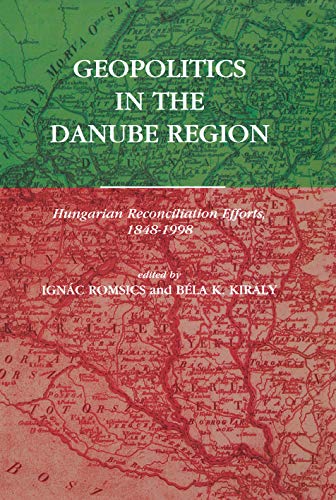
Synopsis
Central and Eastern Europe has a long history of, on the one hand, ethnic conflicts and, on the other, of a revolutionary tradition against expansionism. Both have their roots in the geographical situation and ethnic composition of the region. All these problems have surfaced at times when the political status quo has been upset for some reason, such as after the two world wars and after the collapse of the Soviet Union.
Both great powers bordering the Danube region-Germany and Russia-have strived to develop their own versions of confederations (Mitteleuropa and Pan-Slavic movements). Also, politicians and intellectuals of the countries affected have proposed various theories, and made initiatives for different forms of closer or looser confederative formations.
This book examines the reasons for the failure of these initiatives, these reasons including such factors as ethnically-motivated political antagonism, and the lack of economic complementarity. Contributing valuable information on the problems of political and economic integration, which should not be forgotten in a period when the countries of the region are looking towards the European Union, expecting-realistically or not-the solution of their various conflicts.
"synopsis" may belong to another edition of this title.
About the Author
Ingác Romsics is Professor of Modern Hungarian History at Eötvös Loránd University, Budapest.
Béla K. Király taught Military History at Brooklyn College, and became chairman of the history department.
From the Back Cover
"Central and Eastern Europe has a long history of, on the one hand, ethnic conflicts and, on the other, of a revolutionary tradition against expansionism. Both have their roots in the geographical situation and ethnic composition of the region. All these problems have surfaced at times when the political status quo has been upset for some reason, such as after the two world wars and after the collapse of the Soviet Union."--BOOK JACKET. "Both great powers bordering the Danube region - Germany and Russia - have striven to develop their own versions of confederations (Mitteleuropa and Pan-Slavic movements). Politicians and intellectuals of the countries affected have proposed various theories, and made initiatives for different forms of closer or looser confederative formations."--BOOK JACKET. "The reasons behind the failure of these initiatives are examined, including such factors as ethnically-motivated political antagonism, and the lack of economic complementarity."--BOOK JACKET.
"About this title" may belong to another edition of this title.
Search results for Geopolitics in the Danube Region: Hungarian Reconciliation...

Seller Image
Geopolitics in the Danube Region : Hungarian Reconciliation Efforts, 1848-1998
Published by
Central European University Press, 1998
ISBN 10: 9639116297
ISBN 13: 9789639116290
Used
Hardcover
Seller: GreatBookPrices, Columbia, MD, U.S.A.
Seller rating 5 out of 5 stars

Condition: As New. Unread book in perfect condition. Seller Inventory # 2080847
Seller Image
Geopolitics in the Danube Region : Hungarian Reconciliation Efforts, 1848-1998
Published by
Central European University Press, 1998
ISBN 10: 9639116297
ISBN 13: 9789639116290
Used
Hardcover
Seller: GreatBookPricesUK, Woodford Green, United Kingdom
Seller rating 5 out of 5 stars
Condition: As New. Unread book in perfect condition. Seller Inventory # 2080847
Buy Used
£ 146
£ 15 shipping
Ships from United Kingdom to U.S.A.
Ships from United Kingdom to U.S.A.
Quantity: 10 available
Stock Image
Geopolitics in the Danube Region
Published by
Central European University Press, 1998
ISBN 10: 9639116297
ISBN 13: 9789639116290
New
Hardcover
Seller: Majestic Books, Hounslow, United Kingdom
Seller rating 4 out of 5 stars

Condition: New. pp. 428 9:B&W 6 x 9 in or 229 x 152 mm Case Laminate on Creme w/Gloss Lam. Seller Inventory # 6437052
Buy New
£ 161.26
£ 6.50 shipping
Ships from United Kingdom to U.S.A.
Ships from United Kingdom to U.S.A.
Quantity: 3 available
Seller Image
Geopolitics in the Danube Region : Hungarian Reconciliation Efforts, 1848-1998
Published by
Central European University Press, 1998
ISBN 10: 9639116297
ISBN 13: 9789639116290
New
Hardcover
Seller: GreatBookPrices, Columbia, MD, U.S.A.
Seller rating 5 out of 5 stars
Condition: New. Seller Inventory # 2080847-n
Stock Image
Geopolitics in the Danube Region
Published by
Central European University Press CEU Press, 1998
ISBN 10: 9639116297
ISBN 13: 9789639116290
New
Hardcover
Seller: Books Puddle, Woodside, NY, U.S.A.
Seller rating 4 out of 5 stars
Condition: New. pp. 428. Seller Inventory # 261410915
Seller Image
Geopolitics in the Danube Region : Hungarian Reconciliation Efforts, 1848-1998
Published by
Central European University Press, 1998
ISBN 10: 9639116297
ISBN 13: 9789639116290
New
Hardcover
Seller: GreatBookPricesUK, Woodford Green, United Kingdom
Seller rating 5 out of 5 stars
Condition: New. Seller Inventory # 2080847-n
Buy New
£ 164.20
£ 15 shipping
Ships from United Kingdom to U.S.A.
Ships from United Kingdom to U.S.A.
Quantity: 10 available
Stock Image
Geopolitics in the Danube Region : Hungarian Reconciliation Efforts, 1848-1998
Published by
Amsterdam University Press, 1998
ISBN 10: 9639116297
ISBN 13: 9789639116290
Used
Hardcover
Seller: Buchpark, Trebbin, Germany
Seller rating 5 out of 5 stars
Condition: Sehr gut. Zustand: Sehr gut | Seiten: 428 | Sprache: Englisch | Produktart: Bücher | Central and Eastern Europe has a long history of, on the one hand, ethnic conflicts and, on the other, of a revolutionary tradition against expansionism. Both have their roots in the geographical situation and ethnic composition of the region. All these problems have surfaced at times when the political status quo has been upset for some reason, such as after the two world wars and after the collapse of the Soviet Union. Both great powers bordering the Danube region-Germany and Russia-have strived to develop their own versions of confederations (Mitteleuropa and Pan-Slavic movements). Also, politicians and intellectuals of the countries affected have proposed various theories, and made initiatives for different forms of closer or looser confederative formations. This book examines the reasons for the failure of these initiatives, these reasons including such factors as ethnically-motivated political antagonism, and the lack of economic complementarity. Contributing valuable information on the problems of political and economic integration, which should not be forgotten in a period when the countries of the region are looking towards the European Union, expecting-realistically or not-the solution of their various conflicts. Seller Inventory # 2310999/2
Stock Image
Geopolitics in the Danube Region
Published by
Central European University Press, 1998
ISBN 10: 9639116297
ISBN 13: 9789639116290
New
Hardcover
Seller: Biblios, Frankfurt am main, HESSE, Germany
Seller rating 4 out of 5 stars
Condition: New. pp. 428. Seller Inventory # 181410921
Seller Image
Geopolitics in the Danube Region
Published by
Amsterdam University Press, 1998
ISBN 10: 9639116297
ISBN 13: 9789639116290
New
Hardcover
Seller: moluna, Greven, Germany
Seller rating 5 out of 5 stars
Gebunden. Condition: New. Seller Inventory # 5842180
Buy New
£ 152.21
£ 41.75 shipping
Ships from Germany to U.S.A.
Ships from Germany to U.S.A.
Quantity: Over 20 available
Seller Image
Geopolitics in the Danube Region : Hungarian Reconciliation Efforts, 1848-1998
Published by
Amsterdam University Press Jan 1998, 1998
ISBN 10: 9639116297
ISBN 13: 9789639116290
New
Hardcover
Seller: AHA-BUCH GmbH, Einbeck, Germany
Seller rating 5 out of 5 stars
Buch. Condition: Neu. Neuware - Central and Eastern Europe has a long history of, on the one hand, ethnic conflicts and, on the other, of a revolutionary tradition against expansionism. Both have their roots in the geographical situation and ethnic composition of the region. All these problems have surfaced at times when the political status quo has been upset for some reason, such as after the two world wars and after the collapse of the Soviet Union. Both great powers bordering the Danube region-Germany and Russia-have strived to develop their own versions of confederations (Mitteleuropa and Pan-Slavic movements). Also, politicians and intellectuals of the countries affected have proposed various theories, and made initiatives for different forms of closer or looser confederative formations. This book examines the reasons for the failure of these initiatives, these reasons including such factors as ethnically-motivated political antagonism, and the lack of economic complementarity. Contributing valuable information on the problems of political and economic integration, which should not be forgotten in a period when the countries of the region are looking towards the European Union, expecting-realistically or not-the solution of their various conflicts. Seller Inventory # 9789639116290