
Items related to The Chinese Air Threat: Understanding the Reality
Synopsis
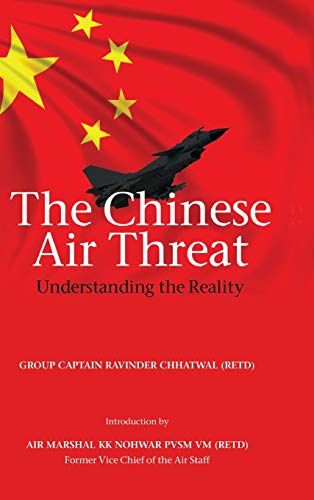
The Chinese Air Force (also known as the People's Liberation Army Air Force - PLAAF) is the third largest air force in the world, with an inventory of almost 2,200 combat aircraft. Against this, the Indian Air Force has a strength of about 860 combat aircraft. Does this make the PLAAF a giant in front of the IAF? The PLAAF may be having an advantage in terms of numbers but mere numbers do not tell the full story. The Chinese Air Force cannot deploy all these aircraft against India. In a meticulously researched analysis, the author argues that PLAAF will have serious limitations in achieving air superiority against the IAF. The limitations of airfield infrastructure and terrain in Tibet severely restrict PLAAF's capabilities to carry out a sustained air campaign against India. Since the 1990s, the Chinese Air Force has been modernising at a rapid pace. The large numbers of obsolete Soviet era fighter aircraft is being replaced by increasing numbers of fourth generation fighters of the SU-27/SU-30/J-10/J-11 class, but the IAF continues to maintain its technological lead, with the SU-30MKI of the IAF being more advanced than the SU-30MKK of PLAAF. India must continue to maintain its technological lead in the coming years. Another advantage the IAF has is in its superior training, but the Chinese are catching up in this field, with greater exposure to international exercises. The main advantage that the PLA has is in its second artillery's conventional capability. The author discusses the second artillery's capabilities and says that China's ballistic and cruise missiles will be a major threat to India, but they cannot incapacitate us. To counter the Chinese missile threat, India must develop similar capabilities with its Agni, Brahmos and Nirbhay missiles. The IAF needs to develop its capabilities in critical areas and exploit PLAAF's limitations, because unlike in 1962, this time, the contest is going to be in the air.
"synopsis" may belong to another edition of this title.
Search results for The Chinese Air Threat: Understanding the Reality

Stock Image
The Chinese Air Threat : Understanding the Reality
Print on DemandSeller: Majestic Books, Hounslow, United Kingdom
Seller rating 4 out of 5 stars

Condition: New. Print on Demand pp. 270. Seller Inventory # 372187578
Buy New
£ 13.82
£ 6.50 shipping
Ships from United Kingdom to U.S.A.
Ships from United Kingdom to U.S.A.
Quantity: 4 available
Stock Image
The Chinese Air Threat : Understanding the Reality
Seller: Books Puddle, New York, NY, U.S.A.
Seller rating 4 out of 5 stars
Condition: New. pp. 270. Seller Inventory # 26374906469
Stock Image
The Chinese Air Threat : Understanding the Reality
Print on DemandSeller: Biblios, Frankfurt am main, HESSE, Germany
Seller rating 4 out of 5 stars
Condition: New. PRINT ON DEMAND pp. 270. Seller Inventory # 18374906479
Stock Image
The Chinese Air Threat: Understanding the Reality
Seller: Vedams eBooks (P) Ltd, New Delhi, India
Seller rating 4 out of 5 stars
Hardcover. Condition: As New. Contents: Preface. Introduction. 1. PLAAF's Military strategy and doctrine. 2. PLAAF's organisation. 3. PLAAF's early warning network. 4. PLAAF's Air defence weapons. 5. China's second artillery force. 6. China's military aviation industry. 7. Analysis and comparison of PLAAF capabilities against IAF 179. 8. PLAAF Modernisation programmes and comparison with IAF plans. The Chinese Air Force (also known as the People's Liberation Army Air Force PLAAF) is the third largest air force in the world, with an inventory of almost 2,200 combat aircraft. Against this, the Indian Air Force has a strength of about 860 combat aircraft. Does this make the PLAAF a giant in front of the IAF? The PLAAF may be having an advantage in terms of numbers but mere numbers do not tell the full story. The Chinese Air Force cannot deploy all these aircraft against India. In a meticulously researched analysis, the author argues that PLAAF will have serious limitations in achieving air superiority against the IAF. The limitations of airfield infrastructure and terrain in Tibet severely restrict PLAAF's capabilities to carry out a sustained air campaign against India. Since the 1990s, the Chinese Air Force has been modernising at a rapid pace. The large numbers of obsolete Soviet era fighter aircraft is being replaced by increasing numbers of fourth generation fighters of the SU-27/SU-30/J-10/J-11 class, but the IAF continues to maintain its technological lead, with the SU-30MKI of the IAF being more advanced than the SU-30MKK of PLAAF. India must continue to maintain its technological lead in the coming years. Another advantage the IAF has is in its superior training, but the Chinese are catching up in this field, with greater exposure to international exercises. The main advantage that the PLA has is in its second artillery's conventional capability. The author discusses the second artillery's capabilities and says that China's ballistic and cruise missiles will be a major threat to India, but they cannot incapacitate us. To counter the Chinese missile threat, India must develop similar capabilities with its Agni, Brahmos and Nirbhay missiles. The IAF needs to develop its capabilities in critical areas and exploit PLAAF's limitations, because unlike in 1962, this time, the contest is going to be in the air. Seller Inventory # 117040
Seller Image
The Chinese Air Threat: Understanding Th
Seller: GreatBookPrices, Columbia, MD, U.S.A.
Seller rating 5 out of 5 stars

Condition: New. Seller Inventory # 26442823-n
Stock Image
The Chinese Air Threat: Understanding the Reality
Seller: California Books, Miami, FL, U.S.A.
Seller rating 4 out of 5 stars
Condition: New. Seller Inventory # I-9789383649846
Stock Image
The Chinese Air Threat: Understanding the Reality
Print on DemandSeller: PBShop.store UK, Fairford, GLOS, United Kingdom
Seller rating 5 out of 5 stars
HRD. Condition: New. New Book. Delivered from our UK warehouse in 4 to 14 business days. THIS BOOK IS PRINTED ON DEMAND. Established seller since 2000. Seller Inventory # L1-9789383649846
Buy New
£ 53.73
£ 5.02 shipping
Ships from United Kingdom to U.S.A.
Ships from United Kingdom to U.S.A.
Quantity: Over 20 available
Stock Image
The Chinese Air Threat: Understanding the Reality
Print on DemandSeller: PBShop.store US, Wood Dale, IL, U.S.A.
Seller rating 5 out of 5 stars
HRD. Condition: New. New Book. Shipped from UK. THIS BOOK IS PRINTED ON DEMAND. Established seller since 2000. Seller Inventory # L1-9789383649846
Seller Image
The Chinese Air Threat: Understanding Th
Seller: GreatBookPrices, Columbia, MD, U.S.A.
Seller rating 5 out of 5 stars
Condition: As New. Unread book in perfect condition. Seller Inventory # 26442823
Stock Image
The Chinese Air Threat: Understanding the Reality
Seller: Ria Christie Collections, Uxbridge, United Kingdom
Seller rating 5 out of 5 stars
Condition: New. In English. Seller Inventory # ria9789383649846_new
Buy New
£ 53.10
£ 11.29 shipping
Ships from United Kingdom to U.S.A.
Ships from United Kingdom to U.S.A.
Quantity: Over 20 available