
Items related to May: An epic poem about youth: 1 (The Essential Gorter)
May: An epic poem about youth: 1 (The Essential Gorter) - Softcover
Book 1 of 2: The Essential Gorter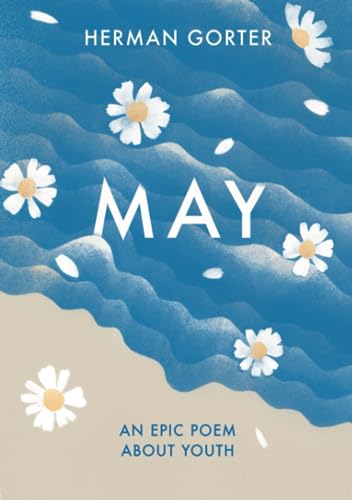
Synopsis
May describes the magical journey of adolescence against the background of Holland's flowery dunescapes. In brush strokes of wonder-filled impressions a stunningly unspoiled girl, May, explores the promise of springtime and the intense spiritual life of youth. However, the cycle of life always moves on, and as May matures and returns to earth, she finds it readying for summer.
When Herman Gorter published May (Dutch: Mei) in 1889, this spontaneous and vibrant epic poem was immediately recognized by his peers as a landmark work for Dutch literature. Inspired in part by John Keats' Endymion (1818), the poem touches upon a wide range of themes, including the innocence and wonder of childhood, the hubris and disillusionment of adolescence, unattainable divine love and the inevitability of transience, The work suggests that poetry itself may be the only way to preserve for eternity the essence of nature and of music.
May was perhaps an inevitable product of the artistically revolutionary and highly lucid spirit in The Netherlands of the 1880s. While Gorter's contemporary, Vincent van Gogh, had just completed the groundbreaking Sunflowers series of paintings, Gorter succeeded with May to compose his own monument of colourful and innovative power.
Second (revised) edition, English-only, including synopsis, foreword by poet Lloyd Haft and introduction by the translator.
"synopsis" may belong to another edition of this title.
About the Author
Herman Gorter (1864-1927) Gorter was born in Wormerveer, a rural town in the north-western Netherlands. His father, a pastor, died when he was six years old. Gorter studied classical languages in Amsterdam and became a teacher at a high school. In 1889, after three years of work on his epic poem May (in Dutch: Mei), Gorter finally could proclaim “the thing is done.” May was published in the contemporary periodical The New Guide (De Nieuwe Gids). It was a retrospect of Gorter’s youth, borrowing both form and theme from John Keats’ Endymion (1818), yet tracing its way through a wide range of impressions: of nature, music, love, the search for the divine, disillusion, transience, and melancholic reflection. Spontaneous and full of vibrant imagery, May quickly became a landmark of the 1880s literary movement in The Netherlands, the so-called ‘Eightiers’ (Tachtigers), which attempted to reclaim aesthetics for art. In 1890, the even more innovative Verses (Verzen) were published, in which Gorter digs further and tries to let his spiritual and sensual emotions express themselves. Always in search of the ultimate form of poetry, Gorter would gradually distance himself from the individualistic ‘Eightiers’ movement. He became increasingly politically engaged and turned to expressing his Marxist ideals through his work, for example in the epic poem Pan (1916) and Lyrics (Liedjes, 1930). Gorter however never gave up his identity as a poet. Love remained a key theme in his work until his death.
From the Back Cover
May describes the magical journey of adolescence against
the background of Holland’s flowery dunescapes. In brush strokes of wonder-filled impressions a stunningly unspoiled girl, May, explores the promise of springtime and the intense spiritual life of youth. However, the cycle of life always moves on, and as May matures and returns to earth, she finds it readying for summer.
When Herman Gorter published May (Mei) in 1889, this spontaneous and vibrant epic poem was immediately recognized
by his peers as a landmark of Dutch literature. Inspired in part by John Keats' Endymion (1818), May was perhaps an inevitable product of the artistically revolutionary and highly lucid spirit in The Netherlands of the 1880s. While Gorter’s contemporary, Vincent van Gogh, had just completed the groundbreaking Sunflowers series of paintings, Gorter succeeded with May in composing his own monument of colourful and innovative power.
'A gripping story... breathlessly onward through magnificent word groups... full of surprising turns of phrase... before you know it, you'll be reading it out loud!' - Lloyd Haft, poet
'This thoughtful, lyrical translation will stir the imagination and invite consideration of what makes the heart sing, even if the joy, like May, is only temporary. The poem, though, will endure.'
- Editor's Pick, BookLife
"About this title" may belong to another edition of this title.
Search results for May: An epic poem about youth: 1 (The Essential Gorter)

Stock Image
May: An epic poem about youth
Seller: GreatBookPrices, Columbia, MD, U.S.A.
Seller rating 5 out of 5 stars

Condition: New. Seller Inventory # 43328010-n
Seller Image
May
Seller: Rarewaves USA, HEBRON, KY, U.S.A.
Seller rating 5 out of 5 stars
Paperback. Condition: New. 2nd Edition ed. Seller Inventory # LU-9789083133645
Stock Image
May: An epic poem about youth
Seller: GreatBookPrices, Columbia, MD, U.S.A.
Seller rating 5 out of 5 stars
Condition: As New. Unread book in perfect condition. Seller Inventory # 43328010
Seller Image
May
Seller: Rarewaves.com USA, London, LONDO, United Kingdom
Seller rating 5 out of 5 stars
Paperback. Condition: New. 2nd Edition ed. Seller Inventory # LU-9789083133645
Buy New
£ 16.79
Free Shipping
Ships from United Kingdom to U.S.A.
Ships from United Kingdom to U.S.A.
Quantity: Over 20 available
Stock Image
May: An epic poem about youth (The Essential Gorter)
Seller: California Books, Miami, FL, U.S.A.
Seller rating 5 out of 5 stars
Condition: New. Seller Inventory # I-9789083133645
Stock Image
May
Print on DemandSeller: PBShop.store US, Wood Dale, IL, U.S.A.
Seller rating 5 out of 5 stars
PAP. Condition: New. New Book. Shipped from UK. THIS BOOK IS PRINTED ON DEMAND. Established seller since 2000. Seller Inventory # L0-9789083133645
Stock Image
May
Print on DemandSeller: PBShop.store UK, Fairford, GLOS, United Kingdom
Seller rating 5 out of 5 stars
PAP. Condition: New. New Book. Delivered from our UK warehouse in 4 to 14 business days. THIS BOOK IS PRINTED ON DEMAND. Established seller since 2000. Seller Inventory # L0-9789083133645
Buy New
£ 17.42
£ 3.29 shipping
Ships from United Kingdom to U.S.A.
Ships from United Kingdom to U.S.A.
Quantity: Over 20 available
Stock Image
May: An epic poem about youth (The Essential Gorter)
Seller: Ria Christie Collections, Uxbridge, United Kingdom
Seller rating 5 out of 5 stars
Condition: New. In English. Seller Inventory # ria9789083133645_new
Buy New
£ 17.75
£ 9.37 shipping
Ships from United Kingdom to U.S.A.
Ships from United Kingdom to U.S.A.
Quantity: Over 20 available
Stock Image
May: An epic poem about youth
Seller: GreatBookPricesUK, Woodford Green, United Kingdom
Seller rating 5 out of 5 stars
Condition: New. Seller Inventory # 43328010-n
Buy New
£ 13.78
£ 15 shipping
Ships from United Kingdom to U.S.A.
Ships from United Kingdom to U.S.A.
Quantity: Over 20 available
Stock Image
May: An epic poem about youth
Seller: GreatBookPricesUK, Woodford Green, United Kingdom
Seller rating 5 out of 5 stars
Condition: As New. Unread book in perfect condition. Seller Inventory # 43328010
Buy Used
£ 15.96
£ 15 shipping
Ships from United Kingdom to U.S.A.
Ships from United Kingdom to U.S.A.
Quantity: Over 20 available