
Items related to Confronting Genocide: 7 (Ius Gentium: Comparative Perspectiv...
Confronting Genocide: 7 (Ius Gentium: Comparative Perspectives on Law and Justice, 7) - Hardcover
Book 10 of 144: Ius Gentium: Comparative Perspectives on Law and Justice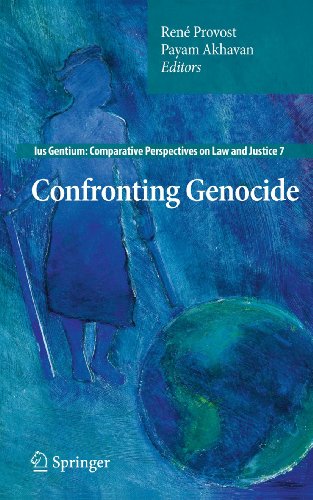
Synopsis
“Never again” stands as one the central pledges of the international community following the end of the Second World War, upon full realization of the massive scale of the Nazi extermination programme. Genocide stands as an intolerable assault on a sense of common humanity embodied in the Universal Declaration of Human Rights and other fundamental international instruments, including the Convention on the Prevention and Punishment of the Crime of Genocide and the United Nations Charter. And yet, since the Second World War, the international community has proven incapable of effectively preventing the occurrence of more genocides in places like Cambodia, Yugoslavia, Rwanda and Sudan. Is genocide actually preventable, or is “ever again” a more accurate catchphrase to capture the reality of this phenomenon? The essays in this volume explore the complex nature of genocide and the relative promise of various avenues identified by the international community to attempt to put a definitive end to its occurrence. Essays focus on a conceptualization of genocide as a social and political phenomenon, on the identification of key actors (Governments, international institutions, the media, civil society, individuals), and on an exploration of the relative promise of different means to prevent genocide (criminal accountability, civil disobedience, shaming, intervention).
"synopsis" may belong to another edition of this title.
From the Back Cover
“Never again” stands as one the central pledges of the international community following the end of the Second World War, upon full realization of the massive scale of the Nazi extermination programme. Genocide stands as an intolerable assault on a sense of common humanity embodied in the Universal Declaration of Human Rights and other fundamental international instruments, including the Convention on the Prevention and Punishment of the Crime of Genocide and the United Nations Charter. And yet, since the Second World War, the international community has proven incapable of effectively preventing the occurrence of more genocides in places like Cambodia, Yugoslavia, Rwanda and Sudan. Is genocide actually preventable, or is “ever again” a more accurate catchphrase to capture the reality of this phenomenon? The essays in this volume explore the complex nature of genocide and the relative promise of various avenues identified by the international community to attempt to put a definitive end to its occurrence. Essays focus on a conceptualization of genocide as a social and political phenomenon, on the identification of key actors (Governments, international institutions, the media, civil society, individuals), and on an exploration of the relative promise of different means to prevent genocide (criminal accountability, civil disobedience, shaming, intervention). The essays grew out of the first Echenberg Family Conference on Human Rights at the McGill Centre for Human Rights and Legal Pluralism in Montréal, Canada.
"About this title" may belong to another edition of this title.
Search results for Confronting Genocide: 7 (Ius Gentium: Comparative Perspectiv...

Seller Image
Confronting Genocide (Ius Gentium: Comparative Perspectives on Law and Justice 7)
Published by
Cham, CH: Springer, 2010
ISBN 10: 9048198399
ISBN 13: 9789048198399
Used
Hardcover
First Edition
Seller: James Payne, Books and Prints, New York City, NY, U.S.A.
Seller rating 5 out of 5 stars

Hardcover. Condition: Fine. First Edition. [LAW]. Eds. Rene Provost, Payam Akhavan. "Confronting Genocide (Ius Gentium: Comparative Perspectives on Law and Justice 7)." Cham, CH: Springer, 2010. 374 pp. Shelf-wear. Text clean. Like New to Fine. Seller Inventory # 08235
Stock Image
Confronting Genocide: 7 (Ius Gentium: Comparative Perspectives on Law and Justice, 7) [Hardcover] [Nov 30, 2010] Provost, René and Akhavan, Payam
Seller: StainesBookhub, Weybridge, SURRE, United Kingdom
Seller rating 1 out of 5 stars

Condition: New. A brand new book in pristine condition. Showing zero signs of shelf wear, creases, or damage. Seller Inventory # SPRLISTINGBYSHB10390
Buy New
£ 80.28
£ 30 shipping
Ships from United Kingdom to U.S.A.
Ships from United Kingdom to U.S.A.
Quantity: 1 available
Stock Image
Confronting Genocide (eng)
Print on DemandSeller: Brook Bookstore On Demand, Napoli, NA, Italy
Seller rating 5 out of 5 stars
Condition: new. Questo è un articolo print on demand. Seller Inventory # 57508b423557c7d94e58d81079db9295
Buy New
£ 111.57
£ 5.83 shipping
Ships from Italy to U.S.A.
Ships from Italy to U.S.A.
Quantity: Over 20 available
Seller Image
Confronting Genocide
Published by
SPRINGER NATURE Nov 2010, 2010
ISBN 10: 9048198399
ISBN 13: 9789048198399
New
Hardcover
Seller: BuchWeltWeit Ludwig Meier e.K., Bergisch Gladbach, Germany
Seller rating 5 out of 5 stars
Buch. Condition: Neu. This item is printed on demand - it takes 3-4 days longer - Neuware -'Never again' stands as one the central pledges of the international community following the end of the Second World War, upon full realization of the massive scale of the Nazi extermination programme. Genocide stands as an intolerable assault on a sense of common humanity embodied in the Universal Declaration of Human Rights and other fundamental international instruments, including the Convention on the Prevention and Punishment of the Crime of Genocide and the United Nations Charter. And yet, since the Second World War, the international community has proven incapable of effectively preventing the occurrence of more genocides in places like Cambodia, Yugoslavia, Rwanda and Sudan. Is genocide actually preventable, or is 'ever again' a more accurate catchphrase to capture the reality of this phenomenon The essays in this volume explore the complex nature of genocide and the relative promise of various avenues identified by the international community to attempt to put a definitive end to its occurrence. Essays focus on a conceptualization of genocide as a social and political phenomenon, on the identification of key actors (Governments, international institutions, the media, civil society, individuals), and on an exploration of the relative promise of different means to prevent genocide (criminal accountability, civil disobedience, shaming, intervention). 374 pp. Englisch. Seller Inventory # 9789048198399
Stock Image
Confronting Genocide (Ius Gentium: Comparative Perspectives on Law and Justice, 7)
Seller: Ria Christie Collections, Uxbridge, United Kingdom
Seller rating 5 out of 5 stars
Condition: New. In English. Seller Inventory # ria9789048198399_new
Buy New
£ 151.78
£ 11.29 shipping
Ships from United Kingdom to U.S.A.
Ships from United Kingdom to U.S.A.
Quantity: Over 20 available
Seller Image
Confronting Genocide
Seller: moluna, Greven, Germany
Seller rating 5 out of 5 stars
Gebunden. Condition: New. Seller Inventory # 5822722
Buy New
£ 121.29
£ 42.03 shipping
Ships from Germany to U.S.A.
Ships from Germany to U.S.A.
Quantity: Over 20 available
Seller Image
Confronting Genocide
Seller: AHA-BUCH GmbH, Einbeck, Germany
Seller rating 5 out of 5 stars
Buch. Condition: Neu. Druck auf Anfrage Neuware - Printed after ordering - 'Never again' stands as one the central pledges of the international community following the end of the Second World War, upon full realization of the massive scale of the Nazi extermination programme. Genocide stands as an intolerable assault on a sense of common humanity embodied in the Universal Declaration of Human Rights and other fundamental international instruments, including the Convention on the Prevention and Punishment of the Crime of Genocide and the United Nations Charter. And yet, since the Second World War, the international community has proven incapable of effectively preventing the occurrence of more genocides in places like Cambodia, Yugoslavia, Rwanda and Sudan. Is genocide actually preventable, or is 'ever again' a more accurate catchphrase to capture the reality of this phenomenon The essays in this volume explore the complex nature of genocide and the relative promise of various avenues identified by the international community to attempt to put a definitive end to its occurrence. Essays focus on a conceptualization of genocide as a social and political phenomenon, on the identification of key actors (Governments, international institutions, the media, civil society, individuals), and on an exploration of the relative promise of different means to prevent genocide (criminal accountability, civil disobedience, shaming, intervention). Seller Inventory # 9789048198399
Stock Image
Confronting Genocide
Seller: Books Puddle, Woodside, NY, U.S.A.
Seller rating 4 out of 5 stars

Condition: New. pp. 396. Seller Inventory # 263461803
Stock Image
Confronting Genocide
Seller: Buchpark, Trebbin, Germany
Seller rating 5 out of 5 stars
Condition: Sehr gut. Zustand: Sehr gut | Seiten: 396 | Sprache: Englisch | Produktart: Bücher | "Never again" stands as one the central pledges of the international community following the end of the Second World War, upon full realization of the massive scale of the Nazi extermination programme. Genocide stands as an intolerable assault on a sense of common humanity embodied in the Universal Declaration of Human Rights and other fundamental international instruments, including the Convention on the Prevention and Punishment of the Crime of Genocide and the United Nations Charter. And yet, since the Second World War, the international community has proven incapable of effectively preventing the occurrence of more genocides in places like Cambodia, Yugoslavia, Rwanda and Sudan. Is genocide actually preventable, or is "ever again" a more accurate catchphrase to capture the reality of this phenomenon? The essays in this volume explore the complex nature of genocide and the relative promise of various avenues identified by the international community to attempt to put a definitive end to its occurrence. Essays focus on a conceptualization of genocide as a social and political phenomenon, on the identification of key actors (Governments, international institutions, the media, civil society, individuals), and on an exploration of the relative promise of different means to prevent genocide (criminal accountability, civil disobedience, shaming, intervention). The essays grew out of the first Echenberg Family Conference on Human Rights at the McGill Centre for Human Rights and Legal Pluralism in Montréal, Canada. Seller Inventory # 8304383/12
Stock Image
Confronting Genocide
Print on DemandSeller: Majestic Books, Hounslow, United Kingdom
Seller rating 4 out of 5 stars
Condition: New. Print on Demand pp. 396 24 Illus. Seller Inventory # 4418932
Buy New
£ 197.20
£ 6.50 shipping
Ships from United Kingdom to U.S.A.
Ships from United Kingdom to U.S.A.
Quantity: 4 available