
Items related to imagining the unimaginable: The Poetics of Early Modern...
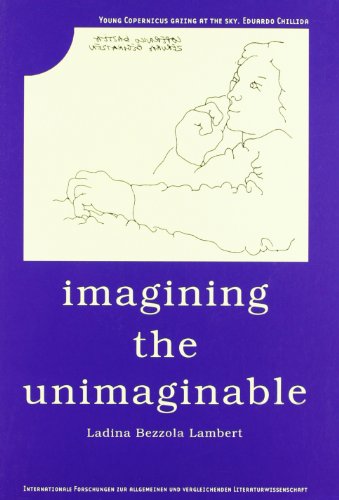
imagining the unimaginable: The Poetics of Early Modern Astronomy: 58 (Internationale Forschungen zur Allgemeinen und Vergleichenden Literaturwissenschaft, 58) - Softcover
Synopsis
How is it possible to imagine what is unknown and therefore unimaginable? How can the unimaginable be represented? On what materials do such representations rely? These questions lie at the heart of this book.
Copernican theory redefined the role and importance of the imagination even as it implied the moment of its crisis. Based on this claim, Ladina Bezzola Lambert analyzes seventeenth-century astronomical texts – particularly descriptions of the moon and treatises written in support of the theory of the plurality of worlds – to show how early modern astronomers questioned the role of the imagination as a tool to visualize the unknown, but also how, pressed by the need to support their theories with convincing descriptions of other potential worlds, they sought to overcome the limitations of the imagination with a sophisticated rhetoric and techniques more commonly associated with poetic writing. The limitations of the imagination are at once a problem that all of the texts discussed struggle with and their recurrent theme.
In the first and last chapter, the focus shifts to a more explicitly literary context: Ariosto’s Orlando furioso and the work of Italo Calvino. The change of focus from science to literature and from the narratives of the past to contemporary ones serves to emphasize that the issues relating to the imagination, its limitations and creative means, are basically the same both in science and literature and that they are still relevant today.
"synopsis" may belong to another edition of this title.
Review
"Lambert's impressive book is certain to greatly influence later studies of early modern science. Her methodology and careful attention to rhetorical figures contribute to a more complete understanding of this important period in science history." in: Revue d'Histoire des Sciences, No. 25, Vol. 12, 2005 "...rich in detail and [...] very useful..." in: The British Journal for the History of Science, Vol. 38, No. 1, March 2005, pp.105-6
"About this title" may belong to another edition of this title.
Search results for imagining the unimaginable: The Poetics of Early Modern...

Stock Image
Imagining the Unimaginable. The Poetics of Early Moden Astronomy.
Published by
Amsterdam-Atlanta, Rodopi. 2002, 2002
ISBN 10: 9042015780
ISBN 13: 9789042015784
Used
Softcover
Seller: Antiquariaat Schot, Hendrik-Ido-Ambacht, Netherlands
Seller rating 5 out of 5 stars

Original publisher's sewn paperback, pictorial frontcover, large 8vo: 182pp., 6 essays, 4 illustrations, footnotes, bibliography, index. Contents: 1. How Metaphors Matter: Astolfo's Lunar Journey in the Orlando furioso. 2. Images Proposed in Jest: Galileo's Sidereus nuncius and the Dialogue. 3. The Stuff that Dreams are Made of: Kepler's Somnium. 4. Worlds of Words: Cyrano de Bergerac's Lune and Soleil. 5. Metaphors as Systems of Thought: Fontenelle, Cyrano, Wilkins and Huygens. 6. Representing the Unimaginability of the Imaginable: Italo Calvino's Castello dei destini incrociati and Le città invisibili. Very fine copy - as new. Volume 58: Internationale Forschungen zur Allgemeinen und Vergleichenden Literaturwissenschaft. How is it possible to imagine what is unknown and therefore unimaginable? How can the unimaginable be represented? On what materials do such representations rely? These questions lie at the heart of this book. Copernican theory redefined the role and importance of the imagination even as it implied the moment of its crisis. Based on this claim, Ladina Bezzola Lambert analyzes seventeenth-century astronomical texts - particularly descriptions of the moon and treatises written in support of the theory of the plurality of worlds - to show how early modern astronomers questioned the role of the imagination as a tool to visualize the unknown, but also how, pressed by the need to support their theories with convincing descriptions of other potential worlds, they sought to overcome the limitations of the imagination with a sophisticated rhetoric and techniques more commonly associated with poetic writing. The limitations of the imagination are at once a problem that all of the texts discussed struggle with and their recurrent theme. In the first and last chapter, the focus shifts to a more explicitly literary context: Ariosto's Orlando furioso and the work of Italo Calvino. The change of focus from science to literature and from the narratives of the past to contemporary ones serves to emphasize that the issues relating to the imagination, its limitations and creative means, are basically the same both in science and literature and that they are still relevant today. Seller Inventory # 146234
Buy Used
£ 27.97
£ 21.08 shipping
Ships from Netherlands to U.S.A.
Ships from Netherlands to U.S.A.
Quantity: 3 available
Stock Image
Imagining the Unimaginable (Internationale Forschungen zur Allgemeinen und Vergleichenden Literaturwissenschaft)
Seller: suspiratio - online bücherstube lic.phil h.b., Basel, Switzerland
Seller rating 4 out of 5 stars

Softcover. Condition: Sehr gut. sehr gut, wie ungelesen, 182 seiten Language: DEU. Seller Inventory # xl-507-muz
Buy Used
£ 28.66
£ 30.35 shipping
Ships from Switzerland to U.S.A.
Ships from Switzerland to U.S.A.
Quantity: 1 available
Stock Image
imagining the unimaginable
Print on DemandSeller: Brook Bookstore On Demand, Napoli, NA, Italy
Seller rating 5 out of 5 stars
Condition: new. Questo è un articolo print on demand. Seller Inventory # ORYMNTTDYV
Buy New
£ 95.01
£ 4.64 shipping
Ships from Italy to U.S.A.
Ships from Italy to U.S.A.
Quantity: Over 20 available
Stock Image
imagining the unimaginable: The Poetics of Early Modern Astronomy (Internationale Forschungen zur Allgemeinen und Vergleichenden Literaturwissenschaft, 58)
Seller: California Books, Miami, FL, U.S.A.
Seller rating 5 out of 5 stars
Condition: New. Seller Inventory # I-9789042015784
Stock Image
Imagining the Unimaginable (Internationale Forschungen Zur Allgemeinen & Vergleichenden Literaturwissenschaft)
Print on DemandSeller: Revaluation Books, Exeter, United Kingdom
Seller rating 5 out of 5 stars
Paperback. Condition: Brand New. 182 pages. 9.29x6.69x0.63 inches. In Stock. This item is printed on demand. Seller Inventory # __9042015780
Buy New
£ 136.33
£ 10 shipping
Ships from United Kingdom to U.S.A.
Ships from United Kingdom to U.S.A.
Quantity: 1 available
Seller Image
imagining the unimaginable
Seller: moluna, Greven, Germany
Seller rating 5 out of 5 stars
Condition: New. Seller Inventory # 2227459070
Buy New
£ 125.45
£ 41.31 shipping
Ships from Germany to U.S.A.
Ships from Germany to U.S.A.
Quantity: Over 20 available
Seller Image
imagining the unimaginable
Published by
Koninklijke Brill BV Jan 2002, 2002
ISBN 10: 9042015780
ISBN 13: 9789042015784
New
Taschenbuch
Seller: AHA-BUCH GmbH, Einbeck, Germany
Seller rating 5 out of 5 stars
Taschenbuch. Condition: Neu. Neuware - How is it possible to imagine what is unknown and therefore unimaginable How can the unimaginable be represented On what materials do such representations rely These questions lie at the heart of this book. Copernican theory redefined the role and importance of the imagination even as it implied the moment of its crisis. Based on this claim, Ladina Bezzola Lambert analyzes seventeenth-century astronomical texts - particularly descriptions of the moon and treatises written in support of the theory of the plurality of worlds - to show how early modern astronomers questioned the role of the imagination as a tool to visualize the unknown, but also how, pressed by the need to support their theories with convincing descriptions of other potential worlds, they sought to overcome the limitations of the imagination with a sophisticated rhetoric and techniques more commonly associated with poetic writing. The limitations of the imagination are at once a problem that all of the texts discussed struggle with and their recurrent theme. In the first and last chapter, the focus shifts to a more explicitly literary context: Ariosto's Orlando furioso and the work of Italo Calvino. The change of focus from science to literature and from the narratives of the past to contemporary ones serves to emphasize that the issues relating to the imagination, its limitations and creative means, are basically the same both in science and literature and that they are still relevant today. Seller Inventory # 9789042015784