
Items related to Matisse and Engraving: The Other Instrument
Synopsis
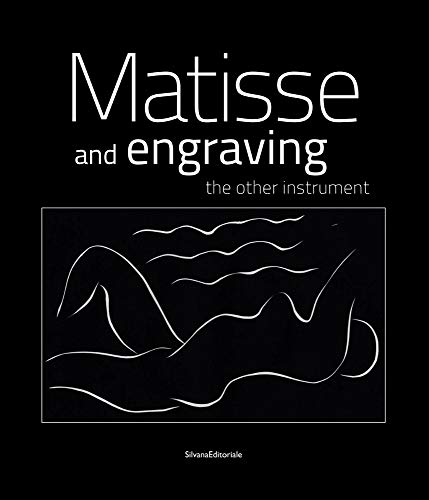
Matisse and Engraving explores all of the engraving techniques used by Henri Matisse (1869-1954) from 1900 until the end of his life. Though Matisse is known primarily for his mastery of color, engraving was essential to his overall practice. The artist placed equal importance on engraving, drawing, painting and sculpture, with the representation of the human figure essential across all these mediums. This catalogue finally makes accessible this important aspect of her father's work. For the very first time, the matrices--woodcut, lithograph, drypoint, etching, linocut and more--accompany the works, allowing readers to glimpse the process behind the resulting prints.
"synopsis" may belong to another edition of this title.
From the Back Cover
Matisse and engraving: the other instrument, who other than Henri Matisse's daughter Marguerite could describe his engraving in this way? Responsible for validating her father's press-proofs, she is, along with her son Claude Duthuit, the author of the catalogue raisonné of his engravings. She has devoted a large part of her life to allowing this "unknown continent" to be discovered and which is nevertheless essential in understanding the progression of an artist known above all for his mastery of colour. The Matisse Departmental Museum, with the help of the Matisse family, and notably Barbara Duthuit, and some most prestigious institutions, explores in this catalogue all of the engraving techniques used by Matisse from 1900 and up to the end of his life. For him, engraving, drawing, painting, sculpture all had the same importance, and in this work all the key themes, which led him to build his research around the human figure, are represented. For the very first time the matrices (woodcut, lithograph, drypoint, etching, linocut...) accompany the works and help us to understand that high standards and hard work, along with an economy of means, led Matisse to transform black into a colour that he used to serve the purity of line.
From the Inside Flap
Matisse and engraving: the other instrument, who other than Henri Matisse's daughter Marguerite could describe his engraving in this way? Responsible for validating her father's press-proofs, she is, along with her son Claude Duthuit, the author of the catalogue raisonné of his engravings. She has devoted a large part of her life to allowing this "unknown continent" to be discovered and which is nevertheless essential in understanding the progression of an artist known above all for his mastery of colour. The Matisse Departmental Museum, with the help of the Matisse family, and notably Barbara Duthuit, and some most prestigious institutions, explores in this catalogue all of the engraving techniques used by Matisse from 1900 and up to the end of his life. For him, engraving, drawing, painting, sculpture all had the same importance, and in this work all the key themes, which led him to build his research around the human figure, are represented. For the very first time the matrices (woodcut, lithograph, drypoint, etching, linocut...) accompany the works and help us to understand that high standards and hard work, along with an economy of means, led Matisse to transform black into a colour that he used to serve the purity of line.
"About this title" may belong to another edition of this title.
Search results for Matisse and Engraving: The Other Instrument

Stock Image
Henri Matisse: Matisse and Engraving: The Other Instrument
Seller: Midtown Scholar Bookstore, Harrisburg, PA, U.S.A.
Seller rating 5 out of 5 stars

Paperback. Condition: Good. Good - Bumped and creased book with tears to the extremities, but not affecting the text block, may have remainder mark or previous owner's name - GOOD Oversized. Seller Inventory # M8836632459Z3
Stock Image
Henri Matisse: Matisse and Engraving: The Other Instrument
Seller: Midtown Scholar Bookstore, Harrisburg, PA, U.S.A.
Seller rating 5 out of 5 stars
Paperback. Condition: Very Good. Very Good paperback with light shelfwear - NICE! Oversized. Seller Inventory # mon0000314845
Stock Image
Henri Matisse: Matisse and Engraving: The Other Instrument
Seller: Magers and Quinn Booksellers, Minneapolis, MN, U.S.A.
Seller rating 5 out of 5 stars
paperback. Condition: New. Brand New. Seller Inventory # 1140052
Stock Image
Matisse and engraving the other instrument
Seller: Powell's Bookstores Chicago, ABAA, Chicago, IL, U.S.A.
Seller rating 5 out of 5 stars
Paperback. Condition: New. New copy. Seller Inventory # 2049655
Seller Image
Matisse and Engraving
Seller: Rarewaves USA, HEBRON, KY, U.S.A.
Seller rating 5 out of 5 stars
Paperback. Condition: New. Who other than Henri Matisse's daughter Marguerite could describe his engraving in this way? Responsible for validating her father's press-proofs, she is, along with her son Claude Duthuit, the author of this catalogue raisonné of his engravings. She has devoted a large part of her life to allowing this 'unknown continent' to be discovered and which is nevertheless essential in understanding the progression of an artist known above all for his mastery of colour. The Matisse Departmental Museum, with the help of the Matisse family, Barbara Duthuit, and some most prestigious institutions, explores in this catalogue all of the engraving techniques used by Matisse from 1900 up to the end of his life. For him, engraving, drawing, painting, and sculpture all had the same importance, and in this work all the key themes that led him to build his research around the human figure, are represented. For the very first time the matrices (woodcut, lithograph, drypoint, etching, linocut.) accompany the works and help us to understand that high standards and hard work, along with an economy of means, led Matisse to transform black into a colour that he used to serve the purity of line. Text in English and French. Seller Inventory # LU-9788836632459
Stock Image
Matisse and Engraving: The Other Instrument
Published by
Silvana Editoriale, Milan, 2015
ISBN 10: 8836632459
ISBN 13: 9788836632459
Used
Paperback
Seller: Colin Martin Books, Near Hull, EY, United Kingdom
Seller rating 5 out of 5 stars
Paperback. Condition: Fine. Qto., 256 pages, colour illustrated. The text is in both English and French. Unused, a Fine copy. Seller Inventory # 094235
Seller Image
Matisse and Engraving
Seller: Rarewaves USA United, HEBRON, KY, U.S.A.
Seller rating 5 out of 5 stars
Paperback. Condition: New. Who other than Henri Matisse's daughter Marguerite could describe his engraving in this way? Responsible for validating her father's press-proofs, she is, along with her son Claude Duthuit, the author of this catalogue raisonné of his engravings. She has devoted a large part of her life to allowing this 'unknown continent' to be discovered and which is nevertheless essential in understanding the progression of an artist known above all for his mastery of colour. The Matisse Departmental Museum, with the help of the Matisse family, Barbara Duthuit, and some most prestigious institutions, explores in this catalogue all of the engraving techniques used by Matisse from 1900 up to the end of his life. For him, engraving, drawing, painting, and sculpture all had the same importance, and in this work all the key themes that led him to build his research around the human figure, are represented. For the very first time the matrices (woodcut, lithograph, drypoint, etching, linocut.) accompany the works and help us to understand that high standards and hard work, along with an economy of means, led Matisse to transform black into a colour that he used to serve the purity of line. Text in English and French. Seller Inventory # LU-9788836632459