
Items related to Open Space: Transparency -- Freedom -- Dematerialisation
Synopsis
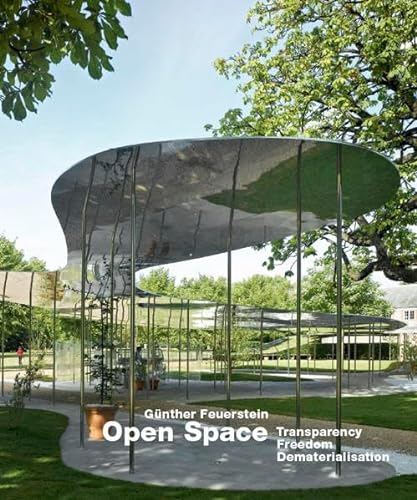
The aim of the study is to analyse and describe in detail one of the most important trends in architecture in the 19th and 20th centuries: the evolution leading from the closed, hermetic spaces of the early cultures and the Middle Ages to the "open space" and transparency of the 19th and 20th/21st centuries. Historically, the focus is on the "diaphanous" space of the Gothic cathedral, the opening of the late-Baroque dome towards the sky, the transparency of exhibition halls and hothouses in the 19th century, and the glass dreams of the early 20th century. The steel-and-glass technology of the past one hundred years has permitted even more transparency, openness, and dematerialisation on a scale never seen before. It is notable -- to quote just one aspect of the study -- that many modern glass buildings have been compared to a "crystal". This is the material with which we associate concepts such as purity, transparency, and order. We have thus also found a symbol for clarity and translucency in architecture. One key objective of the study is to demonstrate that this trend has been driven by no means only by a functionalist, pragmatic, or physical motivation but that, as in past epochs, the "opening up" of architecture reflects elementary desires of humankind: these are, first of all, psychological, aesthetic and artistic desires, the wish to overcome gravity as far as possible and, last but not least, the liberation of architecture and the attempt to resolve the heteronomy of "indoors" and "outdoors". Many statements have suggested that this touches even on the borders of the irrational and the metaphysical. The study should therefore also contribute to a fresh debate on the boundaries of architecture and, most importantly, should serve as a plea to allow architecture to remain open, free, light, and transparent even in the future.
"synopsis" may belong to another edition of this title.
About the Author
Günther Feuerstein, who was a professor at the Hochschule für Gestaltung in Linz and also a lecturer at the Akademie der bildenden Künste and at the Technische Universität in Vienna, must be considered the catalyst in the Viennese post-war architectural scene, as almost all architectural avant-garde groups of the town have come from his circle. As an author, Feuerstein addresses areas where art history and sociology intersect with architecture. Feuerstein is one of the earliest critics of functionalism and pleads for an "expanded architecture".
"About this title" may belong to another edition of this title.
Search results for Open Space: Transparency -- Freedom -- Dematerialisation

Seller Image
Open Space: Transparency Freedom - Dematerialisation.
Seller: ANTIQUARIAT Franke BRUDDENBOOKS, Lübeck, Germany
Seller rating 5 out of 5 stars

Gebundene Ausgabe, 4°. Condition: Sehr gut. 1. 256 S. Das Buch ist in sehr gutem, sauberen Zustand. Einband minimal berieben. Sonst sauberes und wohlerhaltenes Exemplar. -----Inhalt:. The aim of the study is to analyse and describe in detail one of the most important trends in architecture in the 19th and 20th centuries: the evolution leading from the closed, hermetic spaces of the early cultures and the Middle Ages to the 'open space' and transparency of the 19th and 20th/21st centuries. Historically, the focus is on the 'diaphanous' space of the Gothic cathedral, the opening of the late-Baroque dome towards the sky, the transparency of exhibition halls and hothouses in the 19th century, and the glass dreams of the early 20th century. The steel-and-glass technology of the past one hundred years has permitted even more transparency, open-ness, and dematerialisation on a scale never seen before. It is notable to quote just one aspect of the study that many modern glass buildings have been compared to a 'crystal'. This is the material with which we associate concepts such as purity, transparency, and order. We have thus also found a symbol for clarity and translucency in architecture. One key objective of the study is to demonstrate that this trend has been driven by no means only by a functionalist, pragmatic, or physical motivation but that, as in past epochs, the 'opening up' of architecture reflects elementary desires of humankind: these are, first of all, psychological, aesthetic and artistic desires, the wish to overcome gravity as far as possible and, last but not least, the liberation of architecture and the attempt to resolve the heteronomy of 'indoors' and 'outdoors'. Many statements have suggested that this touches even on the borders of the irrational and the metaphysical. The study should therefore also contribute to a fresh debate on the boundaries of architecture and, most importantly, should serve as a plea to allow architecture to remain open, free, light, and transparent even in the future. Günther Feuerstein, who was a professor at the Hochschule für Gestaltung in Linz and also a lecturer at the Akademie der bildenden Künste and at the Technische Universität in Vienna, must be considered the catalyst in the Viennese post-war architectural scene, as almost all architectu-ral avant-garde groups of the town have come from his circle. As an author, Feuerstein addresses areas where art history and sociology inter-sect with architecture. Feuerstein is one of the earliest critics of functionalism and pleads for an 'expanded architecture'. ISBN: 9783936681550 Due to new EU packaging regulations, we are currently unable to ship to many EU countries. Shipping to Germany, the Netherlands, Ireland, Finland, and the Baltic states is possible. Deliveries to border-based parcel lockers or cross-border parcel forwarding services remain possible. Shipping to all countries outside the EU also remains possible. Sprache: Englisch Gewicht in Gramm: 1388. Seller Inventory # 692130
Stock Image
Open Space: Transparency Freedom - Dematerialisation
Seller: medimops, Berlin, Germany
Seller rating 5 out of 5 stars
Condition: very good. Gut/Very good: Buch bzw. Schutzumschlag mit wenigen Gebrauchsspuren an Einband, Schutzumschlag oder Seiten. / Describes a book or dust jacket that does show some signs of wear on either the binding, dust jacket or pages. Seller Inventory # M03936681554-V
Seller Image
Open Space : Transparency, Freedom, Dematerialisation
Seller: GreatBookPrices, Columbia, MD, U.S.A.
Seller rating 5 out of 5 stars
Condition: As New. Unread book in perfect condition. Seller Inventory # 15572634
Stock Image
Open Space
Seller: PBShop.store UK, Fairford, GLOS, United Kingdom
Seller rating 5 out of 5 stars
HRD. Condition: New. New Book. Shipped from UK. Established seller since 2000. Seller Inventory # GZ-9783936681550
Buy New
£ 40.41
£ 8.49 shipping
Ships from United Kingdom to U.S.A.
Ships from United Kingdom to U.S.A.
Quantity: 2 available
Stock Image
Open Space : Transparency, Freedom, Dematerialisation
Seller: GreatBookPrices, Columbia, MD, U.S.A.
Seller rating 5 out of 5 stars
Condition: New. Seller Inventory # 15572634-n
Stock Image
Open Space
Seller: PBShop.store US, Wood Dale, IL, U.S.A.
Seller rating 5 out of 5 stars
HRD. Condition: New. New Book. Shipped from UK. Established seller since 2000. Seller Inventory # GZ-9783936681550
Stock Image
Open Space
Seller: Kennys Bookshop and Art Galleries Ltd., Galway, GY, Ireland
Seller rating 5 out of 5 stars
Condition: New. 2013. Hardcover. The aim of the study is to analyze and describe in detail one of the most important trends in architecture in the 19th and 20th centuries: the evolution, leading from the closed, hermetic spaces of the early cultures and the Middle Ages to the open space and transparency of the 19, and 20th/21st centuries. Num Pages: 240 pages, 515 illus. BIC Classification: AMC; AMX. Category: (G) General (US: Trade). Dimension: 293 x 244 x 21. Weight in Grams: 1388. . . . . . Seller Inventory # V9783936681550
Seller Image
Open Space
Seller: Rarewaves.com USA, London, LONDO, United Kingdom
Seller rating 5 out of 5 stars
Hardback. Condition: New. The aim of the study is to analyse and describe in detail one of the most important trends in architecture in the 19th and 20th centuries: the evolution leading from the closed, hermetic spaces of the early cultures and the Middle Ages to the "open space" and transparency of the 19th and 20th/21st centuries. Historically, the focus is on the "diaphanous" space of the Gothic cathedral, the opening of the late-Baroque dome towards the sky, the transparency of exhibition halls and hothouses in the 19th century, and the glass dreams of the early 20th century. The steel-and-glass technology of the past one hundred years has permitted even more transparency, openness, and dematerialisation on a scale never seen before. It is notable -- to quote just one aspect of the study -- that many modern glass buildings have been compared to a "crystal". This is the material with which we associate concepts such as purity, transparency, and order. We have thus also found a symbol for clarity and translucency in architecture. One key objective of the study is to demonstrate that this trend has been driven by no means only by a functionalist, pragmatic, or physical motivation but that, as in past epochs, the "opening up" of architecture reflects elementary desires of humankind: these are, first of all, psychological, aesthetic and artistic desires, the wish to overcome gravity as far as possible and, last but not least, the liberation of architecture and the attempt to resolve the heteronomy of "indoors" and "outdoors". Many statements have suggested that this touches even on the borders of the irrational and the metaphysical. The study should therefore also contribute to a fresh debate on the boundaries of architecture and, most importantly, should serve as a plea to allow architecture to remain open, free, light, and transparent even in the future. Seller Inventory # LU-9783936681550
Buy New
£ 54.78
Free Shipping
Ships from United Kingdom to U.S.A.
Ships from United Kingdom to U.S.A.
Quantity: 1 available
Seller Image
Open Space : Transparency, Freedom, Dematerialisation
Seller: GreatBookPricesUK, Woodford Green, United Kingdom
Seller rating 5 out of 5 stars
Condition: New. Seller Inventory # 15572634-n
Buy New
£ 40.40
£ 15 shipping
Ships from United Kingdom to U.S.A.
Ships from United Kingdom to U.S.A.
Quantity: 2 available
Seller Image
Open Space : Transparency, Freedom, Dematerialisation
Seller: GreatBookPricesUK, Woodford Green, United Kingdom
Seller rating 5 out of 5 stars
Condition: As New. Unread book in perfect condition. Seller Inventory # 15572634
Buy Used
£ 43.57
£ 15 shipping
Ships from United Kingdom to U.S.A.
Ships from United Kingdom to U.S.A.
Quantity: 2 available