
Items related to Reena Saini Kallat: Deep Rivers Run Quiet: Sitelines:...
Synopsis
Transboundary – Exposing the Porosity of the Concept of National Borders
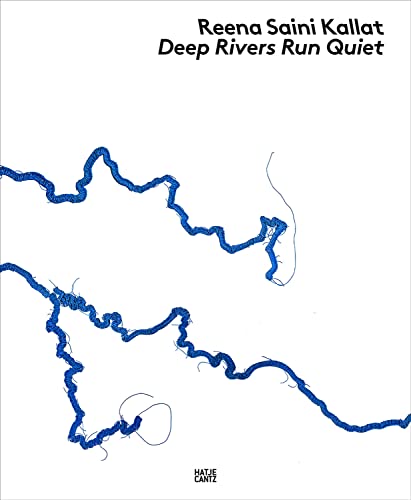
Reena Saini Kallat’s practice evolves around the tension between the concept of barriers in a world fundamentally shaped by mobility and interaction. Exploring the divisive narratives around national and geopolitical borders and their impact on identity and self-image for people and their immediate environment, she is also concerned with social and psychological barriers. That barriers give way, and can be subverted, is an idea that is pronounced in Kallat’s work using electric cables twisted to resemble barbed wire. She uses the paradox of the existence of technology for free flow of information and restriction on movement. In order to expose the ambiguity of national narratives, the figure of the hybrid has come to hold symbolic potential in her practice, as a truant against dividing lines: Kallat creates hybrids of animals and plants that are strongly associated with national identity, only to show that nature defies the violent cleaving through land and nature, and uses the motif of the river, which is often both, border and lifeline to both sides. Kallat’s work reveals the idea of isolation as an illusion, and instead suggests to embrace a pluralism of cultures.
"synopsis" may belong to another edition of this title.
About the Author
REENA SAINI KALLAT (*1973, Delhi) is one of the most acclaimed contemporary artists from India. Having studied painting in Mumbai, where she also lives today, her practice spans drawing, sculpture and installation, photography and video. Her interest in political and social borders resonates with the continuing aftershocks of the Partition in India, which her paternal family experienced. Her work is widely exhibited at international institutions including the Museum of Modern Art, New York, and Tate Modern, among many others.
From the Back Cover
Recent multimedia works from an artist interrogating the impact of borders on the construction of personal and national identities. Indian artist Reena Saini Kallat (born 1973) explores the divisive narratives around national and geopolitical borders and their impact on identity and self-image. Encompassing painting, photography, sculpture and video, her practice interrogates the concept of barriers in a world fundamentally shaped by mobility and interaction.
"About this title" may belong to another edition of this title.
Search results for Reena Saini Kallat: Deep Rivers Run Quiet: Sitelines:...

Stock Image
Reena Saini Kallat: Deep Rivers Run Quiet
Seller: HPB-Ruby, Dallas, TX, U.S.A.
Seller rating 5 out of 5 stars

paperback. Condition: Very Good. Connecting readers with great books since 1972! Used books may not include companion materials, and may have some shelf wear or limited writing. We ship orders daily and Customer Service is our top priority! Seller Inventory # S_429376438
Seller Image
Reena Saini Kallat: Deep Rivers Run Quiet
Seller: artbook-service, Berlin, Germany
Seller rating 5 out of 5 stars
Taschenbuch. Condition: Sehr gut. Gebraucht - Sehr gut Ungelesenes, vollständiges Exemplar; in sehr gutem Zustand, leichte Lagerspuren, als Mängelexemplar gekennzeichnet -Reena Saini Kallat setzt sich mit geopolitischen und geographischen Grenzen auseinander, die Identität und das Selbstverständnis der betroffenen Bevölkerung und ihre unmittelbare Umwelt prägen. Nationale Grenzen als gesellschaftliche und politische Konstruktionen enttarnend, geht es ihr nicht nur um umkämpfte Territorialgrenzen, sondern auch um soziale und psychologische Barrieren. Ihre stets mehrdeutigen Arbeiten stellen dem trennenden Element immer auch eine verbindende Komponente gegenüber. Ein zentrales Motiv ist der Stacheldraht: Doch Kallat knüpft das Symbol der Beschränkung der Bewegungsfreiheit aus Elektrokabeln, die einen Austausch über Grenzen hinweg ermöglichen. Sie schafft Hybridwesen einer Flora und Fauna, die sich nicht durch die gewaltsame Zerschneidung von Land miteinander in Konflikt stehender Staaten trennen lässt und folgt Flussläufen, die sowohl natürliche Grenze als auch Lebensadern zu beiden Ufern sind. Eindrücklich ruft sie in Erinnerung, wozu die Menschheit (noch) nicht in der Lage ist: ein friedliches und gleichberechtigtes Miteinander und ein gelebter Pluralismus der Kulturen.REENA SAINI KALLAT (\*1973, Delhi) ist eine der wichtigsten indischen Künstlerinnen der Gegenwart. 1996 schloss sie ihr Studium der Malerei in Mumbai ab, wo sie auch heute lebt. In ihren Zeichnungen, Soundinstallationen, Skulpturen, Fotografien und Videoarbeiten hat die Figur des Hybriden ein symbolisches Potenzial. Ihre Familie selbst war durch die Vertreibung aus Lahore von der gewaltsamen Teilung Indiens und Pakistans betroffen. Ihre Arbeiten werden vielfach international gezeigt u.a. im MoMA in New York, der Tate Modern in London. 120 pp. Deutsch, Englisch. Seller Inventory # 7031645
Stock Image
Reena Saini Kallat: Deep Rivers Run Quiet
Published by
Hatje Cantz and Kunstmuseum Thun, 2023
ISBN 10: 3775754873
ISBN 13: 9783775754873
Used
Softcover
Seller: ANARTIST, New York, NY, U.S.A.
Seller rating 5 out of 5 stars
Softcover, 120 pages, in English and German; as new condition; clean and crisp; no internal marks. Foreign shipping may be extra. Seller Inventory # ReKaHa45
Seller Image
Reena Saini Kallat: Deep Rivers Run Quiet
Seller: artbook-service, Berlin, Germany
Seller rating 5 out of 5 stars
Taschenbuch. Condition: Neu. Neu -Reena Saini Kallat setzt sich mit geopolitischen und geographischen Grenzen auseinander, die Identität und das Selbstverständnis der betroffenen Bevölkerung und ihre unmittelbare Umwelt prägen. Nationale Grenzen als gesellschaftliche und politische Konstruktionen enttarnend, geht es ihr nicht nur um umkämpfte Territorialgrenzen, sondern auch um soziale und psychologische Barrieren. Ihre stets mehrdeutigen Arbeiten stellen dem trennenden Element immer auch eine verbindende Komponente gegenüber. Ein zentrales Motiv ist der Stacheldraht: Doch Kallat knüpft das Symbol der Beschränkung der Bewegungsfreiheit aus Elektrokabeln, die einen Austausch über Grenzen hinweg ermöglichen. Sie schafft Hybridwesen einer Flora und Fauna, die sich nicht durch die gewaltsame Zerschneidung von Land miteinander in Konflikt stehender Staaten trennen lässt und folgt Flussläufen, die sowohl natürliche Grenze als auch Lebensadern zu beiden Ufern sind. Eindrücklich ruft sie in Erinnerung, wozu die Menschheit (noch) nicht in der Lage ist: ein friedliches und gleichberechtigtes Miteinander und ein gelebter Pluralismus der Kulturen.REENA SAINI KALLAT (\*1973, Delhi) ist eine der wichtigsten indischen Künstlerinnen der Gegenwart. 1996 schloss sie ihr Studium der Malerei in Mumbai ab, wo sie auch heute lebt. In ihren Zeichnungen, Soundinstallationen, Skulpturen, Fotografien und Videoarbeiten hat die Figur des Hybriden ein symbolisches Potenzial. Ihre Familie selbst war durch die Vertreibung aus Lahore von der gewaltsamen Teilung Indiens und Pakistans betroffen. Ihre Arbeiten werden vielfach international gezeigt u.a. im MoMA in New York, der Tate Modern in London. 120 pp. Deutsch, Englisch. Seller Inventory # 15004033
Stock Image
Reena Saini Kallat : Deep Rivers Run Quiet
Seller: GreatBookPrices, Columbia, MD, U.S.A.
Seller rating 5 out of 5 stars
Condition: New. Seller Inventory # 45647521-n
Stock Image
Reena Saini Kallat: Deep Rivers Run Quiet
Seller: PBShop.store UK, Fairford, GLOS, United Kingdom
Seller rating 5 out of 5 stars
PAP. Condition: New. New Book. Shipped from UK. Established seller since 2000. Seller Inventory # L2-9783775754873
Buy New
£ 38.23
£ 5.02 shipping
Ships from United Kingdom to U.S.A.
Ships from United Kingdom to U.S.A.
Quantity: 10 available
Stock Image
Reena Saini Kallat : Deep Rivers Run Quiet
Seller: GreatBookPrices, Columbia, MD, U.S.A.
Seller rating 5 out of 5 stars
Condition: As New. Unread book in perfect condition. Seller Inventory # 45647521
Stock Image
Reena Saini Kallat: Deep Rivers Run Quiet
Seller: PBShop.store US, Wood Dale, IL, U.S.A.
Seller rating 5 out of 5 stars
PAP. Condition: New. New Book. Shipped from UK. Established seller since 2000. Seller Inventory # L2-9783775754873
Stock Image
Reena Saini Kallat: Deep Rivers Run Quiet
Seller: Ria Christie Collections, Uxbridge, United Kingdom
Seller rating 5 out of 5 stars
Condition: New. In English. Seller Inventory # ria9783775754873_new
Buy New
£ 41.70
£ 11.29 shipping
Ships from United Kingdom to U.S.A.
Ships from United Kingdom to U.S.A.
Quantity: 10 available
Seller Image
Reena Saini Kallat - Deep rivers run quiet. Herausgeber: Kunstmuseum Thun, Helen Hirsch ; Übersetzungen: Alexandra Titze-Grabec, Cornelius Reiber, Steven Lindberg
Published by
Berlin, Germany : Hatje Cantz, 2023
ISBN 10: 3775754873
ISBN 13: 9783775754873
Used
Broschur,
Seller: nika-books, Nordwestuckermark-Fürstenwerder, NWUM, Germany
Seller rating 5 out of 5 stars
Broschur, 119 Seiten, deutsch-englisch, Das Buch ist in einem sehr guten Zustand. 9783775754873 Sprache: Deutsch Gewicht in Gramm: 198. Seller Inventory # 69734