
Items related to Constitutional Democracy in a Multicultural and Globalised...
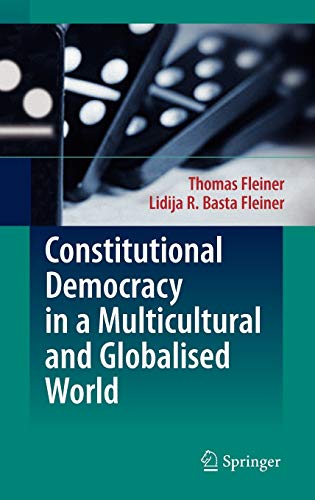
Synopsis
After World War II, states transformed into ‘collective fortresses’ in order to protect competing ideological systems. The debate on post-modern statehood heavily built on ideological disputes between liberalism and communism, over the nature of the economic and social system, and the state and government that could sustain such a system. What is an ‘ideologically acceptable’ state-concept; which tasks and fu- tions should the state fulfil, and how to legitimate not only democratic, but also authoritarian and even totalitarian regimes? These questions were at the very centre of state theory. However, after the fall of communism in Europe and the former Soviet Union, the discourse of state and government scholarship radically changed. The need for a profound shift in the state paradigm was emerging. The time after 1989 seemed to proclaim that the nation-state had lost its raison d’être as an island of undisputed and unlimited sovereignty. A globalised world order broke open the ‘fortress state’ that developed within the tradition of European constitutionalism. Given the simultaneous structural changes to the nation-state’s foundations, socio-economic and political reforms going hand in hand with new constitutional designs, the ‘state in transition’ started paving the way towards a new state paradigm, and not only with regard to the states in the process of de- cratic transformation from socialist into liberal constitutional democracies.
"synopsis" may belong to another edition of this title.
Synopsis
'This book is 'full of profound insights, stimulating reflections and ideas, and creative provocations, such as the authors' continuous scepticism towards the liberal political and state theory'. Defining the multicultural state as the essential political community of the 21st century and redefining the basic concepts of the theory of state to that effect, this book may become a milestone in the history of political and state theory' - Ulrich K. Preuss in the "International Journal of Constitutional Law, 2006, page 576-581. 'It is a great merit of Thomas Fleiner and Lidija R. Basta Fleiner that they identify both internal changes of a personal substrate of contemporary states and the challenges of globalization not only with an astonishing seismological sensitiveness; moreover, they do it in a manner, which distinguishes their book with regard to other works on the theory of the State' - Felix Hanschmann, in "Kritische Justiz", 2005, page 207-213.
"About this title" may belong to another edition of this title.
Search results for Constitutional Democracy in a Multicultural and Globalised...

Seller Image
Constitutional Democracy in a Multicultural and Globalised World
Published by
Berlin: Springer-Verlag Berlin Heidelberg. Printed in the USA, 2009
ISBN 10: 3540764119
ISBN 13: 9783540764113
New
Hardcover
First Edition
Seller: James Payne, Books and Prints, New York City, NY, U.S.A.
Seller rating 5 out of 5 stars

Hardcover. Condition: New. First Edition. [POLITICS]. Thomas Fleiner, Lidija R. Basta Fleiner. Translated by Katy Le Roy. "Constitutional Democracy in a Multicultural and Globalised World." Berlin: Springer-Verlag Berlin Heidelberg. Printed in the USA, 2009. First edition. English language. Hardcover. Nonfiction academic text in nine chapters with preface, bibliography, index, and black-and-white maps. 9 1/2 x 6 1/2 inches. 42 oz. xxvi, 670 pp. Text clean. New. ISBN: 9783540764113. "After World War II, states transformed into ?collective fortresses? in order to protect competing ideological systems. The debate on post-modern statehood heavily built on ideological disputes between liberalism and communism, over the nature of the economic and social system, and the state and government that could sustain such a system. What is an ?ideologically acceptable? state-concept; which tasks and functions should the state fulfill, and how to legitimate not only democratic, but also authoritarian and even totalitarian regimes? These questions were at the very center of state theory. However, after the fall of communism in Europe and the former Soviet Union, the discourse of state and government scholarship radically changed. The need for a profound shift in the state paradigm was emerging. The time after 1989 seemed to proclaim that the nation-state had lost its raison d?etre as an island of undisputed and unlimited sovereignty. A globalized world order broke open the ?fortress state? that developed within the tradition of European constitutionalism. Given the simultaneous structural changes to the nation-state?s foundations, socioeconomic and political reforms going hand in hand with new constitutional designs, the ?state in transition? started paving the way toward a new state paradigm, and not only with regard to the states in the process of transformation from socialist into liberal constitutional democracies.". Seller Inventory # 07118
Stock Image
Constitutional Democracy in a Multicultural and Globalised World (eng)
Print on DemandSeller: Brook Bookstore On Demand, Napoli, NA, Italy
Seller rating 5 out of 5 stars
Condition: new. Questo è un articolo print on demand. Seller Inventory # XKONFO09A5
Buy New
£ 76.26
£ 17.17 shipping
Ships from Italy to U.S.A.
Ships from Italy to U.S.A.
Quantity: Over 20 available
Stock Image
Constitutional Democracy in a Multicultural and Globalised World
Seller: Ria Christie Collections, Uxbridge, United Kingdom
Seller rating 5 out of 5 stars
Condition: New. In. Seller Inventory # ria9783540764113_new
Buy New
£ 96.88
£ 11.98 shipping
Ships from United Kingdom to U.S.A.
Ships from United Kingdom to U.S.A.
Quantity: Over 20 available
Seller Image
Constitutional Democracy in a Multicultural and Globalised World
Published by
Berlin Springer Berlin Heidelberg Springer Jan 2009, 2009
ISBN 10: 3540764119
ISBN 13: 9783540764113
New
Hardcover
Seller: BuchWeltWeit Ludwig Meier e.K., Bergisch Gladbach, Germany
Seller rating 5 out of 5 stars
Buch. Condition: Neu. This item is printed on demand - it takes 3-4 days longer - Neuware -After World War II, states transformed into 'collective fortresses' in order to protect competing ideological systems. The debate on post-modern statehood heavily built on ideological disputes between liberalism and communism, over the nature of the economic and social system, and the state and government that could sustain such a system. What is an 'ideologically acceptable' state-concept; which tasks and fu- tions should the state fulfil, and how to legitimate not only democratic, but also authoritarian and even totalitarian regimes These questions were at the very centre of state theory. However, after the fall of communism in Europe and the former Soviet Union, the discourse of state and government scholarship radically changed. The need for a profound shift in the state paradigm was emerging. The time after 1989 seemed to proclaim that the nation-state had lost its raison d'être as an island of undisputed and unlimited sovereignty. A globalised world order broke open the 'fortress state' that developed within the tradition of European constitutionalism. Given the simultaneous structural changes to the nation-state's foundations, socio-economic and political reforms going hand in hand with new constitutional designs, the 'state in transition' started paving the way towards a new state paradigm, and not only with regard to the states in the process of de- cratic transformation from socialist into liberal constitutional democracies. 670 pp. Englisch. Seller Inventory # 9783540764113
Seller Image
Constitutional Democracy in a Multicultural and Globalised World
Published by
Springer Berlin Heidelberg, 2009
ISBN 10: 3540764119
ISBN 13: 9783540764113
New
Hardcover
Seller: moluna, Greven, Germany
Seller rating 5 out of 5 stars
Gebunden. Condition: New. Dieser Artikel ist ein Print on Demand Artikel und wird nach Ihrer Bestellung fuer Sie gedruckt. A theory of the state of the 21st century, facing the challenges of internal heterogeneity and the pressures of its unprecedented globalized interdependency without giving up democracy and the rule of lawAfter World War II, states transformed into `coll. Seller Inventory # 4900482
Buy New
£ 82.24
£ 42.06 shipping
Ships from Germany to U.S.A.
Ships from Germany to U.S.A.
Quantity: Over 20 available
Stock Image
Constitutional Democracy in a Multicultural and Globalised World
Seller: Books Puddle, New York, NY, U.S.A.
Seller rating 4 out of 5 stars

Condition: New. pp. 700, Maps. Seller Inventory # 26445790
Stock Image
Constitutional Democracy in a Multicultural and Globalised World
Print on DemandSeller: Majestic Books, Hounslow, United Kingdom
Seller rating 4 out of 5 stars
Condition: New. Print on Demand pp. 700 52:B&W 6.14 x 9.21in or 234 x 156mm (Royal 8vo) Case Laminate on White w/Gloss Lam, Maps. Seller Inventory # 7434881
Buy New
£ 132.26
£ 6.50 shipping
Ships from United Kingdom to U.S.A.
Ships from United Kingdom to U.S.A.
Quantity: 4 available
Seller Image
Constitutional Democracy in a Multicultural and Globalised World
Published by
Springer, Berlin, Springer, 2009
ISBN 10: 3540764119
ISBN 13: 9783540764113
New
Hardcover
Seller: AHA-BUCH GmbH, Einbeck, Germany
Seller rating 5 out of 5 stars
Buch. Condition: Neu. Druck auf Anfrage Neuware - Printed after ordering - After World War II, states transformed into 'collective fortresses' in order to protect competing ideological systems. The debate on post-modern statehood heavily built on ideological disputes between liberalism and communism, over the nature of the economic and social system, and the state and government that could sustain such a system. What is an 'ideologically acceptable' state-concept; which tasks and fu- tions should the state fulfil, and how to legitimate not only democratic, but also authoritarian and even totalitarian regimes These questions were at the very centre of state theory. However, after the fall of communism in Europe and the former Soviet Union, the discourse of state and government scholarship radically changed. The need for a profound shift in the state paradigm was emerging. The time after 1989 seemed to proclaim that the nation-state had lost its raison d'être as an island of undisputed and unlimited sovereignty. A globalised world order broke open the 'fortress state' that developed within the tradition of European constitutionalism. Given the simultaneous structural changes to the nation-state's foundations, socio-economic and political reforms going hand in hand with new constitutional designs, the 'state in transition' started paving the way towards a new state paradigm, and not only with regard to the states in the process of de- cratic transformation from socialist into liberal constitutional democracies. Seller Inventory # 9783540764113
Stock Image
Constitutional Democracy in a Multicultural and Globalised World
Print on DemandSeller: Biblios, Frankfurt am main, HESSE, Germany
Seller rating 4 out of 5 stars
Condition: New. PRINT ON DEMAND pp. 700. Seller Inventory # 18445780
Stock Image
Constitutional Democracy in a Multicultural and Globalised World
Seller: Buchpark, Trebbin, Germany
Seller rating 5 out of 5 stars
Condition: Sehr gut. Zustand: Sehr gut | Seiten: 670 | Sprache: Englisch | Produktart: Bücher | Keine Beschreibung verfügbar. Seller Inventory # 4309561/12