
Items related to Et Sapienter et Eloquenter: Studies on Rhetorical and...
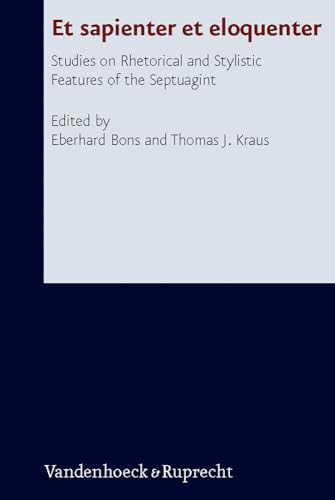
Et Sapienter et Eloquenter: Studies on Rhetorical and Stylistic Features of the Septuagint (Forschungen zur Religion und Literatur des Alten und Neuen Testaments): 241 - Hardcover
Synopsis
This volume considers the question whether the translators of the Septuagint might have used their rhetorical and stylistic skills in order to make their texts appear wise and eloquent. Over the last years the Septuagint has gradually edged closer into the interest of Biblical scholars and into the centre of historical and philological research. The question which has hardly been studied so far is to what extent the Greek translation of the Bible consists of stylistic and rhetorical elements that are not present in the Hebrew source text. This issue is taken up in this collected volume. Seven scholars investigate into stylistic and rhetorical elements present in various books of the Bible and establish a field of work that deserves to receive more attention in the future. Contributors are E. Bons, J.M. Dines, K. Hauspie, J. Joosten, T.J. Kraus, A. Léonas and K. Usener.
"synopsis" may belong to another edition of this title.
About the Authors
Eberhard Bons, b. 1958, dr. theol., is Professor of Old Testament at the University of Strasbourg.
Dr. theol. Thomas J. Kraus is a teacher of English and Ethics at a Bavarian grammar school.
"About this title" may belong to another edition of this title.
Search results for Et Sapienter et Eloquenter: Studies on Rhetorical and...

Stock Image
Et Sapienter Et Eloquenter: Studies on Rhetorical and Stylistic Features of the Septuagint (Forschungen Zur Religion Und Literatur Des Alten Und Neuen . 241) (English, Greek and German Edition)
Published by
Vandenhoeck & Ruprecht Gmbh & Co, 2011
ISBN 10: 352553261X
ISBN 13: 9783525532614
Used
Hardcover
Seller: Jackson Street Booksellers, Omaha, NE, U.S.A.
Seller rating 5 out of 5 stars

Hardcover. Condition: Near Fine. Near fine copy in pictorial hardcover. Rubbing to covers. Seller Inventory # 050967
Seller Image
Et sapienter et eloquenter
Published by
Vandenhoeck & Ruprecht Gmbh & Co, 2013
ISBN 10: 352553261X
ISBN 13: 9783525532614
Used
Hardcover
Seller: SKULIMA Wiss. Versandbuchhandlung, Westhofen, Germany
Seller rating 5 out of 5 stars
Condition: Wie Neu. Zustandsbeschreibung: leichte Lagerspuren/minor shelfwear. Studies on Rhetorical and Stylistic Features of the Septuagint. Edited by Eberhard Bons and Thomas J. Kraus. The question is to what extent the Greek translation of the Bible consists of stylistic and rhetorical elements that are not present in the Hebrew source text. Did the translators made use of their rhetoric and stylistic skills to give their translations a distinctive ornatus?Seven scholars investigate into stylistic and rhetorical elements present in various books of the Bible (e.g., Psalms, Amos, and Solomon's Book of Wisdom). With 7 contributions by Jan Joosten, Jennifer M. Dines, Thomas J. Kraus et al. 165 Seiten, gebunden (Forschungen zur Religion und Literatur des Alten und Neuen Testaments; Band 241/Vandenhoeck & Ruprecht 2013). Statt EUR 99,00. Gewicht: 410 g - Gebunden/Gebundene Ausgabe. Seller Inventory # 113272
Seller Image
Et sapienter et eloquenter. Studies on Rhetorical and Stylistic Features of the Septuagint
Seller: primatexxt Buchversand, München, Germany
Seller rating 5 out of 5 stars
gebundene Ausgabe. Condition: Sehr gut. 165 Seiten Text englisch - Leichte äußere Mängel - Buch ist als Mängelexemplar gekennzeichnet - Buch ansonsten in sehr gutem und ungelesenem Zustand - Jeder Lieferung liegt eine ordentliche Rechnung mit ausgewiesener MwSt. bei Sprache: Englisch Gewicht in Gramm: 450. Seller Inventory # 180533
Stock Image
Et Sapienter et Eloquenter
Published by
Vandenhoeck and Ruprecht, 2011
ISBN 10: 352553261X
ISBN 13: 9783525532614
New
Hardcover
Seller: PBShop.store UK, Fairford, GLOS, United Kingdom
Seller rating 5 out of 5 stars
HRD. Condition: New. New Book. Shipped from UK. Established seller since 2000. Seller Inventory # GZ-9783525532614
Buy New
£ 86.56
£ 4.16 shipping
Ships from United Kingdom to U.S.A.
Ships from United Kingdom to U.S.A.
Quantity: 2 available
Seller Image
Et Sapienter Et Eloquenter : Studies on Rhetorical and Stylistic Features of the Septuagint
Published by
Vandenhoeck & Ruprecht Gmbh & Co, 2011
ISBN 10: 352553261X
ISBN 13: 9783525532614
New
Hardcover
Seller: GreatBookPrices, Columbia, MD, U.S.A.
Seller rating 5 out of 5 stars
Condition: New. Seller Inventory # 14356671-n
Stock Image
Et Sapienter Et Eloquenter
Published by
Vandenhoeck & Ruprecht GmbH & Co KG, 2011
ISBN 10: 352553261X
ISBN 13: 9783525532614
New
Hardcover
Seller: Kennys Bookshop and Art Galleries Ltd., Galway, GY, Ireland
Seller rating 5 out of 5 stars
Condition: New. To what extent does the Greek translation of the Bible contain stylistic and rhetorical elements that are not present in the Hebrew source text? This title examines this question. It investigates the stylistic and rhetorical elements present in various books of the Bible (for example: "Psalms", "Amos", and "Solomons Book of Wisdom"). Editor(s): Bons, Eberhard; Kraus, Thomas J. Num Pages: 165 pages. BIC Classification: HRCG. Category: (P) Professional & Vocational; (U) Tertiary Education (US: College). Weight in Grams: 1209. . 2011. Hardback. . . . . Seller Inventory # V9783525532614
Seller Image
Et Sapienter Et Eloquenter : Studies on Rhetorical and Stylistic Features of the Septuagint
Published by
Vandenhoeck & Ruprecht Gmbh & Co, 2011
ISBN 10: 352553261X
ISBN 13: 9783525532614
Used
Hardcover
Seller: GreatBookPrices, Columbia, MD, U.S.A.
Seller rating 5 out of 5 stars
Condition: As New. Unread book in perfect condition. Seller Inventory # 14356671
Seller Image
Et Sapienter Et Eloquenter : Studies on Rhetorical and Stylistic Features of the Septuagint
Published by
Vandenhoeck & Ruprecht Gmbh & Co, 2011
ISBN 10: 352553261X
ISBN 13: 9783525532614
New
Hardcover
Seller: GreatBookPricesUK, Woodford Green, United Kingdom
Seller rating 5 out of 5 stars
Condition: New. Seller Inventory # 14356671-n
Buy New
£ 86.55
£ 15 shipping
Ships from United Kingdom to U.S.A.
Ships from United Kingdom to U.S.A.
Quantity: 2 available
Seller Image
Et Sapienter et Eloquenter
Published by
Vandenhoeck and Ruprecht GmbH and Co KG, DE, 2011
ISBN 10: 352553261X
ISBN 13: 9783525532614
New
Hardcover
Seller: Rarewaves.com USA, London, LONDO, United Kingdom
Seller rating 5 out of 5 stars
Hardback. Condition: New. As the ancient Greek version of the Old Testament the Septuagint is probably the first great translation project of Greco-Roman antiquity. Together with the Septuagint text the religion and culture of ancient Judaism came to the fore of a Greek speaking audience, which did not have any access to the holy scriptures of the Jews in Hebrew. That translation project also manifested a transfer of religious, social, and anthropological categories and concepts of Semitic origin to another cultural world of language and science that itself was shaped by Hellenism.Over the last years the Septuagint has gradually edged closer into the interest of Biblical scholars and into the centre of historical and philological research. In the course of this main attention has not only been paid to further particulars of its origination in Alexandria but also on various linguistic specifics and distinctive features with regards to content of the Greek Bible. The question, however, which has hardly been studied so far, is to what extent the Greek translation of the Bible consists of stylistic and rhetorical elements that are not present in the Hebrew source text. Did the translators made use of their rhetoric and stylistic skills to give their translations a distinctive ornatus? Can we, according to Augustine, rightly claim that not only the authors of the Biblical texts but also the translators knew to formulate et eloquenter et sapienter, i.e. in an eloquent and wise manner? This issue, neglected in current research, is taken up in this collected volume. Seven scholars investigate into stylistic and rhetorical elements present in various books of the Bible (e.g., Psalms, Amos, and Solomon's Book of Wisdom) and establish a field of work that deserves to receive more attention in the future.Contributors are Eberhard Bons, Jennifer M. Dines, Katrin Hauspie, Jan Joosten, Thomas J. Kraus, A. Léonas, and K. Usener. Seller Inventory # LU-9783525532614
Buy New
£ 107.02
Free Shipping
Ships from United Kingdom to U.S.A.
Ships from United Kingdom to U.S.A.
Quantity: 1 available
Seller Image
Et Sapienter Et Eloquenter : Studies on Rhetorical and Stylistic Features of the Septuagint
Published by
Vandenhoeck & Ruprecht Gmbh & Co, 2011
ISBN 10: 352553261X
ISBN 13: 9783525532614
Used
Hardcover
Seller: GreatBookPricesUK, Woodford Green, United Kingdom
Seller rating 5 out of 5 stars
Condition: As New. Unread book in perfect condition. Seller Inventory # 14356671
Buy Used
£ 95.83
£ 15 shipping
Ships from United Kingdom to U.S.A.
Ships from United Kingdom to U.S.A.
Quantity: 2 available