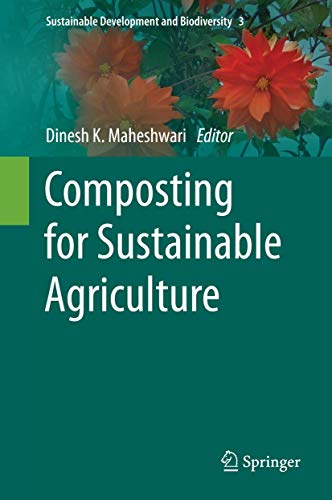
Synopsis
The dramatic worldwide increase in agricultural and industrial productivity has created severe environmental problems. Soil and groundwater reservoirs have been polluted with pesticides, xenobiotics and agro-chemicals. The global consensus to reduce inputs of chemical pesticides and agrochemical fertilizers, which are perceived at being hazardous by some consumers, has provided opportunities for the development of novel, benign sustainable crop management strategies.
The future of agricultural depends upon our ability to enhance the productivity without damage to their long-term production potential. One of the strategies is the application of effective microbial products beneficial for both farmers and ecosystems. This kind of approach can ensure both ecological and economic sustainability. Soil microbial populations are immersed in framework of interactions, which are known to affect plant fitness and soil quality.
For betterment of life of human being, improvedquality and variety of products are formed due to versatile action of different group of microorganisms, Microbes are able to degrade solid waste material into compost which is a mixture of decayed organic matter, manure etc. Incomplete microbial degradation of organic waste where the microbial process varies aerobic to anaerobic form is stated as compost, if added to soil improves plant growth and development. The biological activities and microbial metabolism in the soil contribute to alter its mixture and fertility. Incorporation of organic remain in the form of compost is known to influence favourably the physio-chemical and biological properties of soil. The beneficial activities bestowed upon plants by compost utilization are multifaceted, hence most promising alternatives for achieving sustainable agricultural production.
An increased awareness on compost has led to their use in agricultural concern. Contents in the present book will comprised various chapters on the role of beneficial bacteria in the composting process. The application is depicted to achieve the attainable productivity besides, in disease management and suppressiveness of organisms of phytopathogenic in nature. Significance of the compost elicits certain responses e.g. soil reclamation, soil fertility, soil health and disease management exhibit due to quality compost amendment in soil. It serves as low cost prospective option for sustainable crop production and protection.
"synopsis" may belong to another edition of this title.
From the Back Cover
Excessive use of agrochemicals such as fertilizers and pesticides have some substantial benefits in enhancing crop productivity but may lead to environmental and ecological damages.
Compost, the organic by-products of farming and allied industries which derive from animals and other sources is considered as the source of immense practical value for raising crops. It aids agricultural sustainability by means of various processes such as green manuring, mulching etc.
Significance of compost for sustainable agriculture and the role of beneficial micro-organisms in composting processes is depicted in this volume entitled “Composting for Sustainable Agriculture”.
"About this title" may belong to another edition of this title.
Other Popular Editions of the Same Title

Search results for Composting for Sustainable Agriculture: 3 (Sustainable...

Stock Image
Composting for Sustainable Agriculture.
Seller: Universitätsbuchhandlung Herta Hold GmbH, Berlin, Germany
Seller rating 5 out of 5 stars

x, 290 p. Hardcover. Versand aus Deutschland / We dispatch from Germany via Air Mail. Einband bestoßen, daher Mängelexemplar gestempelt, sonst sehr guter Zustand. Imperfect copy due to slightly bumped cover, apart from this in very good condition. Stamped. Sprache: Englisch. Seller Inventory # 43029HB
Stock Image
Composting For Sustainable Agriculture
Seller: Romtrade Corp., STERLING HEIGHTS, MI, U.S.A.
Seller rating 5 out of 5 stars
Condition: New. This is a Brand-new US Edition. This Item may be shipped from US or any other country as we have multiple locations worldwide. Seller Inventory # ABNR-156435
Stock Image
Composting For Sustainable Agriculture
Seller: Basi6 International, Irving, TX, U.S.A.
Seller rating 5 out of 5 stars
Condition: Brand New. New. US edition. Expediting shipping for all USA and Europe orders excluding PO Box. Excellent Customer Service. Seller Inventory # ABEOCT25-237081
Stock Image
Composting for Sustainable Agriculture (Sustainable Development and Biodiversity, 3)
Seller: ALLBOOKS1, Direk, SA, Australia
Seller rating 5 out of 5 stars
Brand new book. Fast ship. Please provide full street address as we are not able to ship to P O box address. Seller Inventory # SHAK237081
Stock Image
Composting for Sustainable Agriculture
Seller: Books Puddle, New York, NY, U.S.A.
Seller rating 4 out of 5 stars

Condition: New. pp. x + 290. Seller Inventory # 26323889715
Stock Image
Composting for Sustainable Agriculture
Seller: Majestic Books, Hounslow, United Kingdom
Seller rating 4 out of 5 stars
Condition: New. pp. x + 290 43 Illus. (16 Col.). Seller Inventory # 322541036
Stock Image
Composting for Sustainable Agriculture
Seller: Biblios, Frankfurt am main, HESSE, Germany
Seller rating 4 out of 5 stars
Condition: New. pp. x + 290. Seller Inventory # 18323889721
Stock Image
Composting for Sustainable Agriculture (Sustainable Development and Biodiversity, 3)
Seller: Lucky's Textbooks, Dallas, TX, U.S.A.
Seller rating 5 out of 5 stars
Condition: New. Seller Inventory # ABLIING23Mar3113020087675
Stock Image
Composting for Sustainable Agriculture (Sustainable Development and Biodiversity, 3)
Seller: Ria Christie Collections, Uxbridge, United Kingdom
Seller rating 5 out of 5 stars
Condition: New. In. Seller Inventory # ria9783319080031_new
Buy New
£ 134.30
Shipping:
£ 11.98
From United Kingdom to U.S.A.
Quantity: Over 20 available
Seller Image
Composting for Sustainable Agriculture
Published by
Springer International Publishing Nov 2014, 2014
ISBN 10: 3319080032
ISBN 13: 9783319080031
New
Hardcover
Seller: BuchWeltWeit Ludwig Meier e.K., Bergisch Gladbach, Germany
Seller rating 5 out of 5 stars
Buch. Condition: Neu. Neuware -The dramatic worldwide increase in agricultural and industrial productivity has created severe environmental problems. Soil and groundwater reservoirs have been polluted with pesticides, xenobiotics and agro-chemicals. The global consensus to reduce inputs of chemical pesticides and agrochemical fertilizers, which are perceived at being hazardous by some consumers, has provided opportunities for the development of novel, benign sustainable crop management strategies.The future of agricultural depends upon our ability to enhance the productivity without damage to their long-term production potential. One of the strategies is the application of effective microbial products beneficial for both farmers and ecosystems. This kind of approach can ensure both ecological and economic sustainability. Soil microbial populations are immersed in framework of interactions, which are known to affect plant fitness and soil quality.For betterment of life of human being, improved quality and variety of products are formed due to versatile action of different group of microorganisms, Microbes are able to degrade solid waste material into compost which is a mixture of decayed organic matter, manure etc. Incomplete microbial degradation of organic waste where the microbial process varies aerobic to anaerobic form is stated as compost, if added to soil improves plant growth and development. The biological activities and microbial metabolism in the soil contribute to alter its mixture and fertility. Incorporation of organic remain in the form of compost is known to influence favourably the physio-chemical and biological properties of soil. The beneficial activities bestowed upon plants by compost utilization are multifaceted, hence most promising alternatives for achieving sustainable agricultural production.An increased awareness on compost has led to their use in agricultural concern. Contents in the present book will comprised various chapters on the role of beneficial bacteria in the composting process. The application is depicted to achieve the attainable productivity besides, in disease management and suppressiveness of organisms of phytopathogenic in nature. Significance of the compost elicits certain responses e.g. soil reclamation, soil fertility, soil health and disease management exhibit due to quality compost amendment in soil. It serves as low cost prospective option for sustainable crop production and protection. 300 pp. Englisch. Seller Inventory # 9783319080031