
Items related to Geriatric Emergencies: A Case-Based Approach to Improving...
Synopsis
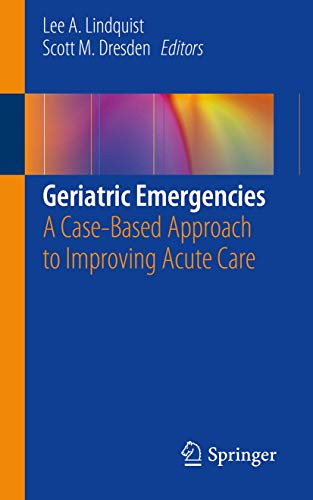
Care for older adults in Emergency Departments (EDs) has historically been focused on acute medical conditions with little emphasis on geriatric-specific issues. In 2010, emergency departments (EDs) throughout the nation saw almost 130 million patients, 15% of whom were 65 or older. The number of older adults who visit an ED has doubled in the last decade and continues to grow rapidly. Older adults receiving care in an ED are highly likely to be admitted to the hospital, much more so than their younger counterparts. Preventing a hospital admission saves older adults from frequently encountered adverse events, including hospital-acquired delirium, functional status impairment, cognitive loss, and nursing home admission.
It is unknown how many older adults are hospitalized for reasons other than acute medical illness, such as functional decline, polypharmacy, progressive dementia, caregiver stress, or unstable living situation. These non-emergent conditions are rarely addressed during a typical ED visit due to lack of resources, significant patient volumes, and the need for rapid turnover of care spaces. The predominant management strategy of emergency physicians to handle these important but not imminently life-threatening geriatric issues is to recommend hospital admission.
Northwestern has pioneered the Geriatric Emergency Department through the creation of the Geriatric Emergency Department Innovation model (GEDI), with goals to prevent admissions for older adults by assessing and meeting their geriatric-specific, non-acute care needs in the ED. The GEDI model at Northwestern centers on a multi-disciplinary curriculum composed of clinical, didactic, and practical arms developed by emergency medicine and geriatrics educational experts.
In this title, we will present case studies of older adults seen in the Emergency Department through the GEDI model and discuss means of identifying/screening for, diagnosing, and treating geriatric syndromes seen in the emergent care of the older adult patient. In addition, there will be a set of concise “take-home points” for each case study that will be easy to commit to memory and implement in clinical care of older adults.
As the number of seniors seeking emergent care will continue to increase, the ED setting must become responsive to geriatric-specific needs. This book will provide a variety of models detailing how to offer comprehensive, state-of-the-art, optimal care for managing the full range of geriatric syndromes that regularly present in the emergent care setting.
"synopsis" may belong to another edition of this title.
About the Author
Lee A. Lindquist, MD MPH MBA
Associate Professor of Medicine
Section Chief of Geriatrics
Northwestern University Feinberg School of Medicine
750 N. Lake Shore Drive, 10th Floor
Chicago, IL 60611
Scott Dresden, MD
Assistant Professor of Medicine
Department of Emergency Medicine
Northwestern University Feinberg School of Medicine
211 E. Ontario, Room 200
Chicago, IL 60611
From the Back Cover
This book introduces the unique medical needs of aging patients in the emergency department and outlines the challenges that leave many clinicians struggling to adequately care for this demographic, including limited resources, management concerns, and other barriers. The text presents strategies for screening, diagnosing, and treating geriatric syndromes seen in the emergency care of the older adult patient. Topics include pharmacological interventions, transitioning care, and sustainability. The text includes complex cases that demonstrate the caution necessary to treat this delicate patient group. Each case concludes with a set of concise “take-home points” to make the guidelines easy to remember and/or reference.
Geriatric Emergencies: A Case-Based Approach to Improving the Acute Care of Seniors is an excellent resource for geriatricians, emergency medicine specialists, internal medicine physicians, hospitalists, nurses, social workers, students, residents, trainees, and all medical professionals working with older patients in an emergency setting.
"About this title" may belong to another edition of this title.
Search results for Geriatric Emergencies: A Case-Based Approach to Improving...

Stock Image
Geriatric Emergencies (eng)
Print on DemandSeller: Brook Bookstore On Demand, Napoli, NA, Italy
Seller rating 5 out of 5 stars

Condition: new. Questo è un articolo print on demand. Seller Inventory # c615a6c721de7185f6ff7408d508df35
Buy New
£ 57.13
£ 4.61 shipping
Ships from Italy to U.S.A.
Ships from Italy to U.S.A.
Quantity: Over 20 available
Stock Image
Geriatric Emergencies: A Case-Based Approach to Improving Acute Care
Seller: HPB-Red, Dallas, TX, U.S.A.
Seller rating 5 out of 5 stars
paperback. Condition: Good. Connecting readers with great books since 1972! Used textbooks may not include companion materials such as access codes, etc. May have some wear or writing/highlighting. We ship orders daily and Customer Service is our top priority! Seller Inventory # S_467568461
Seller Image
Geriatric Emergencies
Published by
Springer International Publishing Mai 2019, 2019
ISBN 10: 3030124134
ISBN 13: 9783030124137
New
Taschenbuch
Seller: BuchWeltWeit Ludwig Meier e.K., Bergisch Gladbach, Germany
Seller rating 5 out of 5 stars
Taschenbuch. Condition: Neu. This item is printed on demand - it takes 3-4 days longer - Neuware -Care for older adults in Emergency Departments (EDs) has historically been focused on acute medical conditions with little emphasis on geriatric-specific issues. In 2010, emergency departments (EDs) throughout the nation saw almost 130 million patients, 15% of whom were 65 or older. The number of older adults who visit an ED has doubled in the last decade and continues to grow rapidly. Older adults receiving care in an ED are highly likely to be admitted to the hospital, much more so than their younger counterparts. Preventing a hospital admission saves older adults from frequently encountered adverse events, including hospital-acquired delirium, functional status impairment, cognitive loss, and nursing home admission. It is unknown how many older adults are hospitalized for reasons other than acute medical illness, such as functional decline, polypharmacy, progressive dementia, caregiver stress, or unstable living situation. These non-emergent conditions are rarely addressed during a typical ED visit due to lack of resources, significant patient volumes, and the need for rapid turnover of care spaces. The predominant management strategy of emergency physicians to handle these important but not imminently life-threatening geriatric issues is to recommend hospital admission. Northwestern has pioneered the Geriatric Emergency Department through the creation of the Geriatric Emergency Department Innovation model (GEDI), with goals to prevent admissions for older adults by assessing and meeting their geriatric-specific, non-acute care needs in the ED. The GEDI model at Northwestern centers on a multi-disciplinary curriculum composed of clinical, didactic, and practical arms developed by emergency medicine and geriatrics educational experts. In this title, we will present case studies of older adults seen in the Emergency Department through the GEDI model and discuss means of identifying/screening for, diagnosing, and treating geriatric syndromes seen in the emergent care of the older adult patient. In addition, there will be a set of concise 'take-home points' for each case study that will be easy to commit to memory and implement in clinical care of older adults. As the number of seniors seeking emergent care will continue to increase, the ED setting must become responsive to geriatric-specific needs. This book will provide a variety of models detailing how to offer comprehensive, state-of-the-art, optimal care for managing the full range of geriatric syndromes that regularly present in the emergent care setting. 224 pp. Englisch. Seller Inventory # 9783030124137
Seller Image
Geriatric Emergencies
Published by
Springer International Publishing, 2019
ISBN 10: 3030124134
ISBN 13: 9783030124137
New
Kartoniert / Broschiert
Seller: moluna, Greven, Germany
Seller rating 5 out of 5 stars
Kartoniert / Broschiert. Condition: New. Dieser Artikel ist ein Print on Demand Artikel und wird nach Ihrer Bestellung fuer Sie gedruckt. Written by experts in geriatric medicine Includes 11 case studies demonstrating the unique considerations of aging patients in the emergency room Each chapter concludes with take-home points Identifies solutions for challenging pro. Seller Inventory # 262744283
Buy New
£ 59.20
£ 41.03 shipping
Ships from Germany to U.S.A.
Ships from Germany to U.S.A.
Quantity: Over 20 available
Seller Image
Geriatric Emergencies : A Case-Based Approach to Improving Acute Care
Seller: AHA-BUCH GmbH, Einbeck, Germany
Seller rating 5 out of 5 stars
Taschenbuch. Condition: Neu. Druck auf Anfrage Neuware - Printed after ordering - Care for older adults in Emergency Departments (EDs) has historically been focused on acute medical conditions with little emphasis on geriatric-specific issues. In 2010, emergency departments (EDs) throughout the nation saw almost 130 million patients, 15% of whom were 65 or older. The number of older adults who visit an ED has doubled in the last decade and continues to grow rapidly. Older adults receiving care in an ED are highly likely to be admitted to the hospital, much more so than their younger counterparts. Preventing a hospital admission saves older adults from frequently encountered adverse events, including hospital-acquired delirium, functional status impairment, cognitive loss, and nursing home admission. It is unknown how many older adults are hospitalized for reasons other than acute medical illness, such as functional decline, polypharmacy, progressive dementia, caregiver stress, or unstable living situation. These non-emergent conditions are rarely addressed during a typical ED visit due to lack of resources, significant patient volumes, and the need for rapid turnover of care spaces. The predominant management strategy of emergency physicians to handle these important but not imminently life-threatening geriatric issues is to recommend hospital admission. Northwestern has pioneered the Geriatric Emergency Department through the creation of the Geriatric Emergency Department Innovation model (GEDI), with goals to prevent admissions for older adults by assessing and meeting their geriatric-specific, non-acute care needs in the ED. The GEDI model at Northwestern centers on a multi-disciplinary curriculum composed of clinical, didactic, and practical arms developed by emergency medicine and geriatrics educational experts. In this title, we will present case studies of older adults seen in the Emergency Department through the GEDI model and discuss means of identifying/screening for, diagnosing, and treating geriatric syndromes seen in the emergent care of the older adult patient. In addition, there will be a set of concise 'take-home points' for each case study that will be easy to commit to memory and implement in clinical care of older adults. As the number of seniors seeking emergent care will continue to increase, the ED setting must become responsive to geriatric-specific needs. This book will provide a variety of models detailing how to offer comprehensive, state-of-the-art, optimal care for managing the full range of geriatric syndromes that regularly present in the emergent care setting. Seller Inventory # 9783030124137
Stock Image
Geriatric Emergencies: A Case-Based Approach to Improving Acute Care
Seller: Books Puddle, Woodside, NY, U.S.A.
Seller rating 4 out of 5 stars

Condition: New. Seller Inventory # 26375937859
Stock Image
Geriatric Emergencies: A Case-Based Approach to Improving Acute Care
Print on DemandSeller: Majestic Books, Hounslow, United Kingdom
Seller rating 4 out of 5 stars
Condition: New. Print on Demand. Seller Inventory # 371188892
Buy New
£ 111.36
£ 6.50 shipping
Ships from United Kingdom to U.S.A.
Ships from United Kingdom to U.S.A.
Quantity: 4 available
Seller Image
Geriatric Emergencies
Published by
Springer, Birkhäuser Mai 2019, 2019
ISBN 10: 3030124134
ISBN 13: 9783030124137
New
Taschenbuch
Seller: buchversandmimpf2000, Emtmannsberg, BAYE, Germany
Seller rating 5 out of 5 stars
Taschenbuch. Condition: Neu. This item is printed on demand - Print on Demand Titel. Neuware -Written by experts in geriatric medicineIncludes 11 case studies demonstrataing the unique considerations of aging patients in the emergency roomEach chapter concludes with 'take-home points' Identifies solutions for challenging problems encountered commonly with older adult patientsSpringer-Verlag KG, Sachsenplatz 4-6, 1201 Wien 224 pp. Englisch. Seller Inventory # 9783030124137
Seller Image
Geriatric Emergencies | A Case-Based Approach to Improving Acute Care
Seller: preigu, Osnabrück, Germany
Seller rating 5 out of 5 stars
Taschenbuch. Condition: Neu. Geriatric Emergencies | A Case-Based Approach to Improving Acute Care | Lee A. Lindquist (u. a.) | Taschenbuch | x | Englisch | 2019 | Springer | EAN 9783030124137 | Verantwortliche Person für die EU: Springer Verlag GmbH, Tiergartenstr. 17, 69121 Heidelberg, juergen[dot]hartmann[at]springer[dot]com | Anbieter: preigu. Seller Inventory # 115129206
Stock Image
Geriatric Emergencies: A Case-Based Approach to Improving Acute Care
Print on DemandSeller: Biblios, Frankfurt am main, HESSE, Germany
Seller rating 4 out of 5 stars
Condition: New. PRINT ON DEMAND. Seller Inventory # 18375937865