
Items related to Best British Poetry 2011, The
Synopsis
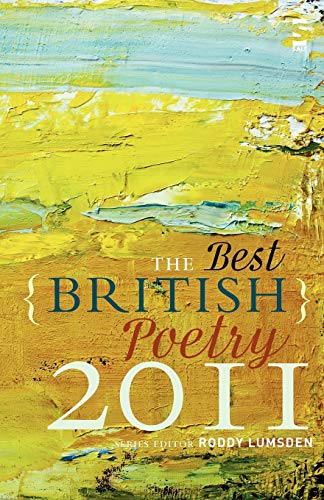
Presents the finest and most engaging poems found in British-based literary magazines and webzines over the past year. The material gathered represents the rich variety of current UK poetry, including lyric, formal and experimental poetry. Each poem is accompanied by a note by the poet themselves, explaining the inspiration for the poem and why they decided to write the poem in that form.
"synopsis" may belong to another edition of this title.
About the Authors
Roddy Lumsden (born 1966) is a Scottish poet, who was born in St Andrews. He has published five collections of poetry, a number of chapbooks and a collection of trivia, as well as editing a generational anthology of British and Irish poets of the 1990s and 2000s, Identity Parade. He lives in London where he teaches for The Poetry School. He died in January 2020.
Mark Burnhope was born in 1982 and studied at London School of Theology before completing an MA in Creative Writing at Brunel University. His work has appeared in a variety of print and online publications. He currently lives and writes in Bournemouth, Dorset with his partner, four stepchildren, two geckos and a greyhound. This is his first book of poetry.
Kayo Chingonyi was born in Zambia in 1987 and came to the UK in 1993. His poems have been published in a range of magazines and anthologies including The Best British Poetry 2011 and The Salt Book Of Younger Poets. He also travels regularly across the UK, and internationally, to give readings. His work has been described as ‘full of contrast, deftly managed with a buoyant and musical hand’ (Poetry International Web)
Amy De’Ath was born in Suffolk in 1985. She studied at the University of East Anglia and in Philadelphia, US, before moving to Australia and then to London. Her poems have appeared in a wide variety of journals in the UK and US and will feature in the Salt Younger Poets 2011 anthology. She currently lives and works in London. This is her first book of poems.
Isobel Dixon has been described by Clive James as being ‘born with the gift of lyricism as natural speech’ and by J M Coetzee as ‘a poet confident in her mastery of her medium.’ Her poems have appeared in publications like The Paris Review, The Guardian, Penguin’s Poems for Love and The Forward Book of Poetry. Salt published A Fold in the Map in 2007. www.isobeldixon.com
Excerpt. © Reprinted by permission. All rights reserved.
fromIntroduction by Roddy Lumsden
The poems presented in this volume were selected from UK-based poetry magazines, literary journals and online publications issued between spring 2010 and spring 2011. The main purpose of this volume is to celebrate the thriving scene of literary magazines and the developing sphere of literary sites online. For the past year, I have been reading these publications as they appeared, seeking poems which struck me as enjoyable, rewarding, accomplished ... I could continue with such adjectives but, in the end, I was not looking for poems to tick boxes; I merely read, with a mix of personal taste and an attempt at a consensus of opinion, and selected the pieces which brought an instinctive 'yes' when I reached the poem's end.
The format of the book owes a debt to The Best American Poetry series of anthologies which was founded in 1988. Similar volumes appear each year in Canada, Australia and Ireland. We have not previously had such a book in the UK, partly because of the existence of a similar series, The Forward Book of Poetry, which has been appearing annually since the early 1990s to coincide with National Poetry Day and the Forward Prizes. The Forward series does a good job, but its main aim is to select from published books and only a handful of poems from magazines now appear each year. At a time when print publications are threatened by funding problems and the recession, and when online publications are becoming more common and more attractive, it seems right to gather some of the best work from these sources, to showcase the strength and breadth of what is appearing there.
Now let's deal with the B word. We have decided to go with the familiar branding in other countries of such books as 'Best X Poetry'. All of these books, at some time, have been questioned on the use of the debatable word 'best'. What best? Whose best? The word irks some people who feel that the subjective nature of selecting and editing a book like this is at odds with such an objective word as 'best'. I can see that, but there is no manifesto behind the word, no ulterior motive. If it really bothers anyone, a cup of tea and a nap might help. These were the poems I felt were best, of all the poems I read. Someone else would have made a different selection, and next year, another editor will do so, as I retreat into my capacity as Series Editor, leaving much of the decision making to my guest editor who, in 2012, will be the Carcanet / Oxford poet Sasha Dugdale.
"About this title" may belong to another edition of this title.
Search results for Best British Poetry 2011, The

Stock Image
Best British Poetry 2011, The
Seller: AwesomeBooks, Wallingford, United Kingdom
Seller rating 5 out of 5 stars

Paperback. Condition: Very Good. Best British Poetry 2011, The This book is in very good condition and will be shipped within 24 hours of ordering. The cover may have some limited signs of wear but the pages are clean, intact and the spine remains undamaged. This book has clearly been well maintained and looked after thus far. Money back guarantee if you are not satisfied. See all our books here, order more than 1 book and get discounted shipping. Seller Inventory # 7719-9781907773044
Buy Used
£ 3.06
£ 4.12 shipping
Ships from United Kingdom to U.S.A.
Ships from United Kingdom to U.S.A.
Quantity: 2 available
Stock Image
Best British Poetry 2011, The
Seller: WorldofBooks, Goring-By-Sea, WS, United Kingdom
Seller rating 5 out of 5 stars
Paperback. Condition: Very Good. The book has been read, but is in excellent condition. Pages are intact and not marred by notes or highlighting. The spine remains undamaged. Seller Inventory # GOR004293921
Buy Used
£ 1.90
£ 5.60 shipping
Ships from United Kingdom to U.S.A.
Ships from United Kingdom to U.S.A.
Quantity: 3 available
Stock Image
The Best British Poetry 2011
Seller: Bahamut Media, Reading, United Kingdom
Seller rating 4 out of 5 stars

Condition: Very Good. Shipped within 24 hours from our UK warehouse. Clean, undamaged book with no damage to pages and minimal wear to the cover. Spine still tight, in very good condition. Remember if you are not happy, you are covered by our 100% money back guarantee. Seller Inventory # 6545-9781907773044
Buy Used
£ 3.28
£ 6.98 shipping
Ships from United Kingdom to U.S.A.
Ships from United Kingdom to U.S.A.
Quantity: 2 available
Stock Image
The Best British Poetry 2011 (Anthologies)
Seller: Book House in Dinkytown, IOBA, Minneapolis, MN, U.S.A.
Seller rating 5 out of 5 stars
Paperback. Condition: Very Good. Very good paperback. Spine is uncreased, binding tight and sturdy, text also very good. Ships from Dinkytown in Minneapolis, Minnesota. Seller Inventory # 178147
Stock Image
The Best British Poetry 2011
Seller: a2zbooks, Burgin, KY, U.S.A.
Seller rating 5 out of 5 stars
Softcover. Condition: As New. Book is in as new condition. Cover may have some minor wear from storage. Text appears to be clean. Quantity Available: 1. Shipped Weight: Under 1 kilo. Category: Education; ISBN: 1907773045. ISBN/EAN: 9781907773044. Pictures of this item not already displayed here available upon request. Inventory No: 1561042717. Seller Inventory # 1561042717
Stock Image
The Best British Poetry 2011
Seller: Anybook.com, Lincoln, United Kingdom
Seller rating 5 out of 5 stars
Condition: Good. This is an ex-library book and may have the usual library/used-book markings inside.This book has soft covers. In good all round condition. Please note the Image in this listing is a stock photo and may not match the covers of the actual item,300grams, ISBN:9781907773044. Seller Inventory # 9120787
Buy Used
£ 2.50
£ 13.04 shipping
Ships from United Kingdom to U.S.A.
Ships from United Kingdom to U.S.A.
Quantity: 1 available
Stock Image
The Best British Poetry 2011
Seller: Brit Books, Milton Keynes, United Kingdom
Seller rating 4 out of 5 stars
Paperback. Condition: Used; Good. ***Simply Brit*** Welcome to our online used book store, where affordability meets great quality. Dive into a world of captivating reads without breaking the bank. We take pride in offering a wide selection of used books, from classics to hidden gems, ensuring there is something for every literary palate. All orders are shipped within 24 hours and our lightning fast-delivery within 48 hours coupled with our prompt customer service ensures a smooth journey from ordering to delivery. Discover the joy of reading with us, your trusted source for affordable books that do not compromise on quality. Seller Inventory # 1050956
Buy Used
£ 3.67
£ 15.99 shipping
Ships from United Kingdom to U.S.A.
Ships from United Kingdom to U.S.A.
Quantity: 1 available
Stock Image
The Best British Poetry 2011
Seller: Brit Books, Milton Keynes, United Kingdom
Seller rating 4 out of 5 stars
Paperback. Condition: Used; Very Good. ***Simply Brit*** Welcome to our online used book store, where affordability meets great quality. Dive into a world of captivating reads without breaking the bank. We take pride in offering a wide selection of used books, from classics to hidden gems, ensuring there is something for every literary palate. All orders are shipped within 24 hours and our lightning fast-delivery within 48 hours coupled with our prompt customer service ensures a smooth journey from ordering to delivery. Discover the joy of reading with us, your trusted source for affordable books that do not compromise on quality. Seller Inventory # 2398995
Buy Used
£ 3.67
£ 15.99 shipping
Ships from United Kingdom to U.S.A.
Ships from United Kingdom to U.S.A.
Quantity: 1 available
Stock Image
The Best British Poetry 2011
Seller: Greener Books, London, United Kingdom
Seller rating 4 out of 5 stars
Paperback. Condition: Used; Very Good. **SHIPPED FROM UK** We believe you will be completely satisfied with our quick and reliable service. All orders are dispatched as swiftly as possible! Buy with confidence! Greener Books. Seller Inventory # 2736348
Buy Used
£ 3.67
£ 20 shipping
Ships from United Kingdom to U.S.A.
Ships from United Kingdom to U.S.A.
Quantity: 1 available
Stock Image
Best British Poetry 2011, The
Seller: Pearlydewdrops, Streat, United Kingdom
Seller rating 5 out of 5 stars
Paperback. Condition: Good. Damage and marks to closed edges; liught tanning to closed edge. Shipped from the UK within 2 business days of order being placed. Seller Inventory # mon0000229749