
Items related to Blockade Diary
Synopsis
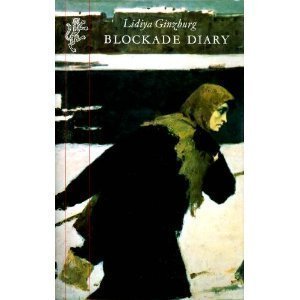
The 900-day siege of Leningrad (1941-44) was one the turning points of the Second World War. It slowed down the German advance into Russia and became a national symbol of survival and resistance. From her own experience of the blockade and using facts, conversations and impressions collected over many years, Lidiya Ginzburg has created a remarkable everyman hero in whom she distils the collective experience of life under siege. Though the author may depict, often painfully, the hunger and harrowing conditions of that period, the reader takes away a different impression: the dignity, vitality and intellectual resilience of the thinking mind as it records and makes sense of extreme experience.
"synopsis" may belong to another edition of this title.
Review
"Most Leningraders had suffered enough for one lifetime (the first world war, the civil war, the winter war, two famines and two major waves of political terror) when in June 1941 the Nazis blockaded all supply routes to their city. Some 750,000 civilians died of cold and hunger. Lidiya Ginzburg's Notes from the Blockade is a classic account of the siege" (Guardian)
"Much more than just an 'historical documentary'. It has a universal applicability. Hard not to weep as one reads; impossible - because she writes with such lucidity - not to feel ourselves actually present in these terrible scenes... This small book is a major work - a worthy memorial to a great woman, and a truly horrible period of Russian history" (A.N. Wilson Evening Standard)
"An account of the 900-day siege of Leningrad by a member of the Russian literary generation of Akhmatova, Pasternak and Mandelstam. Ginzburg writes with splendid imaginative particularity--never tragically, though--about how bombs and starvation work. And she writes--how could someone of her heritage and generation not write?--about the nobility of the human spirit so as to make it as tangible as cardboard shoes" (Los Angeles Times)
"Tells more of the experience of life in twentieth-century Russia than many multi-volume novels" (Alexandr Kushner)
"A startling and moving description of what it's like to slowly starve to death." (Independent on Sunday)
Book Description
An incredible story of struggle and survival during the siege of Leningrad during the Second World War
"About this title" may belong to another edition of this title.
Search results for Blockade Diary

Stock Image
Notes From the Blockade
Seller: World of Books (was SecondSale), Montgomery, IL, U.S.A.
Seller rating 5 out of 5 stars

Hardback. Condition: Good. The 900-day siege of Lenningrad (1941-440 was one of the turning points of the Second World War. It slowed down the German advance into Russia and became a national symbol of survival and resistance. From her own experience as a survivor of the blockade and using facts, conversations and impressions collected over the years, Lidiya Ginzburg has created a remarkable everyman hero in whom she distils the collective experience of life under siege. Though the author may depict, often painfully, the hunger and harrowing conditions of that period, the reader takes away a different impression- the dignity, vitality and intellectual resilience of the thinking mind as it records and makes sense of extreme experience. This first translation of a classic work of documentary fiction, reminscient of the work of Primo Levi and Albert Camus, introduces a major twentieth-century Russian writer to English-language readers. Seller Inventory # CIN1860460321G
Stock Image
Notes From the Blockade
Seller: World of Books Inc, Montgomery, IL, U.S.A.
Seller rating 4 out of 5 stars

Hardback. Condition: Good. The 900-day siege of Lenningrad (1941-440 was one of the turning points of the Second World War. It slowed down the German advance into Russia and became a national symbol of survival and resistance. From her own experience as a survivor of the blockade and using facts, conversations and impressions collected over the years, Lidiya Ginzburg has created a remarkable everyman hero in whom she distils the collective experience of life under siege. Though the author may depict, often painfully, the hunger and harrowing conditions of that period, the reader takes away a different impression- the dignity, vitality and intellectual resilience of the thinking mind as it records and makes sense of extreme experience. This first translation of a classic work of documentary fiction, reminscient of the work of Primo Levi and Albert Camus, introduces a major twentieth-century Russian writer to English-language readers. Seller Inventory # CIN1860460321G
Seller Image
Blockade Diary
Seller: Bay State Book Company, North Smithfield, RI, U.S.A.
Seller rating 5 out of 5 stars
Condition: very_good. Seller Inventory # BSM.1C7IX
Seller Image
Blockade Diary
Seller: WeBuyBooks, Rossendale, LANCS, United Kingdom
Seller rating 5 out of 5 stars
hardcover. Condition: Very Good. Most items will be dispatched the same or the next working day. A copy that has been read, but is in excellent condition. Pages are intact and not marred by notes or highlighting. The spine remains undamaged. Seller Inventory # rev1719036439
Buy Used
£ 21.83
£ 5.55 shipping
Ships from United Kingdom to U.S.A.
Ships from United Kingdom to U.S.A.
Quantity: 1 available