Synopsis
With an Introduction and Notes by Merry M. Pawlowski, Professor and Chair, Department of English, California State University,Bakersfield.
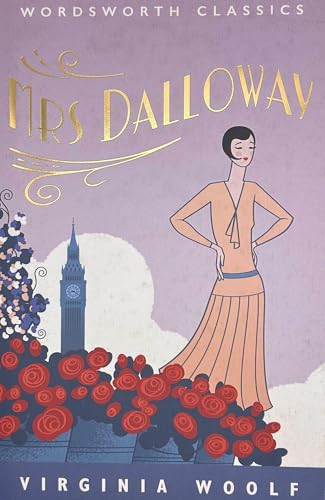
Virginia Woolf's singular technique in Mrs Dalloway heralds a break with the traditional novel form and reflects a genuine humanity and a concern with the experiences that both enrich and stultify existence.
Society hostess, Clarissa Dalloway is giving a party. Her thoughts and sensations on that one day, and the interior monologues of others whose lives are interwoven with hers gradually reveal the characters of the central protagonists. Clarissa's life is touched by tragedy as the events in her day run parallel to those of Septimus Warren Smith, whose madness escalates as his life draws toward inevitable suicide.
"synopsis" may belong to another edition of this title.
About the Author
Virginia Woolf was born in London in 1882, the daughter of Sir Leslie Stephen, first editor of The Dictionary of National Biography. After his death in 1904 Virginia and her sister, the painter Vanessa Bell, moved to Bloomsbury and became the centre of 'The Bloomsbury Group'. This informal collective of artists and writers which included Lytton Strachey and Roger Fry, exerted a powerful influence over early twentieth-century British culture.
In 1912 Virginia married Leonard Woolf, a writer and social reformer. Three years later, her first novel The Voyage Out was published, followed by Night and Day (1919) and Jacob's Room (1922). These first novels show the development of Virginia Woolf's distinctive and innovative narrative style. It was during this time that she and Leonard Woolf founded The Hogarth Press with the publication of the co-authored Two Stories in 1917, hand-printed in the dining room of their house in Surrey.
Between 1925 and 1931 Virginia Woolf produced what are now regarded as her finest masterpieces, from Mrs Dalloway (1925) to the poetic and highly experimental novel The Waves (1931). She also maintained an astonishing output of literary criticism, short fiction, journalism and biography, including the playfully subversive Orlando (1928) and A Room of One's Own (1929) a passionate feminist essay. This intense creative productivity was often matched by periods of mental illness, from which she had suffered since her mother's death in 1895. On 28 March 1941, a few months before the publication of her final novel, Between the Acts, Virginia Woolf committed suicide.
"About this title" may belong to another edition of this title.
Search results for Mrs Dalloway Virginia Woolf (Wordsworth Classics)

Stock Image
Mrs. Dalloway (Wordsworth Classics)
Published by
Wordsworth Editions Ltd, 1998
ISBN 10: 1853261912
ISBN 13: 9781853261916
Used
Softcover
Seller: World of Books (was SecondSale), Montgomery, IL, U.S.A.
Seller rating 5 out of 5 stars

Condition: Acceptable. Item in acceptable condition! Textbooks may not include supplemental items i.e. CDs, access codes etc. Seller Inventory # 00089250102
Stock Image
Mrs. Dalloway (Wordsworth Classics)
Published by
Wordsworth Editions Ltd, 1998
ISBN 10: 1853261912
ISBN 13: 9781853261916
Used
Softcover
Seller: World of Books (was SecondSale), Montgomery, IL, U.S.A.
Seller rating 5 out of 5 stars
Condition: Good. Item in good condition and has highlighting/writing on text. Used texts may not contain supplemental items such as CDs, info-trac etc. Seller Inventory # 00095760316
Seller Image
Mrs. Dalloway (Wordsworth Classics)
Published by
Wordsworth Editions Ltd, 1998
ISBN 10: 1853261912
ISBN 13: 9781853261916
Used
Softcover
Seller: Zoom Books East, Glendale Heights, IL, U.S.A.
Seller rating 5 out of 5 stars
Condition: acceptable. Book is in acceptable condition and shows signs of wear. Book may also include underlining highlighting. The book can also include "From the library of" labels. May not contain miscellaneous items toys, dvds, etc. . We offer 100% money back guarantee and 24 7 customer service. Seller Inventory # ZEV.1853261912.A
Seller Image
Mrs. Dalloway (Wordsworth Classics)
Published by
Wordsworth Editions Ltd, 1998
ISBN 10: 1853261912
ISBN 13: 9781853261916
Used
Softcover
Seller: Zoom Books Company, Lynden, WA, U.S.A.
Seller rating 5 out of 5 stars
Condition: very_good. Book is in very good condition and may include minimal underlining highlighting. The book can also include "From the library of" labels. May not contain miscellaneous items toys, dvds, etc. . We offer 100% money back guarantee and 24 7 customer service. Seller Inventory # ZBV.1853261912.VG
Seller Image
Mrs. Dalloway (Wordsworth Classics)
Published by
Wordsworth Editions Ltd, 1998
ISBN 10: 1853261912
ISBN 13: 9781853261916
Used
Softcover
Seller: Zoom Books East, Glendale Heights, IL, U.S.A.
Seller rating 5 out of 5 stars
Condition: very_good. Book is in very good condition and may include minimal underlining highlighting. The book can also include "From the library of" labels. May not contain miscellaneous items toys, dvds, etc. . We offer 100% money back guarantee and 24 7 customer service. Seller Inventory # ZEV.1853261912.VG
Seller Image
Mrs. Dalloway (Wordsworth Classics)
Published by
Wordsworth Editions Ltd, 1998
ISBN 10: 1853261912
ISBN 13: 9781853261916
Used
Softcover
Seller: Goodwill of Colorado, COLORADO SPRINGS, CO, U.S.A.
Seller rating 5 out of 5 stars
Condition: good. All pages and cover are intact. Dust jacket included if applicable, though it may be missing on hardcover editions. Spine and cover may show minor signs of wear including scuff marks, curls or bends to corners as well as cosmetic blemishes including stickers. Pages may contain limited notes or highlighting. "From the library of" labels may be present. Shrink wrap, dust covers, or boxed set packaging may be missing. Bundled media e.g., CDs, DVDs, access codes may not be included. Seller Inventory # COLV.1853261912.G
Seller Image
Mrs. Dalloway (Wordsworth Classics)
Published by
Wordsworth Editions Ltd, 1998
ISBN 10: 1853261912
ISBN 13: 9781853261916
Used
Softcover
Seller: Goodwill of Colorado, COLORADO SPRINGS, CO, U.S.A.
Seller rating 5 out of 5 stars
Condition: acceptable. This item is in overall acceptable condition. Covers and dust jackets are intact but may have heavy wear including creases, bends, edge wear, curled corners or minor tears as well as stickers or sticker-residue. Pages are intact but may have minor curls, bends or moderate to considerable highlighting writing. Binding is intact; however, spine may have heavy wear. Digital codes may not be included and have not been tested to be redeemable and or active. A well-read copy overall. Please note that all items are donated goods and are in used condition. Orders shipped Monday through Friday! Your purchase helps put people to work and learn life skills to reach their full potential. Orders shipped Monday through Friday. Your purchase helps put people to work and learn life skills to reach their full potential. Thank you! Seller Inventory # 466ZKQ000CP2
Seller Image
Mrs. Dalloway (Wordsworth Classics)
Published by
Wordsworth Editions Ltd, 1998
ISBN 10: 1853261912
ISBN 13: 9781853261916
Used
Softcover
Seller: Zoom Books East, Glendale Heights, IL, U.S.A.
Seller rating 5 out of 5 stars
Condition: good. Book is in good condition and may include underlining highlighting and minimal wear. The book can also include "From the library of" labels. May not contain miscellaneous items toys, dvds, etc. . We offer 100% money back guarantee and 24 7 customer service. Seller Inventory # ZEV.1853261912.G
Seller Image
Mrs. Dalloway (Wordsworth Classics)
Published by
Wordsworth Editions Ltd, 1998
ISBN 10: 1853261912
ISBN 13: 9781853261916
Used
Softcover
Seller: Dream Books Co., Denver, CO, U.S.A.
Seller rating 5 out of 5 stars
Condition: acceptable. This copy has clearly been enjoyedâ"expect noticeable shelf wear and some minor creases to the cover. Binding is strong, and all pages are legible. May contain previous library markings or stamps. Seller Inventory # DBV.1853261912.A
Seller Image
Mrs. Dalloway (Wordsworth Classics)
Published by
Wordsworth Editions Ltd, 1998
ISBN 10: 1853261912
ISBN 13: 9781853261916
Used
Softcover
Seller: Greenworld Books, Arlington, TX, U.S.A.
Seller rating 5 out of 5 stars
Condition: good. Fast Free Shipping â" Good condition book with a firm cover and clean, readable pages. Shows normal use, including some light wear or limited notes highlighting, yet remains a dependable copy overall. Supplemental items like CDs or access codes may not be included. Seller Inventory # GWV.1853261912.G