
Items related to Curiosity: How Science Became Interested in Everything
Synopsis
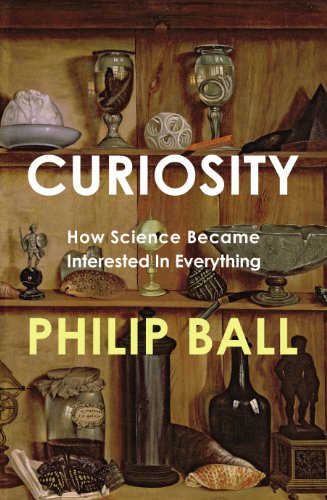
There was a time when curiosity was condemned. To be curious was to delve into matters that didn't concern you - after all, the original sin stemmed from a desire for forbidden knowledge. Through curiosity our innocence was lost.
Yet this hasn't deterred us. Today we spend vast sums trying to recreate the first instants of creation in particle accelerators, out of pure desire to know. There seems now to be no question too vast or too trivial to be ruled out of bounds: Why can fleas jump so high? What is gravity? What shape are clouds? Today curiosity is no longer reviled, but celebrated.
Examining how our inquisitive impulse first became sanctioned, changing from a vice to a virtue, Curiosity begins with the age when modern science began, a time that spans the lives of Galileo and Isaac Newton. It reveals a complex story, in which the liberation – and the taming – of curiosity was linked to magic, religion, literature, travel, trade and empire.
By examining the rise of curiosity, we can ask what has become of it today: how it functions in science, how it is spun and packaged and sold, how well it is being sustained and honoured, and how the changing shape of science influences the kinds of questions it may ask.
"synopsis" may belong to another edition of this title.
About the Author
Philip Ball writes regularly in the scientific and popular media and worked for many years as an editor for physical sciences at Nature. His books cover a wide range of scientific and cultural phenomena, and include Critical Mass: How One Thing Leads To Another (winner of the 2005 Aventis Prize for Science Books), The Music Instinct, Curiosity: How Science Became Interested in Everything, Serving The Reich: The Struggle for the Soul of Science Under Hitler and Invisible: The History of the Unseen from Plato to Particle Physics.
"About this title" may belong to another edition of this title.
Search results for Curiosity: How Science Became Interested in Everything

Stock Image
Curiosity : How Science Became Interested in Everything
Published by
Random House Children's Books, 2012
ISBN 10: 1847921728
ISBN 13: 9781847921727
Used
Hardcover
Seller: Better World Books Ltd, Dunfermline, United Kingdom
Seller rating 5 out of 5 stars

Condition: Very Good. Former library copy. Pages intact with possible writing/highlighting. Binding strong with minor wear. Dust jackets/supplements may not be included. Includes library markings. Stock photo provided. Product includes identifying sticker. Better World Books: Buy Books. Do Good. Seller Inventory # GRP95353052
Buy Used
£ 5.39
£ 5 shipping
Ships from United Kingdom to U.S.A.
Ships from United Kingdom to U.S.A.
Quantity: 3 available
Seller Image
Curiosity : how science became interested in everything
Published by
London : Bodley Head, 2012
ISBN 10: 1847921728
ISBN 13: 9781847921727
Used
Hardcover
First Edition
Seller: MW Books, New York, NY, U.S.A.
Seller rating 5 out of 5 stars
First Edition. Fine cloth copy in a good if somewhat edge-nicked and dust-dulled dust-wrapper, now mylar-sleeved. Remains particularly well-preserved overall; tight, bright, clean and strong. Physical description: viii, 465 p. : ill. ; 24 cm. Subjects: Curiosity. Science History ; Popular works. Genre: Science. Language: English. 1 Kg. Seller Inventory # 365797
Seller Image
Curiosity: How Science Became Interested in Everything
Seller: Cambridge Recycled Books, Cambridge, United Kingdom
Seller rating 5 out of 5 stars
Hardcover. Condition: Good. Dust Jacket Condition: Good. Pages edges are tanned but appears to have hardly been read. Seller Inventory # SS29221004014
Buy Used
£ 7
£ 22.50 shipping
Ships from United Kingdom to U.S.A.
Ships from United Kingdom to U.S.A.
Quantity: 1 available
Seller Image
Curiosity : how science became interested in everything
Published by
London : Bodley Head, 2012
ISBN 10: 1847921728
ISBN 13: 9781847921727
Used
Hardcover
First Edition
Seller: MW Books Ltd., Galway, Ireland
Seller rating 5 out of 5 stars
First Edition. Fine cloth copy in a good if somewhat edge-nicked and dust-dulled dust-wrapper, now mylar-sleeved. Remains particularly well-preserved overall; tight, bright, clean and strong. Physical description: viii, 465 p. : ill. ; 24 cm. Subjects: Curiosity. Science History ; Popular works. Genre: Science. Language: English. 1 Kg. Seller Inventory # 365797
Seller Image
Curiosity: How Science became interested in everything
Seller: PEMBERLEY NATURAL HISTORY BOOKS BA, ABA, Iver, United Kingdom
Seller rating 5 out of 5 stars
Condition: Fine. viii, 465, text figs. . HB. Fine. . [9781847921727]. Seller Inventory # S53660
Stock Image
Curiosity : How Science Became Interested in Everything
Seller: Barclay Books, York, WA, Australia
Seller rating 5 out of 5 stars
Hardback. 512. There was a time when curiosity was condemned. To be curious was to delve into matters that didn't concern you - after all, the original sin stemmed from a desire for forbidden knowledge. Through curiosity our innocence was lost. Yet this hasn't deterred us. Today we spend vast sums trying to recreate the first instants of creation in particle accelerators, out of pure desire to know. There seems now to be no question too vast or too trivial to be ruled out of bounds: Why can fleas jump so high? What is gravity? What shape are clouds? Today curiosity is no longer reviled, but celebrated. Examining how our inquisitive impulse first became sanctioned, changing from a vice to a virtue, "Curiosity" begins with the age when modern science began, a time that spans the lives of Galileo and Isaac Newton. It reveals a complex story, in which the liberation - and the taming - of curiosity was linked to magic, religion, literature, travel, trade and empire. By examining the rise of curiosity, we can ask what has become of it today: how it functions in science, how it is spun and packaged and sold, how well it is being sustained and honoured, and how the changing shape of science influences the kinds of questions it may ask. 2012, First edition, first printing. A fine, unread copy in a fine, unclipped d/w. Seller Inventory # 17184278
Buy Used
£ 21.67
£ 24.30 shipping
Ships from Australia to U.S.A.
Ships from Australia to U.S.A.
Quantity: 1 available
Stock Image
Curiosity : How Science Became Interested in Everything
Seller: Anytime Books, London, United Kingdom
Seller rating 5 out of 5 stars
Soft cover. Condition: Fine. Where has curiosity led humans? pp486. ARC. Unread. Seller Inventory # 005779
Stock Image
Curiosity
Seller: Mooney's bookstore, Den Helder, Netherlands
Seller rating 4 out of 5 stars

Condition: Very Good. Seller Inventory # F328B6876680483
Buy Used
£ 53.46
£ 12.52 shipping
Ships from Netherlands to U.S.A.
Ships from Netherlands to U.S.A.
Quantity: 1 available