
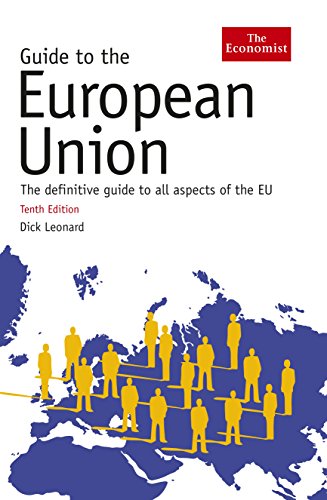
Synopsis
From its original six members (who formed the European Economic Community in 1957) what became the European Union had grown to 27 members in 2007, with several more candidates for membership standing in the wings. This long-established definitive guide to the workings of the EU provides comprehensive coverage of
How it works: the institutions, the mechanisms
Every area of EU competence from agriculture to workers' rights
The effects of the single market and the single currency and the successes and stresses of the euro zone
The implications of the Lisbon treaty
The impact of the enlargement of the EU and the prospects for further enlargement and for closer political integration
The Guide to the European Union is well-established as the clearest and most comprehensive guide to how the EU operates. This new edition brings you up to date at a crucial stage in its development following parliamentary elections and a new Commission taking over in 2009 and the ratification of the Lisbon Treaty.
"synopsis" may belong to another edition of this title.
About the Author
Dick Leonard is Senior Adviser to the Centre for European Policy Studies in Brussels. A former MP for Romford, he was an assistant editor of The Economist and later Brussels correspondent for both The Economist and the Observer. He is the author or co-author of twelve books and also acts as a consultant on European affairs.
From the Inside Flap
This completely updated tenth edition of the much-acclaimed guide to the EU is in four parts and contains 39 chapters.
The background
The origins
Evolution
Treaties
The institutions
The Commission
The Council of Ministers
The European Council
The European Parliament
The Economic and Social Committee and the Committee of the Regions
The Court of Justice
The Court of Auditors
The European Investment Bank
Other EU bodies
The bureaucracy: facts, figures and costs
The competences
Agriculture
Aid and development
Citizens rights and symbolism
Competition policy
Consumers
Culture and the media
Economic and financial policy
Education
Energy
Environment
Financing the Union
Fisheries
Foreign, defence and security policy
Justice and home affairs
Regional policy
Research and new industries
Social policy
Taxation
The single market
Trade
Transport
Women s rights
Workers rights
Special problems
Enlargement
The UK and the Union
The future
"About this title" may belong to another edition of this title.
Other Popular Editions of the Same Title

Search results for The Economist Guide To The European Union

Stock Image
The Economist Guide To The European Union
Seller: WorldofBooks, Goring-By-Sea, WS, United Kingdom
Seller rating 5 out of 5 stars

Hardback. Condition: Very Good. The book has been read, but is in excellent condition. Pages are intact and not marred by notes or highlighting. The spine remains undamaged. Seller Inventory # GOR003785757
Buy Used
£ 2.80
£ 5.60 shipping
Ships from United Kingdom to U.S.A.
Ships from United Kingdom to U.S.A.
Quantity: 4 available
Stock Image
Guide to the European Union : The Definitive Guide to all Aspects of the EU
Published by
Wiley & Sons, Incorporated, John, 2010
ISBN 10: 1846681723
ISBN 13: 9781846681721
Used
Hardcover
Seller: Better World Books Ltd, Dunfermline, United Kingdom
Seller rating 5 out of 5 stars
Condition: Good. 10 Edition. Former library copy. Pages intact with minimal writing/highlighting. The binding may be loose and creased. Dust jackets/supplements are not included. Includes library markings. Stock photo provided. Product includes identifying sticker. Better World Books: Buy Books. Do Good. Seller Inventory # GRP76804139
Buy Used
£ 4.84
£ 5 shipping
Ships from United Kingdom to U.S.A.
Ships from United Kingdom to U.S.A.
Quantity: 1 available
Stock Image
Guide to the European Union : The Definitive Guide to all Aspects of the EU
Published by
Wiley & Sons, Incorporated, John, 2010
ISBN 10: 1846681723
ISBN 13: 9781846681721
Used
Hardcover
Seller: Better World Books Ltd, Dunfermline, United Kingdom
Seller rating 5 out of 5 stars
Condition: Very Good. 10 Edition. Former library copy. Pages intact with possible writing/highlighting. Binding strong with minor wear. Dust jackets/supplements may not be included. Includes library markings. Stock photo provided. Product includes identifying sticker. Better World Books: Buy Books. Do Good. Seller Inventory # 9004052-6
Buy Used
£ 4.84
£ 5 shipping
Ships from United Kingdom to U.S.A.
Ships from United Kingdom to U.S.A.
Quantity: 1 available
Stock Image
Guide To The European Union
Seller: ThriftBooks-Dallas, Dallas, TX, U.S.A.
Seller rating 5 out of 5 stars
Hardcover. Condition: Very Good. No Jacket. May have limited writing in cover pages. Pages are unmarked. ~ ThriftBooks: Read More, Spend Less. Seller Inventory # G1846681723I4N00
Stock Image
Guide To The European Union
Seller: Ammareal, Morangis, France
Seller rating 5 out of 5 stars
Hardcover. Condition: Bon. Edition 2010. Ammareal reverse jusqu'à 15% du prix net de cet article à des organisations caritatives. ENGLISH DESCRIPTION Book Condition: Used, Good. Edition 2010. Ammareal gives back up to 15% of this item's net price to charity organizations. Seller Inventory # H-376-197
Stock Image
Guide To The European Union (Economist Guide to the European Union)
Seller: Greener Books, London, United Kingdom
Seller rating 4 out of 5 stars

Hardcover. Condition: Used; Very Good. **SHIPPED FROM UK** We believe you will be completely satisfied with our quick and reliable service. All orders are dispatched as swiftly as possible! Buy with confidence! Greener Books. Seller Inventory # 2812436
Buy Used
£ 4.84
£ 20 shipping
Ships from United Kingdom to U.S.A.
Ships from United Kingdom to U.S.A.
Quantity: 1 available
Stock Image
Guide To The European Union (Economist Guide to the European Union)
Seller: Greener Books, London, United Kingdom
Seller rating 4 out of 5 stars
Hardcover. Condition: Used; Good. **SHIPPED FROM UK** We believe you will be completely satisfied with our quick and reliable service. All orders are dispatched as swiftly as possible! Buy with confidence! Greener Books. Seller Inventory # mon0001682829
Buy Used
£ 4.84
£ 20 shipping
Ships from United Kingdom to U.S.A.
Ships from United Kingdom to U.S.A.
Quantity: 1 available