
Items related to Richard II (Wordsworth Classics)
Synopsis
Edited, introduced and annotated by Cedric Watts, M.A., Ph.D., Emeritus Professor of English, University of Sussex.
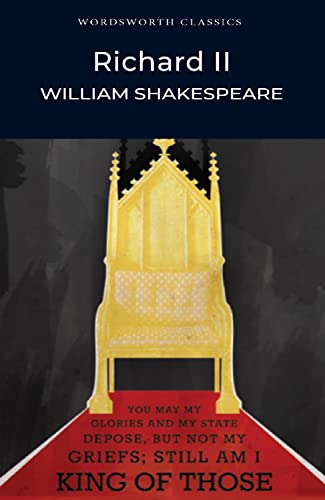
Richard II is one of Shakespeare’s finest works: lucid, eloquent, and boldly structured. It can be seen as a tragedy, or a historical play, or a political drama, or as one part of a vast dramatic cycle which helped to generate England’s national identity. Today, to some of us, Richard II may appear conservative; but, in Shakespeare’s day, it could appear subversive: ‘I am Richard II’, declared an indignant Queen Elizabeth.
Numerous recent revivals in the theatre and on screen have demonstrated the enduring power and poignancy of this drama of the downfall of an egoistic but pitiable monarch.
Richard II is the seventeenth volume in the Wordsworth Classics’ Shakespeare Series, in which each volume has been freshly edited by Cedric Watts.
"synopsis" may belong to another edition of this title.
Review
One of Shakespeare's finest history plays, Richard II deals with one of the most sensitive and politically explosive issues of its day--the rights and wrongs of deposing a legitimately appointed king. Forerunner to the two parts of Henry IV, the play deals with the abdication of King Richard II in 1399, the subsequent succession of Bolingbroke, the future King Henry IV, and Richard's death in the spring of 1400. But the play has been celebrated above and beyond its stature as historical drama. Richard II begins with a portrait of Richard as a pompous, arrogant and self-regarding sovereign, with little sense of his people or his political responsibilities. As he consistently miscalculates in his attempts to destroy Bolingbroke, and watches his own power wane, he becomes a far more appealing, Hamlet-like figure, more interested in "talk of graves, of worms and epitaphs", and "sad stories of the death of kings". Richard's speeches become increasingly lyrical and poetic as his supporters desert him, until he finally takes on the stature of the pilloried Christ in the climax of the play, the deposition scene, one of the most politically risky scenes in all of Shakespeare. The play remains most famous for John of Gaunt's "This royal throne of kings, this sceptred isle" speech, but historians believe that the play was also performed in the streets of London in 1601 in support of the Earl of Essex's attempt to depose Elizabeth I. Whilst the plot failed, it showed the power of the theatre of the time, and the politically controversial nature of Shakespeare's play. --Jerry Brotton
Review
"Cmbridge University Press has provided a very great service to the scholarly community with its series The Early Quartos produced in parallel with....this text is a valuable contribution to the study of this play and of the history of Shakespare's texts in general." Shakespare Bulletin
"About this title" may belong to another edition of this title.
Search results for Richard II (Wordsworth Classics)

Seller Image
Richard Ii
Published by
Wordsworth Editions Ltd, 2013
ISBN 10: 1840227206
ISBN 13: 9781840227208
Used
Softcover
Seller: GreatBookPrices, Columbia, MD, U.S.A.
Seller rating 5 out of 5 stars

Condition: As New. Unread book in perfect condition. Seller Inventory # 18915923
Seller Image
Richard Ii
Seller: GreatBookPrices, Columbia, MD, U.S.A.
Seller rating 5 out of 5 stars
Condition: New. Seller Inventory # 18915923-n
Seller Image
Richard II
Published by
Wordsworth Editions Ltd, GB, 2013
ISBN 10: 1840227206
ISBN 13: 9781840227208
New
Paperback
Seller: Rarewaves.com USA, London, LONDO, United Kingdom
Seller rating 5 out of 5 stars
Paperback. Condition: New. Edited, introduced and annotated by Cedric Watts, M.A., Ph.D., Emeritus Professor of English, University of Sussex.Richard II is one of Shakespeare's finest works: lucid, eloquent, and boldly structured. It can be seen as a tragedy, or a historical play, or a political drama, or as one part of a vast dramatic cycle which helped to generate England's national identity. Today, to some of us, Richard II may appear conservative; but, in Shakespeare's day, it could appear subversive: 'I am Richard II', declared an indignant Queen Elizabeth.Numerous recent revivals in the theatre and on screen have demonstrated the enduring power and poignancy of this drama of the downfall of an egoistic but pitiable monarch.Richard II is the seventeenth volume in the Wordsworth Classics' Shakespeare Series, in which each volume has been freshly edited by Cedric Watts. Seller Inventory # LU-9781840227208
Buy New
£ 7.57
Free Shipping
Ships from United Kingdom to U.S.A.
Ships from United Kingdom to U.S.A.
Quantity: 7 available
Seller Image
Richard II
Published by
Wordsworth Editions Ltd, GB, 2013
ISBN 10: 1840227206
ISBN 13: 9781840227208
New
Paperback
Seller: Rarewaves USA, HEBRON, KY, U.S.A.
Seller rating 5 out of 5 stars
Paperback. Condition: New. Edited, introduced and annotated by Cedric Watts, M.A., Ph.D., Emeritus Professor of English, University of Sussex.Richard II is one of Shakespeare's finest works: lucid, eloquent, and boldly structured. It can be seen as a tragedy, or a historical play, or a political drama, or as one part of a vast dramatic cycle which helped to generate England's national identity. Today, to some of us, Richard II may appear conservative; but, in Shakespeare's day, it could appear subversive: 'I am Richard II', declared an indignant Queen Elizabeth.Numerous recent revivals in the theatre and on screen have demonstrated the enduring power and poignancy of this drama of the downfall of an egoistic but pitiable monarch.Richard II is the seventeenth volume in the Wordsworth Classics' Shakespeare Series, in which each volume has been freshly edited by Cedric Watts. Seller Inventory # LU-9781840227208
Stock Image
Richard II (Wordsworth Classics)
Published by
Wordsworth Editions Ltd, 2013
ISBN 10: 1840227206
ISBN 13: 9781840227208
Used
paperback
Seller: HPB-Diamond, Dallas, TX, U.S.A.
Seller rating 5 out of 5 stars
paperback. Condition: Very Good. Connecting readers with great books since 1972! Used books may not include companion materials, and may have some shelf wear or limited writing. We ship orders daily and Customer Service is our top priority! Seller Inventory # S_448763053
Stock Image
Richard II (Wordsworth Classics)
Published by
Wordsworth Editions Ltd, 2013
ISBN 10: 1840227206
ISBN 13: 9781840227208
Used
paperback
Seller: HPB-Ruby, Dallas, TX, U.S.A.
Seller rating 5 out of 5 stars
paperback. Condition: Very Good. Connecting readers with great books since 1972! Used books may not include companion materials, and may have some shelf wear or limited writing. We ship orders daily and Customer Service is our top priority! Seller Inventory # S_457262505
Stock Image
Richard II (Wordsworth Classics)
Published by
Wordsworth Editions Ltd, 2013
ISBN 10: 1840227206
ISBN 13: 9781840227208
Used
Paperback
Seller: WorldofBooks, Goring-By-Sea, WS, United Kingdom
Seller rating 5 out of 5 stars
Paperback. Condition: Good. The book has been read but remains in clean condition. All pages are intact and the cover is intact. Some minor wear to the spine. Seller Inventory # GOR006939610
Buy Used
£ 2.50
£ 5.60 shipping
Ships from United Kingdom to U.S.A.
Ships from United Kingdom to U.S.A.
Quantity: 2 available
Stock Image
Richard II (Wordsworth Classics)
Published by
Wordsworth Editions Ltd, 2013
ISBN 10: 1840227206
ISBN 13: 9781840227208
Used
Paperback
Seller: WorldofBooks, Goring-By-Sea, WS, United Kingdom
Seller rating 5 out of 5 stars
Paperback. Condition: Very Good. The book has been read, but is in excellent condition. Pages are intact and not marred by notes or highlighting. The spine remains undamaged. Seller Inventory # GOR005794862
Buy Used
£ 2.50
£ 5.60 shipping
Ships from United Kingdom to U.S.A.
Ships from United Kingdom to U.S.A.
Quantity: 4 available
Stock Image
Richard II
Seller: Magers and Quinn Booksellers, Minneapolis, MN, U.S.A.
Seller rating 5 out of 5 stars
paperback. Condition: New. Brand New. Seller Inventory # 917624
Stock Image
Richard II (Wordsworth Classics)
Seller: Chiron Media, Wallingford, United Kingdom
Seller rating 5 out of 5 stars
paperback. Condition: New. Brand new book, sourced directly from publisher. Dispatch time is 4-5 days from our warehouse. Book will be sent in robust, secure packaging to ensure it reaches you securely. Seller Inventory # 6666-BSC-9781840227208
Buy New
£ 4.26
£ 4.49 shipping
Ships from United Kingdom to U.S.A.
Ships from United Kingdom to U.S.A.
Quantity: Over 20 available