
Items related to Expressly Human: Decoding the Language of Emotion
Synopsis
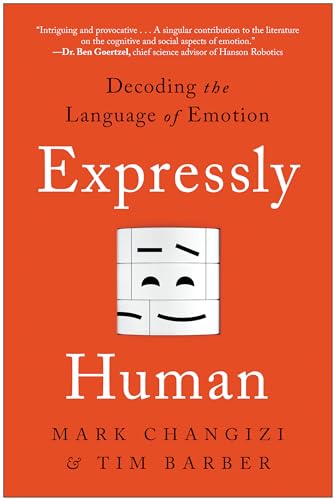
Good communication, conventional wisdom suggests, is calm, logical, rational. Emotions, we’re told, just get in the way. But what if this is backwards? What if those emotional overtones are the main messages we’re sending to one another, and all that logical language is just window dressing? Over billions of years of evolution, animals have become increasingly sophisticated and increasingly sentient. In the process, they evolved emotions, which helped improve their odds of survival in complex situations. These emotions were, at first, purely internal. But at some point, social animals began expressing their emotions, in increasingly dramatic ways. These emotional expressions could accurately reflect internal emotions (smiling to express happiness)―or they could be quite different (smiling to cover up that you’re actually furious, but can’t tell your boss that). Why did once-stone-faced animals evolve to be so emotionally expressive―to be us? The answer, as evolutionary neurobiologist Mark Changizi and mathematician Tim Barber reveal, is that emotional expressions are our first and most important language―one that allows us, as social animals, to engage in highly sophisticated communications and negotiations. Expressly Human introduces an original theory that explains, from first principles, how the broad range of emotional expressions evolved, and provides a Rosetta Stone for human communication. It will revolutionize the way you see every social interaction, from deciding who gets the last slice of pizza to multimillion-dollar business negotiations, and change your definition of what makes us human.
"synopsis" may belong to another edition of this title.
About the Author
Mark Changizi is a cognitive scientist, with several previous books about his research, including Vision Revolution and Harnessed. He has been a researcher and/or professor at University College Cork, Duke University, Caltech, and Rensselaer Polytechnic Institute. Tim Barber earned his PhD from Princeton in mathematics and has had a long interest in diagnosing the algorithms that underlie the uniquely human capacity for reasoning. He is a serial entrepreneur with highly successful companies such as Kount and ClickBank. Author Residence: Columbus, OH and Miami, FL
"About this title" may belong to another edition of this title.
Search results for Expressly Human: Decoding the Language of Emotion

Seller Image
Expressly Human: Decoding the Language of Emotion
Seller: Greenworld Books, Arlington, TX, U.S.A.
Seller rating 5 out of 5 stars

Condition: like_new. Fast Free Shipping â" Excellent condition book with clean cover and pages. Barely handled, with minimal wear. An outstanding copy, close to enjoy! Seller Inventory # GWV.1637740484.LN
Stock Image
Expressly Human: Decoding the Language of Emotion
Seller: World of Books (was SecondSale), Montgomery, IL, U.S.A.
Seller rating 5 out of 5 stars
Paperback. Condition: Good. Good communication, conventional wisdom suggests, is calm, logical, rational. Emotions, we're told, just get in the way. But what if this is backwards? What if those emotional overtones are the main messages we're sending to one another, and all that logical language is just window dressing? Over billions of years of evolution, animals have become increasingly sophisticated and increasingly sentient. In the process, they evolved emotions, which helped improve their odds of survival in complex situations. These emotions were, at first, purely internal. But at some point, social animals began expressing their emotions, in increasingly dramatic ways. These emotional expressions could accurately reflect internal emotions (smiling to express happiness) -- or they could be quite different (smiling to cover up that you're actually furious, but can't tell your boss that). Why did once-stone-faced animals evolve to be so emotionally expressive -- to be us? The answer, as evolutionary neurobiologist Mark Changizi and mathematician Tim Barber reveal, is that emotional expressions are our first and most important language -- one that allows us, as social animals, to engage in highly sophisticated communications and negotiations. Expressly Human introduces an original theory that explains, from first principles, how the broad range of emotional expressions evolved, and provides a Rosetta Stone for human communication. It will revolutionize the way you see every social interaction, from deciding who gets the last slice of pizza to multimillion-dollar business negotiations, and change your definition of what makes us human. Seller Inventory # 00102375909
Stock Image
Expressly Human: Decoding the Language of Emotion
Seller: ThriftBooks-Atlanta, AUSTELL, GA, U.S.A.
Seller rating 5 out of 5 stars
Paperback. Condition: Very Good. No Jacket. May have limited writing in cover pages. Pages are unmarked. ~ ThriftBooks: Read More, Spend Less. Seller Inventory # G1637740484I4N00
Stock Image
Expressly Human : Decoding the Language of Emotion
Seller: Better World Books, Mishawaka, IN, U.S.A.
Seller rating 5 out of 5 stars
Condition: Very Good. Pages intact with possible writing/highlighting. Binding strong with minor wear. Dust jackets/supplements may not be included. Stock photo provided. Product includes identifying sticker. Better World Books: Buy Books. Do Good. Seller Inventory # 50284118-20
Stock Image
Expressly Human: Decoding the Language of Emotion
Seller: Gulf Coast Books, Cypress, TX, U.S.A.
Seller rating 5 out of 5 stars
paperback. Condition: New. Seller Inventory # 1637740484-11-32335462
Stock Image
Expressly Human: Decoding the Language of Emotion
Seller: Your Online Bookstore, Houston, TX, U.S.A.
Seller rating 5 out of 5 stars
paperback. Condition: New. Seller Inventory # 1637740484-11-32334893
Stock Image
Expressly Human: Decoding the Language of Emotion
Seller: World of Books Inc, Montgomery, IL, U.S.A.
Seller rating 4 out of 5 stars

Paperback. Condition: Good. Good communication, conventional wisdom suggests, is calm, logical, rational. Emotions, we're told, just get in the way. But what if this is backwards? What if those emotional overtones are the main messages we're sending to one another, and all that logical language is just window dressing? Over billions of years of evolution, animals have become increasingly sophisticated and increasingly sentient. In the process, they evolved emotions, which helped improve their odds of survival in complex situations. These emotions were, at first, purely internal. But at some point, social animals began expressing their emotions, in increasingly dramatic ways. These emotional expressions could accurately reflect internal emotions (smiling to express happiness) -- or they could be quite different (smiling to cover up that you're actually furious, but can't tell your boss that). Why did once-stone-faced animals evolve to be so emotionally expressive -- to be us? The answer, as evolutionary neurobiologist Mark Changizi and mathematician Tim Barber reveal, is that emotional expressions are our first and most important language -- one that allows us, as social animals, to engage in highly sophisticated communications and negotiations. Expressly Human introduces an original theory that explains, from first principles, how the broad range of emotional expressions evolved, and provides a Rosetta Stone for human communication. It will revolutionize the way you see every social interaction, from deciding who gets the last slice of pizza to multimillion-dollar business negotiations, and change your definition of what makes us human. Seller Inventory # CIN1637740484G
Stock Image
Expressly Human: Decoding the Language of Emotion
Seller: Orion Tech, Kingwood, TX, U.S.A.
Seller rating 5 out of 5 stars
paperback. Condition: New. Seller Inventory # 1637740484-11-32334698
Stock Image
Expressly Human: Decoding the Language of Emotion
Seller: WorldofBooks, Goring-By-Sea, WS, United Kingdom
Seller rating 5 out of 5 stars
Paperback. Condition: Very Good. The book has been read, but is in excellent condition. Pages are intact and not marred by notes or highlighting. The spine remains undamaged. Seller Inventory # GOR014635847
Buy Used
£ 3.72
£ 5.60 shipping
Ships from United Kingdom to U.S.A.
Ships from United Kingdom to U.S.A.
Quantity: 2 available
Stock Image
Expressly Human : Decoding the Language of Emotion
Seller: Better World Books Ltd, Dunfermline, United Kingdom
Seller rating 5 out of 5 stars
Condition: Very Good. Former library copy. Pages intact with possible writing/highlighting. Binding strong with minor wear. Dust jackets/supplements may not be included. Includes library markings. Stock photo provided. Product includes identifying sticker. Better World Books: Buy Books. Do Good. Seller Inventory # 57394913-20
Buy Used
£ 7.36
£ 5 shipping
Ships from United Kingdom to U.S.A.
Ships from United Kingdom to U.S.A.
Quantity: 1 available